
About This Book
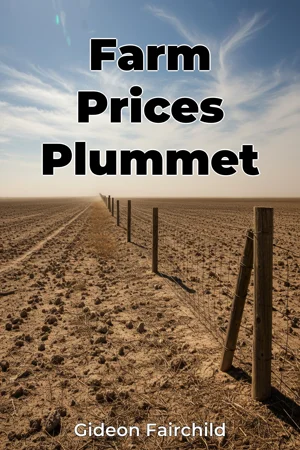
How could American agriculture, once the bedrock of the nation's prosperity, collapse so dramatically in a single decade? "Farm Prices Plummet" examines the devastating agricultural decline of the 1930s, meticulously documented through the lens of United States Department of Agriculture (USDA) figures, offering a comprehensive analysis of the economic forces at play and their far-reaching consequences. This book tackles three critical topics: the sharp decline in farm prices, the subsequent economic hardship endured by farmers, and the government interventions implemented to alleviate the crisis. Understanding these topics is crucial because the agricultural collapse of the 1930s not only shaped the economic landscape of the Great Depression but also fundamentally altered the relationship between the government and the agricultural sector. Furthermore, similar economic pressures continue to challenge agricultural communities today, making this historical analysis highly relevant. The book provides crucial historical context, exploring the agricultural boom of the early 20th century and the factors that led to overproduction, setting the stage for the price crashes of the 1930s. It assumes a basic understanding of economic principles like supply and demand, but all complex economic models are explained carefully. The central argument of "Farm Prices Plummet" is that the agricultural crisis of the 1930s was not solely the result of natural disasters like the Dust Bowl, but rather a complex interplay of overproduction, global economic conditions, and inadequate policy responses. This argument challenges simplistic narratives and underscores the need for nuanced understanding of agricultural economics. The book is structured in three parts. The first section introduces the economic concepts and historical context. The second section analyzes USDA data to demonstrate the dramatic fall in farm prices for key commodities like wheat, corn, and cotton, highlighting the impact on farmers' incomes and livelihoods. The third section evaluates various government programs implemented during the New Deal, assessing their effectiveness in stabilizing farm prices and providing relief to struggling farmers, questioning their long-term impact. The book culminates in a discussion of the lasting legacy of the 1930s agricultural crisis, providing a comparison with modern agricultural policies. "Farm Prices Plummet" relies heavily on quantitative evidence, primarily using detailed price indices, production statistics, and income data sourced directly from USDA reports and archives. The methodologies include time series analysis and comparative economic analysis, revealing patterns and trends often obscured by anecdotal accounts. This book connects strongly to the fields of history and economics. The historical analysis explores social impact of economic policies, while the economics applies theoretical models to real-world agricultural markets. It also links to political science by examining the role of government intervention in shaping economic outcomes. These connections enrich the analysis and provide a more holistic understanding of the agricultural crisis. The book will appeal to economic historians, agricultural economists, policymakers, and anyone seeking a deeper understanding of the Great Depression. It is valuable for those interested in understanding the long-term effects of governmental interventions in agriculture. As a work in economic history, "Farm Prices Plummet" adheres to the genre's conventions of rigorous research, data-driven analysis, and objective presentation. The scope is focused specifically on the price collapse of the 1930s and government responses, without delving into broader social issues of the Depression era unless directly relevant to agriculture. Readers can apply the lessons learned from the 1930s to contemporary issues such as commodity price volatility, global food security, and the ongoing debate about government subsidies for agriculture. The book addresses ongoing debates among economists and historians regarding the effectiveness of New Deal agricultural policies, presenting different perspectives and offering a balanced assessment of their impact.
How could American agriculture, once the bedrock of the nation's prosperity, collapse so dramatically in a single decade? "Farm Prices Plummet" examines the devastating agricultural decline of the 1930s, meticulously documented through the lens of United States Department of Agriculture (USDA) figures, offering a comprehensive analysis of the economic forces at play and their far-reaching consequences. This book tackles three critical topics: the sharp decline in farm prices, the subsequent economic hardship endured by farmers, and the government interventions implemented to alleviate the crisis. Understanding these topics is crucial because the agricultural collapse of the 1930s not only shaped the economic landscape of the Great Depression but also fundamentally altered the relationship between the government and the agricultural sector. Furthermore, similar economic pressures continue to challenge agricultural communities today, making this historical analysis highly relevant. The book provides crucial historical context, exploring the agricultural boom of the early 20th century and the factors that led to overproduction, setting the stage for the price crashes of the 1930s. It assumes a basic understanding of economic principles like supply and demand, but all complex economic models are explained carefully. The central argument of "Farm Prices Plummet" is that the agricultural crisis of the 1930s was not solely the result of natural disasters like the Dust Bowl, but rather a complex interplay of overproduction, global economic conditions, and inadequate policy responses. This argument challenges simplistic narratives and underscores the need for nuanced understanding of agricultural economics. The book is structured in three parts. The first section introduces the economic concepts and historical context. The second section analyzes USDA data to demonstrate the dramatic fall in farm prices for key commodities like wheat, corn, and cotton, highlighting the impact on farmers' incomes and livelihoods. The third section evaluates various government programs implemented during the New Deal, assessing their effectiveness in stabilizing farm prices and providing relief to struggling farmers, questioning their long-term impact. The book culminates in a discussion of the lasting legacy of the 1930s agricultural crisis, providing a comparison with modern agricultural policies. "Farm Prices Plummet" relies heavily on quantitative evidence, primarily using detailed price indices, production statistics, and income data sourced directly from USDA reports and archives. The methodologies include time series analysis and comparative economic analysis, revealing patterns and trends often obscured by anecdotal accounts. This book connects strongly to the fields of history and economics. The historical analysis explores social impact of economic policies, while the economics applies theoretical models to real-world agricultural markets. It also links to political science by examining the role of government intervention in shaping economic outcomes. These connections enrich the analysis and provide a more holistic understanding of the agricultural crisis. The book will appeal to economic historians, agricultural economists, policymakers, and anyone seeking a deeper understanding of the Great Depression. It is valuable for those interested in understanding the long-term effects of governmental interventions in agriculture. As a work in economic history, "Farm Prices Plummet" adheres to the genre's conventions of rigorous research, data-driven analysis, and objective presentation. The scope is focused specifically on the price collapse of the 1930s and government responses, without delving into broader social issues of the Depression era unless directly relevant to agriculture. Readers can apply the lessons learned from the 1930s to contemporary issues such as commodity price volatility, global food security, and the ongoing debate about government subsidies for agriculture. The book addresses ongoing debates among economists and historians regarding the effectiveness of New Deal agricultural policies, presenting different perspectives and offering a balanced assessment of their impact.
"Farm Prices Plummet" rigorously examines the agricultural crisis during the Great Depression, focusing on the sharp decline in farm prices and the resulting economic hardship. It utilizes USDA data to analyze the economic forces at play, arguing that the crisis stemmed from overproduction, global economic conditions, and insufficient policy responses, rather than solely from natural disasters like the Dust Bowl. The book highlights how the agricultural sector, once a cornerstone of American prosperity, experienced a devastating collapse, impacting farm incomes and livelihoods. The book progresses by first establishing the historical and economic context, then delving into the analysis of USDA data to illustrate the plummeting commodity prices for key crops like wheat and corn. Finally, it evaluates the New Deal's government intervention strategies and their effectiveness in stabilizing farm prices. This approach allows the book to provide a nuanced understanding of agricultural economics and the long-term implications of government policies, offering valuable insights for understanding modern agricultural challenges and policy debates.
Book Details
ISBN
9788235228925
Publisher
Publifye AS
Your Licenses
You don't own any licenses for this book
Purchase a license below to unlock this book and download the EPUB.
Purchase License
Select a tier to unlock this book
Need bulk licensing?
Contact us for enterprise agreements.