
About This Book
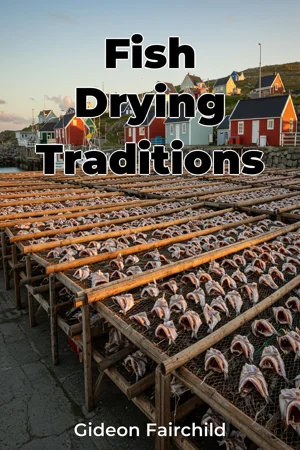
For centuries, the lifeblood of coastal villages has been intricately linked to the sea. This book, "Fish Drying Traditions," delves into the historical fish preservation methods employed in these communities and examines their significant economic impact, a story often overlooked in mainstream economic narratives. This book addresses two principal topics: the evolution and diversity of traditional fish preservation techniques, and the economic systems that developed around them. Why is this important? Understanding these methods provides critical insights into the sustainable practices of coastal communities. Furthermore, analyzing the economic impact reveals how these small-scale industries have shaped local economies and contributed to broader trade networks. Historically, coastal villages faced the challenge of preserving their primary food source, necessitating innovative solutions long before modern refrigeration. Fish drying, smoking, and salting emerged as vital techniques, each adapted to local climates and resource availability. A reader should ideally understand basic economic principles like supply and demand, as well as a general awareness of pre-industrial societies, to fully appreciate the material. The central argument of "Fish Drying Traditions" is that traditional fish preservation methods are not merely relics of the past, but sophisticated, adaptive strategies that formed the backbone of coastal economies and continue to offer valuable lessons for sustainable development. This argument challenges the often-held view that traditional practices are primitive or inefficient, instead highlighting their resilience and adaptability. The book is structured as follows: The introduction lays the groundwork by exploring the historical context of coastal fishing communities and the fundamental challenges of fish preservation. The first major section then examines the diverse range of fish drying techniques used across different geographical regions, detailing the specific methods, tools, and knowledge systems involved. The second section explores the economic systems that evolved around these preservation methods, analyzing trade networks, market structures, and the role of fish as a commodity. A final section considers the modern relevance of these traditions, exploring their potential for sustainable aquaculture and local economic development. The evidence presented in "Fish Drying Traditions" draws from a variety of sources, including historical records, ethnographic studies, and archaeological findings. Unique data sources include oral histories collected from fishermen and their families, providing firsthand accounts of traditional practices. This book connects to several interdisciplinary fields. Firstly, anthropology, through its focus on cultural adaptations and traditional knowledge systems. Secondly, environmental studies, by exploring the sustainability aspects of traditional fishing and preservation. Thirdly, food studies, through the analysis of fish as a cultural and economic staple. "Fish Drying Traditions" offers a fresh perspective by combining historical analysis with economic theory, highlighting the ingenuity and resilience of coastal communities. The tone is academic but accessible, aiming to inform and engage a broad readership. The target audience includes students and researchers in history, economics, anthropology, and environmental studies. Additionally, it will appeal to policymakers interested in sustainable development and the preservation of cultural heritage. This book aligns with the conventions of historical and economic non-fiction, ensuring rigorous research and clear presentation of evidence. The scope of the book is limited to traditional fish preservation methods and their direct economic impact, excluding other forms of maritime resource management. The information in this book can be applied to inform contemporary strategies for sustainable fisheries management, local economic development, and the preservation of traditional knowledge. This book acknowledges the ongoing debate surrounding the impact of globalization on traditional fishing communities and addresses the challenges of balancing economic development with environmental sustainability.
For centuries, the lifeblood of coastal villages has been intricately linked to the sea. This book, "Fish Drying Traditions," delves into the historical fish preservation methods employed in these communities and examines their significant economic impact, a story often overlooked in mainstream economic narratives. This book addresses two principal topics: the evolution and diversity of traditional fish preservation techniques, and the economic systems that developed around them. Why is this important? Understanding these methods provides critical insights into the sustainable practices of coastal communities. Furthermore, analyzing the economic impact reveals how these small-scale industries have shaped local economies and contributed to broader trade networks. Historically, coastal villages faced the challenge of preserving their primary food source, necessitating innovative solutions long before modern refrigeration. Fish drying, smoking, and salting emerged as vital techniques, each adapted to local climates and resource availability. A reader should ideally understand basic economic principles like supply and demand, as well as a general awareness of pre-industrial societies, to fully appreciate the material. The central argument of "Fish Drying Traditions" is that traditional fish preservation methods are not merely relics of the past, but sophisticated, adaptive strategies that formed the backbone of coastal economies and continue to offer valuable lessons for sustainable development. This argument challenges the often-held view that traditional practices are primitive or inefficient, instead highlighting their resilience and adaptability. The book is structured as follows: The introduction lays the groundwork by exploring the historical context of coastal fishing communities and the fundamental challenges of fish preservation. The first major section then examines the diverse range of fish drying techniques used across different geographical regions, detailing the specific methods, tools, and knowledge systems involved. The second section explores the economic systems that evolved around these preservation methods, analyzing trade networks, market structures, and the role of fish as a commodity. A final section considers the modern relevance of these traditions, exploring their potential for sustainable aquaculture and local economic development. The evidence presented in "Fish Drying Traditions" draws from a variety of sources, including historical records, ethnographic studies, and archaeological findings. Unique data sources include oral histories collected from fishermen and their families, providing firsthand accounts of traditional practices. This book connects to several interdisciplinary fields. Firstly, anthropology, through its focus on cultural adaptations and traditional knowledge systems. Secondly, environmental studies, by exploring the sustainability aspects of traditional fishing and preservation. Thirdly, food studies, through the analysis of fish as a cultural and economic staple. "Fish Drying Traditions" offers a fresh perspective by combining historical analysis with economic theory, highlighting the ingenuity and resilience of coastal communities. The tone is academic but accessible, aiming to inform and engage a broad readership. The target audience includes students and researchers in history, economics, anthropology, and environmental studies. Additionally, it will appeal to policymakers interested in sustainable development and the preservation of cultural heritage. This book aligns with the conventions of historical and economic non-fiction, ensuring rigorous research and clear presentation of evidence. The scope of the book is limited to traditional fish preservation methods and their direct economic impact, excluding other forms of maritime resource management. The information in this book can be applied to inform contemporary strategies for sustainable fisheries management, local economic development, and the preservation of traditional knowledge. This book acknowledges the ongoing debate surrounding the impact of globalization on traditional fishing communities and addresses the challenges of balancing economic development with environmental sustainability.
"Fish Drying Traditions" explores the crucial role of traditional fish preservation in shaping coastal economies. It highlights how methods like drying, smoking, and salting were not just primitive techniques, but sophisticated strategies adapted to local climates and resources. These practices were central to coastal communities' survival and established intricate trade networks, demonstrating the significant economic impact of these often-overlooked industries. The book examines the evolution and diversity of these fish preservation methods across various regions. By analyzing the economic systems that arose, it reveals how small-scale industries influenced local economies and broader trade. Drawing from historical records, ethnographic studies, and oral histories, the book argues that these traditions offer valuable lessons for sustainable development, challenging the notion that they are relics of the past. The book progresses by first establishing the historical context, then delving into specific fish drying techniques, analyzing the economic systems built around them, and finally, considering their modern relevance for sustainable aquaculture. "Fish Drying Traditions" connects history with economics, anthropology, and environmental studies, showcasing the ingenuity and resilience of coastal communities and their potential for informing contemporary sustainable strategies.
Book Details
ISBN
9788235228802
Publisher
Publifye AS
Your Licenses
You don't own any licenses for this book
Purchase a license below to unlock this book and download the EPUB.
Purchase License
Select a tier to unlock this book
Need bulk licensing?
Contact us for enterprise agreements.