
About This Book
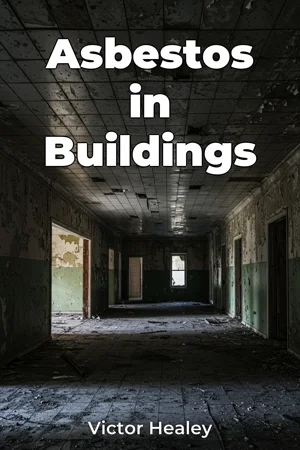
Are you aware that the building you occupy daily could pose a significant health risk? "Asbestos in Buildings" confronts this very real danger, providing a thorough understanding of asbestos, its presence in our built environment, and the crucial steps needed to manage and mitigate exposure. This book addresses two paramount concerns: the pervasive health risks associated with asbestos and the practical strategies for its safe management. These topics are vital because asbestos, once widely used in construction, continues to pose a threat due to its potential to cause serious respiratory illnesses, including mesothelioma and lung cancer. Understanding the dangers and knowing how to manage asbestos are critical for protecting public health. Historically, asbestos was prized for its fire-resistant and insulating properties, leading to its widespread use in building materials throughout the 20th century. However, the health risks associated with asbestos exposure became increasingly apparent, leading to regulations and restrictions in many countries. Despite these measures, asbestos remains present in numerous older buildings, posing an ongoing challenge for building owners, managers, and occupants. Prior knowledge of basic construction practices and common building materials will be beneficial but not essential for understanding the concepts presented. The central argument of "Asbestos in Buildings" is that proactive management and informed decision-making are essential for minimizing asbestos-related health risks. This book emphasizes that understanding the risks, identifying the presence of asbestos, and implementing appropriate control measures are crucial to safeguarding public health. The book begins by introducing asbestos, its properties, and its historical uses in construction. It then develops the following key areas: (1) the health risks associated with asbestos exposure, detailing the specific diseases it can cause and the factors that influence the likelihood of developing these conditions; (2) methods for identifying asbestos-containing materials (ACMs) in buildings, including visual inspection techniques and laboratory analysis; (3) strategies for managing asbestos in place, including encapsulation, enclosure, repair, and removal, with a focus on safety protocols and regulatory compliance. The content culminates in a discussion of long-term management plans and the importance of ongoing monitoring to ensure that asbestos-related risks remain minimized. The practical implications of this knowledge are highlighted through case studies and real-world examples, providing readers with actionable guidance. The book relies on a combination of scientific research, epidemiological studies, and regulatory guidelines to support its arguments. It draws upon data from public health organizations, government agencies, and industry experts to provide a comprehensive and evidence-based overview of asbestos risks and management strategies. "Asbestos in Buildings" connects to several other fields of study, including public health, environmental science, and occupational safety. These interdisciplinary connections enhance the book's argument by providing a holistic perspective on the challenges and solutions related to asbestos management. This book distinguishes itself through its practical focus and comprehensive coverage. It offers a step-by-step approach to identifying, assessing, and managing asbestos risks, making it a valuable resource for professionals and non-experts alike. The book adopts a clear and accessible writing style, making complex scientific and technical information understandable to a broad audience. The tone is informative and authoritative, reflecting the seriousness of the subject matter while remaining engaging and practical. The target audience includes building owners, property managers, facility maintenance personnel, contractors, environmental consultants, and public health officials. This book is valuable to anyone responsible for managing buildings containing asbestos or concerned about the health risks associated with asbestos exposure. As a work in the Health & Fitness, Public Health, and Health Fitness genres, "Asbestos in Buildings" adheres to the conventions of providing accurate, evidence-based information to promote health and well-being. The scope of the book is limited to asbestos in buildings, focusing on the identification, assessment, and management of ACMs within the built environment. It does not cover asbestos in other contexts, such as industrial settings or consumer products, in detail. The information in "Asbestos in Buildings" can be applied practically by readers to develop asbestos management plans, conduct risk assessments, implement control measures, and ensure regulatory compliance. It can also empower individuals to make informed decisions about their health and safety in environments where asbestos may be present. The book touches upon the ongoing debate surrounding the long-term health effects of low-level asbestos exposure and the appropriate methods for managing asbestos risks in different building types and settings.
Are you aware that the building you occupy daily could pose a significant health risk? "Asbestos in Buildings" confronts this very real danger, providing a thorough understanding of asbestos, its presence in our built environment, and the crucial steps needed to manage and mitigate exposure. This book addresses two paramount concerns: the pervasive health risks associated with asbestos and the practical strategies for its safe management. These topics are vital because asbestos, once widely used in construction, continues to pose a threat due to its potential to cause serious respiratory illnesses, including mesothelioma and lung cancer. Understanding the dangers and knowing how to manage asbestos are critical for protecting public health. Historically, asbestos was prized for its fire-resistant and insulating properties, leading to its widespread use in building materials throughout the 20th century. However, the health risks associated with asbestos exposure became increasingly apparent, leading to regulations and restrictions in many countries. Despite these measures, asbestos remains present in numerous older buildings, posing an ongoing challenge for building owners, managers, and occupants. Prior knowledge of basic construction practices and common building materials will be beneficial but not essential for understanding the concepts presented. The central argument of "Asbestos in Buildings" is that proactive management and informed decision-making are essential for minimizing asbestos-related health risks. This book emphasizes that understanding the risks, identifying the presence of asbestos, and implementing appropriate control measures are crucial to safeguarding public health. The book begins by introducing asbestos, its properties, and its historical uses in construction. It then develops the following key areas: (1) the health risks associated with asbestos exposure, detailing the specific diseases it can cause and the factors that influence the likelihood of developing these conditions; (2) methods for identifying asbestos-containing materials (ACMs) in buildings, including visual inspection techniques and laboratory analysis; (3) strategies for managing asbestos in place, including encapsulation, enclosure, repair, and removal, with a focus on safety protocols and regulatory compliance. The content culminates in a discussion of long-term management plans and the importance of ongoing monitoring to ensure that asbestos-related risks remain minimized. The practical implications of this knowledge are highlighted through case studies and real-world examples, providing readers with actionable guidance. The book relies on a combination of scientific research, epidemiological studies, and regulatory guidelines to support its arguments. It draws upon data from public health organizations, government agencies, and industry experts to provide a comprehensive and evidence-based overview of asbestos risks and management strategies. "Asbestos in Buildings" connects to several other fields of study, including public health, environmental science, and occupational safety. These interdisciplinary connections enhance the book's argument by providing a holistic perspective on the challenges and solutions related to asbestos management. This book distinguishes itself through its practical focus and comprehensive coverage. It offers a step-by-step approach to identifying, assessing, and managing asbestos risks, making it a valuable resource for professionals and non-experts alike. The book adopts a clear and accessible writing style, making complex scientific and technical information understandable to a broad audience. The tone is informative and authoritative, reflecting the seriousness of the subject matter while remaining engaging and practical. The target audience includes building owners, property managers, facility maintenance personnel, contractors, environmental consultants, and public health officials. This book is valuable to anyone responsible for managing buildings containing asbestos or concerned about the health risks associated with asbestos exposure. As a work in the Health & Fitness, Public Health, and Health Fitness genres, "Asbestos in Buildings" adheres to the conventions of providing accurate, evidence-based information to promote health and well-being. The scope of the book is limited to asbestos in buildings, focusing on the identification, assessment, and management of ACMs within the built environment. It does not cover asbestos in other contexts, such as industrial settings or consumer products, in detail. The information in "Asbestos in Buildings" can be applied practically by readers to develop asbestos management plans, conduct risk assessments, implement control measures, and ensure regulatory compliance. It can also empower individuals to make informed decisions about their health and safety in environments where asbestos may be present. The book touches upon the ongoing debate surrounding the long-term health effects of low-level asbestos exposure and the appropriate methods for managing asbestos risks in different building types and settings.
"Asbestos in Buildings" tackles the critical public health issue of asbestos exposure in our everyday environments. It highlights how asbestos, once a popular building material due to its fire-resistant properties, now poses significant health risks, including serious respiratory illnesses like mesothelioma. Understanding these dangers and implementing proactive management strategies are central to protecting public health. The book reveals the importance of identifying asbestos-containing materials (ACMs) through methods like visual inspections and laboratory analysis. It then progresses through strategies for managing asbestos, such as encapsulation, repair, and safe removal, always emphasizing safety protocols and regulatory compliance. The book uniquely combines scientific research and regulatory guidelines to offer actionable guidance for building owners, property managers, and anyone concerned about asbestos exposure. The practical approach of "Asbestos in Buildings" makes it an invaluable resource. It starts with an introduction to asbestos and its historical uses, then systematically explores health risks, identification techniques, and management strategies, culminating in long-term management plans. Case studies and real-world examples throughout the chapters further illustrate the book's concepts.
Book Details
ISBN
9788235228314
Publisher
Publifye AS
Your Licenses
You don't own any licenses for this book
Purchase a license below to unlock this book and download the EPUB.
Purchase License
Select a tier to unlock this book
Need bulk licensing?
Contact us for enterprise agreements.