
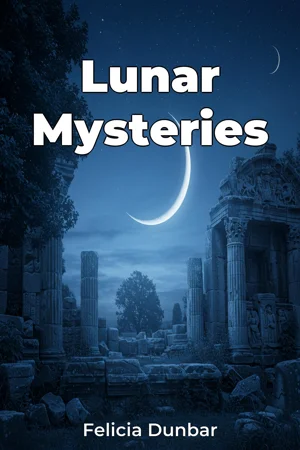
About This Book
For millennia, humanity has gazed upon the moon, attributing to it powers that shape our world and destinies. But how deeply has Earth's celestial companion influenced human culture, belief, and artistic expression across diverse civilizations and eras? This book, *Lunar Mysteries*, embarks on a comprehensive exploration of the moon's multifaceted role in shaping myths, religions, and literary traditions from ancient times to the present day. At the heart of *Lunar Mysteries* lie three fundamental themes: the moon as a symbol of cyclical change and renewal, its role in ancient religious practices and cosmological beliefs, and its enduring presence as muse and metaphor in literature. These themes are intrinsically linked, revealing a deep and persistent human fascination with the lunar orb. Each topic holds exceptional relevance, illustrating how celestial phenomena have consistently affected human interpretations of existence. To fully appreciate the moon's influence, *Lunar Mysteries* provides necessary context, delving into both the scientific aspects of lunar cycles and their correlation with early agricultural practices and timekeeping, alongside the diverse cultural interpretations that arose in societies around the globe. No prior scientific expertise is needed; the book presents astronomical concepts in an accessible manner, ensuring a broad readership can engage with the material. The central argument of *Lunar Mysteries* is that the moon, beyond its physical presence, has acted as a potent cultural catalyst, shaping the human psyche and prompting the development of complex belief systems and artistic endeavors. This assertion challenges purely materialistic interpretations of cultural history, highlighting the essential role of celestial observation in forging human understanding of the world and our place within it. *Lunar Mysteries* is structured to guide readers through a coherent journey of discovery. First, the book introduces the scientific properties of the moon and their observation by early civilizations. It then develops specific themes through dedicated chapters: the moon in ancient mythologies (examining lunar deities and their attributes across cultures); the moon's influence on religious rituals and festivals (exploring lunar calendars and sacred sites); and finally, the moon's representation in literature (analyzing lunar imagery and symbolism from epic poetry to modern novels). The book culminates by considering the enduring appeal of the moon in contemporary society, and the implications of renewed lunar exploration efforts. The evidence presented in *Lunar Mysteries* draws from a variety of sources, including archaeological findings, ancient texts, comparative mythology, and literary analysis. Unique data includes previously untranslated passages from ancient astronomical records and new interpretations of lunar symbolism in art. *Lunar Mysteries* connects to a rich tapestry of other disciplines. Firstly, archaeology, by incorporating findings from digs around the globe related to ancient lunar observatories and artifacts. Secondly, anthropology, by analyzing ritualistic lunar ceremonies and social structures. Finally, comparative literature, by examining literary motifs across different languages and cultures. The links between disciplines demonstrate how the study of the moon can lead to a more comprehensive understanding of human experience. A unique aspect of *Lunar Mysteries* is its comparative approach, contrasting lunar myths and rituals across geographically and culturally diverse societies, from ancient Mesopotamia and Egypt to pre-Columbian America and Oceania. This approach reveals both remarkable commonalities and striking differences in how the moon has been perceived and integrated into human life. The book adopts a professional yet engaging tone, balancing academic rigor with accessible writing. It uses a narrative non-fiction style, incorporating vivid descriptions and compelling anecdotes to make the information relatable and maintain reader interest. The target audience includes readers interested in science, mythology, religion, literature, and cultural history. *Lunar Mysteries* will appeal to anyone seeking a deeper understanding of humankind's long relationship with the moon. As a science and religion book, *Lunar Mysteries* addresses both factual and interpretive aspects, offering a balanced perspective on the moon's role in human life. The book's scope covers a wide range of cultures and historical periods but focuses primarily on civilizations with accessible documented records. The knowledge gained from reading *Lunar Mysteries* can inform current debates about space exploration, as well as influence contemporary artistic and spiritual expressions. The ongoing debates surrounding the interpretation of ancient myths and the influence of celestial events on historical outcomes are discussed, presenting differing viewpoints without advocating any specific theory.
For millennia, humanity has gazed upon the moon, attributing to it powers that shape our world and destinies. But how deeply has Earth's celestial companion influenced human culture, belief, and artistic expression across diverse civilizations and eras? This book, *Lunar Mysteries*, embarks on a comprehensive exploration of the moon's multifaceted role in shaping myths, religions, and literary traditions from ancient times to the present day. At the heart of *Lunar Mysteries* lie three fundamental themes: the moon as a symbol of cyclical change and renewal, its role in ancient religious practices and cosmological beliefs, and its enduring presence as muse and metaphor in literature. These themes are intrinsically linked, revealing a deep and persistent human fascination with the lunar orb. Each topic holds exceptional relevance, illustrating how celestial phenomena have consistently affected human interpretations of existence. To fully appreciate the moon's influence, *Lunar Mysteries* provides necessary context, delving into both the scientific aspects of lunar cycles and their correlation with early agricultural practices and timekeeping, alongside the diverse cultural interpretations that arose in societies around the globe. No prior scientific expertise is needed; the book presents astronomical concepts in an accessible manner, ensuring a broad readership can engage with the material. The central argument of *Lunar Mysteries* is that the moon, beyond its physical presence, has acted as a potent cultural catalyst, shaping the human psyche and prompting the development of complex belief systems and artistic endeavors. This assertion challenges purely materialistic interpretations of cultural history, highlighting the essential role of celestial observation in forging human understanding of the world and our place within it. *Lunar Mysteries* is structured to guide readers through a coherent journey of discovery. First, the book introduces the scientific properties of the moon and their observation by early civilizations. It then develops specific themes through dedicated chapters: the moon in ancient mythologies (examining lunar deities and their attributes across cultures); the moon's influence on religious rituals and festivals (exploring lunar calendars and sacred sites); and finally, the moon's representation in literature (analyzing lunar imagery and symbolism from epic poetry to modern novels). The book culminates by considering the enduring appeal of the moon in contemporary society, and the implications of renewed lunar exploration efforts. The evidence presented in *Lunar Mysteries* draws from a variety of sources, including archaeological findings, ancient texts, comparative mythology, and literary analysis. Unique data includes previously untranslated passages from ancient astronomical records and new interpretations of lunar symbolism in art. *Lunar Mysteries* connects to a rich tapestry of other disciplines. Firstly, archaeology, by incorporating findings from digs around the globe related to ancient lunar observatories and artifacts. Secondly, anthropology, by analyzing ritualistic lunar ceremonies and social structures. Finally, comparative literature, by examining literary motifs across different languages and cultures. The links between disciplines demonstrate how the study of the moon can lead to a more comprehensive understanding of human experience. A unique aspect of *Lunar Mysteries* is its comparative approach, contrasting lunar myths and rituals across geographically and culturally diverse societies, from ancient Mesopotamia and Egypt to pre-Columbian America and Oceania. This approach reveals both remarkable commonalities and striking differences in how the moon has been perceived and integrated into human life. The book adopts a professional yet engaging tone, balancing academic rigor with accessible writing. It uses a narrative non-fiction style, incorporating vivid descriptions and compelling anecdotes to make the information relatable and maintain reader interest. The target audience includes readers interested in science, mythology, religion, literature, and cultural history. *Lunar Mysteries* will appeal to anyone seeking a deeper understanding of humankind's long relationship with the moon. As a science and religion book, *Lunar Mysteries* addresses both factual and interpretive aspects, offering a balanced perspective on the moon's role in human life. The book's scope covers a wide range of cultures and historical periods but focuses primarily on civilizations with accessible documented records. The knowledge gained from reading *Lunar Mysteries* can inform current debates about space exploration, as well as influence contemporary artistic and spiritual expressions. The ongoing debates surrounding the interpretation of ancient myths and the influence of celestial events on historical outcomes are discussed, presenting differing viewpoints without advocating any specific theory.
"Lunar Mysteries" explores the profound impact of the Moon on human culture, religion, and artistic expression throughout history. The book uncovers how ancient civilizations perceived the Moon not just as a celestial body, but as a potent symbol of cyclical change, renewal, and even a divine entity. From influencing early agricultural practices and timekeeping to shaping religious rituals and mythological narratives, the Moon's presence is deeply interwoven with humanity's understanding of existence. Did you know that lunar calendars dictated the timing of sacred sites and festivals in numerous cultures? The book journeys through the scientific properties of the Moon and their early observations, before delving into specific themes. It examines lunar deities in ancient mythologies, explores the Moon's influence on religious rituals and festivals, and analyzes lunar imagery and symbolism in literature, from epic poetry to modern novels. By contrasting lunar myths and rituals across diverse societies like ancient Mesopotamia, pre-Columbian America, and Oceania, "Lunar Mysteries" reveals both commonalities and striking differences in how the Moon has been perceived. Ultimately, the book highlights the Moon's enduring appeal and its continuing influence on contemporary society, making it a valuable resource for those interested in the intersection of science, religion, and cultural history.
Book Details
ISBN
9788235228246
Publisher
Publifye AS
Your Licenses
You don't own any licenses for this book
Purchase a license below to unlock this book and download the EPUB.
Purchase License
Select a tier to unlock this book
Need bulk licensing?
Contact us for enterprise agreements.