
About This Book
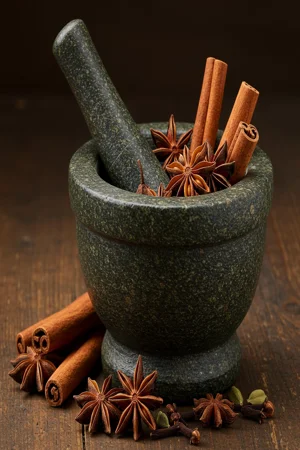
Have you ever considered the journey of the spices that flavor your food, tracing them back to their most fundamental preparation? "Spice Grinding Days" delves into the captivating history and culinary significance of preparing spices by hand, revealing its profound connection to traditional cuisines across generations. This book explores not only the methods but also the cultural importance of this largely forgotten craft. This book focuses on three principal themes: the historical evolution of spice preparation techniques, the cultural impact of hand-ground spices on traditional meals, and the sensory differences between hand-ground and commercially processed spices. Each of these elements is vital to understanding the broader story of how spices have shaped our culinary landscape. Historically, hand spice preparation was not merely a cooking task; it was a ritual deeply embedded in social and family structures. This book explores how different cultures developed unique tools and techniques, often passed down through generations, and how the advent of industrial spice processing gradually eroded this practice. Socially, the preparation of spices by hand was often a communal activity, strengthening bonds within families and communities. Scientifically, the book touches on the argument that hand grinding releases essential oils and aromas more effectively than industrial processes, contributing to a more profound sensory experience when consuming the dish. The central argument of “Spice Grinding Days” is that the shift from hand-prepared to commercially processed spices represents a significant loss of cultural heritage and sensory depth in our food. We maintain that the labor-intensive process of hand grinding unlocks nuances in flavor and aroma that are often absent in mass-produced spices. This argument aims to encourage a deeper appreciation and perhaps even a revival of traditional spice preparation methods. The book's structure unfolds in several parts. First, it introduces the main concepts of spice cultivation, trade routes that delivered spices across continents, and the basic tools used in hand grinding. The central chapters then examine specific regions and their unique spice blends and techniques, such as the garam masalas of India, the ras el hanout of Morocco, and the jerk seasonings of the Caribbean. These chapters will detail the ingredients, methods, and cultural significance of each spice blend, supported by historical accounts, culinary texts, and anthropological studies. The concluding chapter focuses on the practical implications of understanding this history, offering readers guidance on how to source quality spices, experiment with hand-grinding techniques, and incorporate this knowledge into their own cooking. The research presented draws from a variety of sources, including historical cookbooks, botanical records, trade documents, and interviews with culinary experts and individuals who still practice traditional spice preparation. Unique data sources include digitized archives of colonial-era spice trade records and ethnographic field notes documenting spice preparation rituals in remote communities. "Spice Grinding Days" connects to several other fields of study, including anthropology (examining the cultural significance of food rituals), botany (understanding the properties of spices), and economics (analyzing the impact of global trade on local culinary practices). These connections enhance the book's argument by providing a multi-faceted understanding of the subject matter. The book's unique approach lies in its blend of historical analysis, culinary exploration, and sensory appreciation. It seeks to bridge the gap between academic research and practical application, making the information accessible and relevant to a broad audience. The tone of the book is informative, engaging, and respectful of the cultural traditions it explores. The writing style aims to balance scholarly rigor with narrative flair, making the book both educational and enjoyable to read. The target audience includes food enthusiasts, culinary students, historians, and anyone interested in the cultural heritage of food. The book would be valuable to them as a resource for understanding the history, techniques, and sensory qualities of hand-prepared spices. As a work of culinary history, "Spice Grinding Days" adheres to the genre's conventions by providing detailed historical context, accurate descriptions of food preparation methods, and insightful analysis of the cultural significance of food. The scope of the book is intentionally broad, covering a range of spice preparation traditions from around the world. However, it is limited by its focus on hand grinding, excluding other methods of spice processing. The information in "Spice Grinding Days" can be applied practically by readers to enhance their culinary skills, deepen their understanding of food culture, and make more informed choices about the spices they use. While the book does not dwell on controversies, it acknowledges the ongoing debate about the impact of globalization on traditional food systems and the ethical considerations surrounding spice sourcing.
Have you ever considered the journey of the spices that flavor your food, tracing them back to their most fundamental preparation? "Spice Grinding Days" delves into the captivating history and culinary significance of preparing spices by hand, revealing its profound connection to traditional cuisines across generations. This book explores not only the methods but also the cultural importance of this largely forgotten craft. This book focuses on three principal themes: the historical evolution of spice preparation techniques, the cultural impact of hand-ground spices on traditional meals, and the sensory differences between hand-ground and commercially processed spices. Each of these elements is vital to understanding the broader story of how spices have shaped our culinary landscape. Historically, hand spice preparation was not merely a cooking task; it was a ritual deeply embedded in social and family structures. This book explores how different cultures developed unique tools and techniques, often passed down through generations, and how the advent of industrial spice processing gradually eroded this practice. Socially, the preparation of spices by hand was often a communal activity, strengthening bonds within families and communities. Scientifically, the book touches on the argument that hand grinding releases essential oils and aromas more effectively than industrial processes, contributing to a more profound sensory experience when consuming the dish. The central argument of “Spice Grinding Days” is that the shift from hand-prepared to commercially processed spices represents a significant loss of cultural heritage and sensory depth in our food. We maintain that the labor-intensive process of hand grinding unlocks nuances in flavor and aroma that are often absent in mass-produced spices. This argument aims to encourage a deeper appreciation and perhaps even a revival of traditional spice preparation methods. The book's structure unfolds in several parts. First, it introduces the main concepts of spice cultivation, trade routes that delivered spices across continents, and the basic tools used in hand grinding. The central chapters then examine specific regions and their unique spice blends and techniques, such as the garam masalas of India, the ras el hanout of Morocco, and the jerk seasonings of the Caribbean. These chapters will detail the ingredients, methods, and cultural significance of each spice blend, supported by historical accounts, culinary texts, and anthropological studies. The concluding chapter focuses on the practical implications of understanding this history, offering readers guidance on how to source quality spices, experiment with hand-grinding techniques, and incorporate this knowledge into their own cooking. The research presented draws from a variety of sources, including historical cookbooks, botanical records, trade documents, and interviews with culinary experts and individuals who still practice traditional spice preparation. Unique data sources include digitized archives of colonial-era spice trade records and ethnographic field notes documenting spice preparation rituals in remote communities. "Spice Grinding Days" connects to several other fields of study, including anthropology (examining the cultural significance of food rituals), botany (understanding the properties of spices), and economics (analyzing the impact of global trade on local culinary practices). These connections enhance the book's argument by providing a multi-faceted understanding of the subject matter. The book's unique approach lies in its blend of historical analysis, culinary exploration, and sensory appreciation. It seeks to bridge the gap between academic research and practical application, making the information accessible and relevant to a broad audience. The tone of the book is informative, engaging, and respectful of the cultural traditions it explores. The writing style aims to balance scholarly rigor with narrative flair, making the book both educational and enjoyable to read. The target audience includes food enthusiasts, culinary students, historians, and anyone interested in the cultural heritage of food. The book would be valuable to them as a resource for understanding the history, techniques, and sensory qualities of hand-prepared spices. As a work of culinary history, "Spice Grinding Days" adheres to the genre's conventions by providing detailed historical context, accurate descriptions of food preparation methods, and insightful analysis of the cultural significance of food. The scope of the book is intentionally broad, covering a range of spice preparation traditions from around the world. However, it is limited by its focus on hand grinding, excluding other methods of spice processing. The information in "Spice Grinding Days" can be applied practically by readers to enhance their culinary skills, deepen their understanding of food culture, and make more informed choices about the spices they use. While the book does not dwell on controversies, it acknowledges the ongoing debate about the impact of globalization on traditional food systems and the ethical considerations surrounding spice sourcing.
"Spice Grinding Days" explores the rich history and cultural significance of hand-ground spices, tracing their journey from cultivation to culinary use. It argues that the transition to commercially processed spices represents a loss of both cultural heritage and sensory experience. Did you know that hand grinding was once a deeply embedded social ritual? Or that many believe it unlocks essential oils and aromas more effectively than industrial methods? The book investigates the evolution of spice preparation techniques, the unique tools used, and the cultural impact on traditional meals. The book uniquely blends historical analysis with culinary exploration, presenting a multi-faceted understanding of spice preparation. Examining regions such as India, Morocco, and the Caribbean, the book details iconic spice blends like garam masala, ras el hanout, and jerk seasoning. Beginning with spice cultivation and trade routes, the book progresses to specific regional spice blends, concluding with practical guidance on sourcing quality spices and incorporating hand-grinding techniques into modern cooking. Exploring the sensory differences between hand-ground and commercially processed spices, "Spice Grinding Days" provides a valuable resource for food enthusiasts, culinary students, and anyone interested in the history of food. Drawing from historical cookbooks, trade documents, and interviews, it aims to foster a deeper appreciation for traditional spice preparation methods and their role in shaping our culinary landscape.
Book Details
ISBN
9788235228215
Publisher
Publifye AS
Your Licenses
You don't own any licenses for this book
Purchase a license below to unlock this book and download the EPUB.
Purchase License
Select a tier to unlock this book
Need bulk licensing?
Contact us for enterprise agreements.