
About This Book
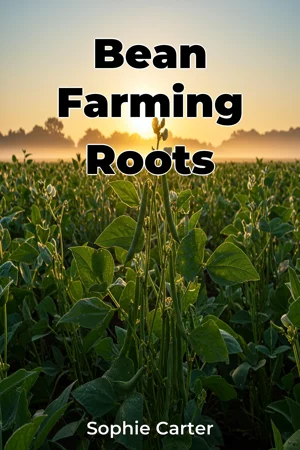
How did a humble legume become a cornerstone of rural diets and agricultural practices? "Bean Farming Roots" delves into the rich history and complex biology of bean cultivation, tracing its evolution from ancient farming techniques to its indispensable role in the sustenance of rural families worldwide. This book explores the multifaceted significance of beans, offering a comprehensive perspective that integrates historical context, scientific insights, and practical applications. This book primarily covers the origins of bean cultivation, the biological aspects of bean plants, and the historical dietary reliance on beans within rural communities. These topics are significant due to their impact on food security, agricultural biodiversity, and the long-term health of communities. Understanding bean cultivation practices offers insights into sustainable farming and historical adaptations to environmental changes. From the earliest archaeological evidence of bean domestication in the Americas to the spread of various bean species across continents, historical context provides the foundation for understanding modern bean farming. The book also incorporates the basic botany and genetics of beans, including their nitrogen-fixing capabilities and nutritional profiles. Readers will gain a foundational understanding of plant biology and agricultural history. The central argument of "Bean Farming Roots" asserts that the cultivation and consumption of beans are inextricably linked to the resilience and dietary stability of rural communities. This argument is critical because it emphasizes the often-overlooked importance of traditional crops in addressing global food security challenges and promoting sustainable agriculture. The book is structured to guide readers through a cohesive exploration of bean cultivation. It opens with an introduction to the origins and early domestication of beans, setting the stage for understanding their historical significance. Following this, the book examines the biological characteristics that make beans a valuable crop, including their ability to enrich soil through nitrogen fixation. Major sections cover the historical spread of bean farming, the role of beans in traditional diets, and the evolution of farming techniques. The ideas culminate in a discussion of modern challenges and opportunities for bean cultivation, including climate change adaptation and promoting biodiversity. The conclusion explores practical applications, such as improving bean yields in smallholder farms and leveraging beans in nutrition programs. The evidence presented in "Bean Farming Roots" is drawn from archaeological findings, botanical studies, historical records, and nutritional analyses. Data from agricultural research institutions worldwide is examined, in addition to case studies of specific rural communities that rely heavily on beans as a staple food. "Bean Farming Roots" connects to several other fields, including anthropology, economics, and environmental science. Anthropological insights illuminate the cultural significance of beans in different societies. Economic analysis explores the role of bean farming in rural livelihoods. Environmental science provides a framework for understanding the ecological impacts of bean cultivation. This book adopts a multidisciplinary approach, combining historical analysis with biological and agricultural science to offer a comprehensive understanding of bean cultivation. It emphasizes the importance of preserving agricultural biodiversity and supporting traditional farming practices. Written in an accessible yet informative style, "Bean Farming Roots" is intended for a broad audience, including students, researchers, agricultural professionals, and anyone interested in food history or sustainable farming. The book provides valuable insights for those seeking a deeper understanding of the relationship between agriculture, nutrition, and rural livelihoods. Aligning with the conventions of non-fiction works in biology, life sciences, and history, this book provides rigorous research, clear explanations, and compelling storytelling. The scope of "Bean Farming Roots" is intentionally broad, encompassing the global history of bean cultivation. However, it focuses primarily on the dietary role of beans in rural communities, with less emphasis on large-scale commercial bean production. The information in "Bean Farming Roots" can be applied practically to improve bean yields, enhance soil fertility, and promote nutritional security. The book highlights sustainable farming practices that can be adopted by smallholder farmers. While the benefits of bean consumption are generally accepted, the ongoing debates about sustainable agricultural practices are addressed, as well as the challenges of balancing traditional farming methods with modern agricultural technologies.
How did a humble legume become a cornerstone of rural diets and agricultural practices? "Bean Farming Roots" delves into the rich history and complex biology of bean cultivation, tracing its evolution from ancient farming techniques to its indispensable role in the sustenance of rural families worldwide. This book explores the multifaceted significance of beans, offering a comprehensive perspective that integrates historical context, scientific insights, and practical applications. This book primarily covers the origins of bean cultivation, the biological aspects of bean plants, and the historical dietary reliance on beans within rural communities. These topics are significant due to their impact on food security, agricultural biodiversity, and the long-term health of communities. Understanding bean cultivation practices offers insights into sustainable farming and historical adaptations to environmental changes. From the earliest archaeological evidence of bean domestication in the Americas to the spread of various bean species across continents, historical context provides the foundation for understanding modern bean farming. The book also incorporates the basic botany and genetics of beans, including their nitrogen-fixing capabilities and nutritional profiles. Readers will gain a foundational understanding of plant biology and agricultural history. The central argument of "Bean Farming Roots" asserts that the cultivation and consumption of beans are inextricably linked to the resilience and dietary stability of rural communities. This argument is critical because it emphasizes the often-overlooked importance of traditional crops in addressing global food security challenges and promoting sustainable agriculture. The book is structured to guide readers through a cohesive exploration of bean cultivation. It opens with an introduction to the origins and early domestication of beans, setting the stage for understanding their historical significance. Following this, the book examines the biological characteristics that make beans a valuable crop, including their ability to enrich soil through nitrogen fixation. Major sections cover the historical spread of bean farming, the role of beans in traditional diets, and the evolution of farming techniques. The ideas culminate in a discussion of modern challenges and opportunities for bean cultivation, including climate change adaptation and promoting biodiversity. The conclusion explores practical applications, such as improving bean yields in smallholder farms and leveraging beans in nutrition programs. The evidence presented in "Bean Farming Roots" is drawn from archaeological findings, botanical studies, historical records, and nutritional analyses. Data from agricultural research institutions worldwide is examined, in addition to case studies of specific rural communities that rely heavily on beans as a staple food. "Bean Farming Roots" connects to several other fields, including anthropology, economics, and environmental science. Anthropological insights illuminate the cultural significance of beans in different societies. Economic analysis explores the role of bean farming in rural livelihoods. Environmental science provides a framework for understanding the ecological impacts of bean cultivation. This book adopts a multidisciplinary approach, combining historical analysis with biological and agricultural science to offer a comprehensive understanding of bean cultivation. It emphasizes the importance of preserving agricultural biodiversity and supporting traditional farming practices. Written in an accessible yet informative style, "Bean Farming Roots" is intended for a broad audience, including students, researchers, agricultural professionals, and anyone interested in food history or sustainable farming. The book provides valuable insights for those seeking a deeper understanding of the relationship between agriculture, nutrition, and rural livelihoods. Aligning with the conventions of non-fiction works in biology, life sciences, and history, this book provides rigorous research, clear explanations, and compelling storytelling. The scope of "Bean Farming Roots" is intentionally broad, encompassing the global history of bean cultivation. However, it focuses primarily on the dietary role of beans in rural communities, with less emphasis on large-scale commercial bean production. The information in "Bean Farming Roots" can be applied practically to improve bean yields, enhance soil fertility, and promote nutritional security. The book highlights sustainable farming practices that can be adopted by smallholder farmers. While the benefits of bean consumption are generally accepted, the ongoing debates about sustainable agricultural practices are addressed, as well as the challenges of balancing traditional farming methods with modern agricultural technologies.
"Bean Farming Roots" explores the fascinating journey of beans, from their ancient origins to their crucial role in sustaining rural communities. This book uncovers the intertwined history and biology of bean cultivation, revealing how this humble legume has become a cornerstone of diets worldwide. Readers will discover intriguing facts, such as beans' remarkable ability to enrich soil through nitrogen fixation, a process vital for sustainable farming. The narrative emphasizes the historical context, scientific insights, and practical applications of bean cultivation. The book uniquely highlights beans' significance in promoting food security and agricultural biodiversity, particularly within rural communities. It delves into the domestication of beans in the Americas and their subsequent spread across continents, illustrating how different cultures have adapted bean farming to suit their needs. By integrating historical records, botanical studies, and nutritional analyses, "Bean Farming Roots" provides a comprehensive understanding of the role beans have played in shaping rural diets and agricultural practices. The book progresses systematically, beginning with the origins and early domestication of beans. It then explores their biological characteristics, historical spread, and the evolution of farming techniques. The culmination is a discussion of modern challenges and opportunities, including climate change adaptation and promoting biodiversity. This multidisciplinary approach connects fields like anthropology, economics, and environmental science, offering a valuable resource for anyone interested in agricultural history, plant biology, or sustainable farming.
Book Details
ISBN
9788235228123
Publisher
Publifye AS
Your Licenses
You don't own any licenses for this book
Purchase a license below to unlock this book and download the EPUB.
Purchase License
Select a tier to unlock this book
Need bulk licensing?
Contact us for enterprise agreements.