
About This Book
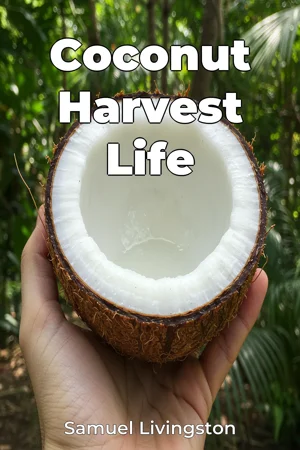
How can a single fruit sustain life and culture? "Coconut Harvest Life" explores this very question, delving deep into the biology, cultivation, and culinary uses of the coconut, particularly within the context of tropical family diets. This book is vital because it illuminates the often-overlooked significance of this resource, providing a comprehensive understanding of its nutritional value and environmental impact. We begin by establishing the coconut's place in tropical ecosystems and human societies, tracing its dispersal patterns and its historical role as a staple food. Foundational botanical knowledge regarding coconut palm taxonomy, growth cycles, and fruit development will be provided, equipping the reader to understand the coconut's unique biological characteristics. The book argues that the coconut is not merely a food source but a cornerstone of sustainable living in many tropical regions, a thesis supported by examining its multifaceted applications. The book unfolds in three major sections. The first section introduces the coconut palm: its biology, cultivation, and global distribution. It details the diverse varieties of coconut palms, optimal growing conditions, and traditional harvesting techniques. The second section explores the nutritional profile of the coconut, breaking down its components—water, meat, milk, and oil—and detailing the role of each in a balanced diet. This section will also discuss the science behind saturated fats in coconut oil and explore the ongoing debates surrounding its health benefits. The final section focuses on culinary applications, providing a wide range of recipes and cooking techniques that utilize every part of the coconut, from the husk to the water. Supporting this exploration are diverse research sources, including botanical studies, nutritional analyses, and ethnographic research on traditional coconut-based diets. We synthesize data from agricultural reports, peer-reviewed scientific articles, and firsthand accounts from communities where coconuts are central to their livelihoods. This transdisciplinary approach examines the interconnectedness of biology, culture, and sustainable food practices. "Coconut Harvest Life" bridges the gap between the fields of biology, nutritional science, and culinary arts. It considers ethnobotany, exploring the cultural significance and traditional uses of coconuts across different tropical regions. Furthermore, it intersects with sustainability studies, examining the environmental impact of coconut farming and promoting responsible harvesting practices. What sets this book apart is its holistic approach, integrating scientific rigor with practical knowledge. It emphasizes sustainable practices, nutritional awareness, and culinary creativity, offering readers a comprehensive understanding of the coconut's potential. This book maintains an accessible and engaging style, designed to appeal to a broad audience, from students and researchers to home cooks and health enthusiasts. The book targets readers interested in botany, nutrition, sustainable agriculture, and tropical cuisine. It offers valuable insights for those seeking a deeper understanding of this vital resource and its role in supporting healthy diets and vibrant communities. This exploration of the coconut aligns with the conventions of popular science writing, blending scientific accuracy with practical applications and cultural insights. The scope of this book is intentionally focused on the coconut's role in tropical family diets and sustainable living. It is not intended as a comprehensive treatise on global commodity markets or industrial applications of coconut products, apart from their impact on sustainable living, allowing a concentrated discussion of aspects most relevant to individual health. The knowledge included in this book can be practically applied by readers to make informed dietary choices, support sustainable coconut farming practices, and explore new and innovative coconut-based recipes. The discussion of saturated fats in coconut oil acknowledges existing controversies and presents a balanced perspective based on current scientific evidence. It refrains from making definitive claims, instead encouraging readers to consult with healthcare professionals for personalized dietary advice.
How can a single fruit sustain life and culture? "Coconut Harvest Life" explores this very question, delving deep into the biology, cultivation, and culinary uses of the coconut, particularly within the context of tropical family diets. This book is vital because it illuminates the often-overlooked significance of this resource, providing a comprehensive understanding of its nutritional value and environmental impact. We begin by establishing the coconut's place in tropical ecosystems and human societies, tracing its dispersal patterns and its historical role as a staple food. Foundational botanical knowledge regarding coconut palm taxonomy, growth cycles, and fruit development will be provided, equipping the reader to understand the coconut's unique biological characteristics. The book argues that the coconut is not merely a food source but a cornerstone of sustainable living in many tropical regions, a thesis supported by examining its multifaceted applications. The book unfolds in three major sections. The first section introduces the coconut palm: its biology, cultivation, and global distribution. It details the diverse varieties of coconut palms, optimal growing conditions, and traditional harvesting techniques. The second section explores the nutritional profile of the coconut, breaking down its components—water, meat, milk, and oil—and detailing the role of each in a balanced diet. This section will also discuss the science behind saturated fats in coconut oil and explore the ongoing debates surrounding its health benefits. The final section focuses on culinary applications, providing a wide range of recipes and cooking techniques that utilize every part of the coconut, from the husk to the water. Supporting this exploration are diverse research sources, including botanical studies, nutritional analyses, and ethnographic research on traditional coconut-based diets. We synthesize data from agricultural reports, peer-reviewed scientific articles, and firsthand accounts from communities where coconuts are central to their livelihoods. This transdisciplinary approach examines the interconnectedness of biology, culture, and sustainable food practices. "Coconut Harvest Life" bridges the gap between the fields of biology, nutritional science, and culinary arts. It considers ethnobotany, exploring the cultural significance and traditional uses of coconuts across different tropical regions. Furthermore, it intersects with sustainability studies, examining the environmental impact of coconut farming and promoting responsible harvesting practices. What sets this book apart is its holistic approach, integrating scientific rigor with practical knowledge. It emphasizes sustainable practices, nutritional awareness, and culinary creativity, offering readers a comprehensive understanding of the coconut's potential. This book maintains an accessible and engaging style, designed to appeal to a broad audience, from students and researchers to home cooks and health enthusiasts. The book targets readers interested in botany, nutrition, sustainable agriculture, and tropical cuisine. It offers valuable insights for those seeking a deeper understanding of this vital resource and its role in supporting healthy diets and vibrant communities. This exploration of the coconut aligns with the conventions of popular science writing, blending scientific accuracy with practical applications and cultural insights. The scope of this book is intentionally focused on the coconut's role in tropical family diets and sustainable living. It is not intended as a comprehensive treatise on global commodity markets or industrial applications of coconut products, apart from their impact on sustainable living, allowing a concentrated discussion of aspects most relevant to individual health. The knowledge included in this book can be practically applied by readers to make informed dietary choices, support sustainable coconut farming practices, and explore new and innovative coconut-based recipes. The discussion of saturated fats in coconut oil acknowledges existing controversies and presents a balanced perspective based on current scientific evidence. It refrains from making definitive claims, instead encouraging readers to consult with healthcare professionals for personalized dietary advice.
"Coconut Harvest Life" explores the multifaceted role of the coconut, revealing how this single fruit sustains life, culture, and tropical family diets. The book delves into the coconut's biology, cultivation, and culinary uses, showcasing its significance as a cornerstone of sustainable living. Did you know that the coconut palm's dispersal patterns have shaped ecosystems and human societies across the tropics? The book argues that the coconut is more than just a food source; it's a vital component of balanced nutrition and responsible environmental practices, providing a comprehensive understanding of its nutritional value and its impact on sustainable agriculture. The book takes a distinctive approach, bridging the gap between biology, nutritional science, and culinary arts, making it valuable for both students and home cooks. It begins by establishing the coconut's place in tropical ecosystems, then explores its nutritional profile, breaking down the benefits of coconut water, meat, milk, and oil. Finally, the journey ends with a showcase of culinary applications, offering a wide range of coconut recipes and cooking techniques. This approach ensures an accessible and engaging style, making complex concepts understandable for a broad audience interested in botany, health, and tropical diets. The journey through "Coconut Harvest Life" progresses in three well-defined sections, starting with an introduction to the coconut palm's biology and global distribution, moving into a detailed analysis of its nutritional components, and culminating in a celebration of its culinary versatility. This structure allows readers to appreciate the coconut's potential for informed dietary choices, sustainable coconut farming practices, and innovative cooking.
Book Details
ISBN
9788235228079
Publisher
Publifye AS
Your Licenses
You don't own any licenses for this book
Purchase a license below to unlock this book and download the EPUB.
Purchase License
Select a tier to unlock this book
Need bulk licensing?
Contact us for enterprise agreements.