
About This Book
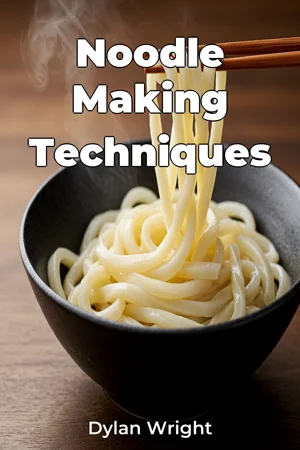
Have you ever considered the subtle yet profound differences that separate a strand of hand-pulled Lanzhou ramen from a perfectly al dente fettuccine, or the delicate chew of udon? "Noodle Making Techniques" embarks on a global culinary journey to explore the art and science behind three distinct noodle-making traditions: Chinese, Italian, and Japanese. This book delves into the nuanced techniques of hand-pulling, cutting, and extrusion, revealing how these processes shape the texture, flavor, and cultural significance of noodles across diverse culinary landscapes. These traditions are significant not only for their culinary applications, but also for what they reveal about cultural history, food science, and the evolution of human craftsmanship. This book provides a rich historical and cultural context, tracing the origins of noodles in each tradition, examining the social significance of noodle consumption, and detailing how these techniques have evolved over centuries. It requires no prior advanced culinary knowledge, explaining basic concepts of dough chemistry and gluten development in accessible language. The central argument of "Noodle Making Techniques" is that while the fundamental ingredients of flour, water, and salt remain consistent, the artistry lies in the manipulation of these elements through distinct techniques, resulting in vastly different sensory experiences and cultural meanings. Understanding the nuances of each technique empowers cooks and food enthusiasts to appreciate the depth and complexity of global noodle traditions. The book is structured to provide a comprehensive understanding of noodle making. It begins with an introduction to the basic principles of dough formation and the role of ingredients. The core of the book is divided into three sections, each dedicated to one of the featured noodle traditions: Chinese, Italian, and Japanese. Each section explores the specific techniques employed (hand-pulling, cutting, and extrusion, respectively), detailing the tools, ingredients, and processes involved. Real-world applications follow, providing adaptable recipies. Each major section discusses not only the dominant method of preparation, but also addresses the variations within. The final chapter culminates in a comparative analysis, highlighting the similarities and differences between the traditions. The book draws upon a combination of historical texts, culinary research, and interviews with master noodle makers. Detailed photographic documentation illustrates the techniques, while scientific explanations clarify the chemical and physical processes at play. This includes observations of gluten formation, starch gelatinization, and the impact of different flours and hydration levels. "Noodle Making Techniques" connects culinary arts with food science and cultural anthropology. The mechanics of gluten development link to chemistry, the historical evolution of noodle dishes connects to cultural studies, and the sensory perception of texture and flavor connects to sensory science. By exploring these interdisciplinary connections, the book enriches the reader's understanding of noodles beyond mere sustenance. A unique aspect of this book is its comprehensive, comparative approach. While many resources focus on individual noodle traditions, this book brings them into dialogue, highlighting both their shared heritage and their distinct characteristics. It delves into the science behind the practices. The tone is informative and engaging with clear, concise language and detailed explanations. It aims for accessibility without sacrificing accuracy. The target audience includes home cooks, culinary students, food enthusiasts, and anyone interested in the intersection of food, culture, and science. Readers will gain a deeper appreciation for the craftsmanship involved in noodle making and the cultural significance of this globally beloved food. As a work of culinary non-fiction, "Noodle Making Techniques" adheres to the conventions of accurate sourcing, clear explanations, and practical application. It provides verifiable information, tested recipes, and step-by-step instructions. The scope of the book is limited to hand-pulled, cut, and extruded noodles within the Chinese, Italian, and Japanese traditions. It does acknowledge other noodle traditions, but focuses on these three for in-depth analysis. The knowledge gained from this book can be applied directly in the kitchen, allowing readers to experiment with different techniques and develop their own noodle-making skills. It also informs a greater appreciation for the diverse culinary landscape. While the fundamental techniques of noodle making are generally well-established, there may be ongoing debates regarding the optimal ingredients, hydration levels, or cooking times for specific noodle types. The book acknowledges these debates and presents a balanced perspective, drawing upon both traditional wisdom and scientific research.
Have you ever considered the subtle yet profound differences that separate a strand of hand-pulled Lanzhou ramen from a perfectly al dente fettuccine, or the delicate chew of udon? "Noodle Making Techniques" embarks on a global culinary journey to explore the art and science behind three distinct noodle-making traditions: Chinese, Italian, and Japanese. This book delves into the nuanced techniques of hand-pulling, cutting, and extrusion, revealing how these processes shape the texture, flavor, and cultural significance of noodles across diverse culinary landscapes. These traditions are significant not only for their culinary applications, but also for what they reveal about cultural history, food science, and the evolution of human craftsmanship. This book provides a rich historical and cultural context, tracing the origins of noodles in each tradition, examining the social significance of noodle consumption, and detailing how these techniques have evolved over centuries. It requires no prior advanced culinary knowledge, explaining basic concepts of dough chemistry and gluten development in accessible language. The central argument of "Noodle Making Techniques" is that while the fundamental ingredients of flour, water, and salt remain consistent, the artistry lies in the manipulation of these elements through distinct techniques, resulting in vastly different sensory experiences and cultural meanings. Understanding the nuances of each technique empowers cooks and food enthusiasts to appreciate the depth and complexity of global noodle traditions. The book is structured to provide a comprehensive understanding of noodle making. It begins with an introduction to the basic principles of dough formation and the role of ingredients. The core of the book is divided into three sections, each dedicated to one of the featured noodle traditions: Chinese, Italian, and Japanese. Each section explores the specific techniques employed (hand-pulling, cutting, and extrusion, respectively), detailing the tools, ingredients, and processes involved. Real-world applications follow, providing adaptable recipies. Each major section discusses not only the dominant method of preparation, but also addresses the variations within. The final chapter culminates in a comparative analysis, highlighting the similarities and differences between the traditions. The book draws upon a combination of historical texts, culinary research, and interviews with master noodle makers. Detailed photographic documentation illustrates the techniques, while scientific explanations clarify the chemical and physical processes at play. This includes observations of gluten formation, starch gelatinization, and the impact of different flours and hydration levels. "Noodle Making Techniques" connects culinary arts with food science and cultural anthropology. The mechanics of gluten development link to chemistry, the historical evolution of noodle dishes connects to cultural studies, and the sensory perception of texture and flavor connects to sensory science. By exploring these interdisciplinary connections, the book enriches the reader's understanding of noodles beyond mere sustenance. A unique aspect of this book is its comprehensive, comparative approach. While many resources focus on individual noodle traditions, this book brings them into dialogue, highlighting both their shared heritage and their distinct characteristics. It delves into the science behind the practices. The tone is informative and engaging with clear, concise language and detailed explanations. It aims for accessibility without sacrificing accuracy. The target audience includes home cooks, culinary students, food enthusiasts, and anyone interested in the intersection of food, culture, and science. Readers will gain a deeper appreciation for the craftsmanship involved in noodle making and the cultural significance of this globally beloved food. As a work of culinary non-fiction, "Noodle Making Techniques" adheres to the conventions of accurate sourcing, clear explanations, and practical application. It provides verifiable information, tested recipes, and step-by-step instructions. The scope of the book is limited to hand-pulled, cut, and extruded noodles within the Chinese, Italian, and Japanese traditions. It does acknowledge other noodle traditions, but focuses on these three for in-depth analysis. The knowledge gained from this book can be applied directly in the kitchen, allowing readers to experiment with different techniques and develop their own noodle-making skills. It also informs a greater appreciation for the diverse culinary landscape. While the fundamental techniques of noodle making are generally well-established, there may be ongoing debates regarding the optimal ingredients, hydration levels, or cooking times for specific noodle types. The book acknowledges these debates and presents a balanced perspective, drawing upon both traditional wisdom and scientific research.
"Noodle Making Techniques" explores the global culinary traditions of Chinese, Italian, and Japanese noodle making, revealing the art and science behind each culture's unique approach. It delves into hand-pulled, cut, and extruded noodle techniques, highlighting how these processes affect texture, flavor, and cultural significance. For example, the subtle differences between hand-pulled Lanzhou ramen and al dente fettuccine showcase the impact of technique. The book journeys through history, tracing the origins of noodles and their cultural importance, while explaining dough chemistry and gluten development in simple terms. Each section focuses on a specific tradition, detailing the tools, ingredients, and processes involved. It begins with basic principles of dough formation, progresses through individual techniques and recipes, and culminates in a comparative analysis of the three traditions. This approach allows readers to appreciate both the shared heritage and distinct characteristics of noodle making across cultures.
Book Details
ISBN
9788235228000
Publisher
Publifye AS
Your Licenses
You don't own any licenses for this book
Purchase a license below to unlock this book and download the EPUB.
Purchase License
Select a tier to unlock this book
Need bulk licensing?
Contact us for enterprise agreements.