
About This Book
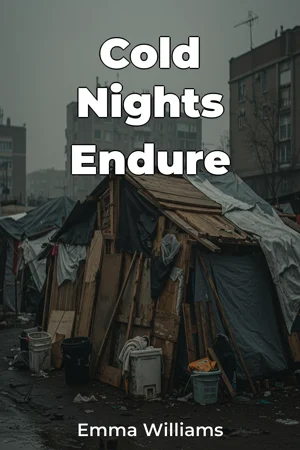
Imagine facing each day without shelter, food, or security. *Cold Nights Endure* explores not only the harsh realities of homelessness but also the profound ingenuity and unwavering mutual support that emerge within these challenging circumstances. This is a journey into the lives of those who navigate survival on the streets, revealing their resourcefulness and the unexpected communities they build. This book delves into three key themes: the practical strategies employed for day-to-day survival, the intricate social networks formed among the unhoused, and the psychological resilience required to endure persistent adversity. Understanding these themes is vital, as homelessness is not merely a state of lacking housing; it is a complex social issue demanding multifaceted understanding and innovative solutions. It is a condition affecting individuals from all walks of life, often stemming from systemic failures and personal crises, making it imperative that society comprehends and addresses the root causes. *Cold Nights Endure* draws upon extensive fieldwork, first-person accounts, and sociological research to paint an accurate picture of life without stable housing. It examines the historical context of homelessness, tracing its evolution from earlier notions of vagrancy to its modern manifestations, influenced by economic shifts, housing policies, and mental health care access. The central argument presented in *Cold Nights Endure* is that the experience of homelessness fosters unique forms of innovation and cooperation born out of necessity. It challenges conventional perceptions of the unhoused as passive victims, instead presenting them as active agents shaping their own survival and support systems. This argument is significant because it demands a shift in societal attitudes and policy approaches, advocating for solutions that recognize and build upon the inherent strengths and resourcefulness of the homeless population. The book unfolds in a structured manner. It begins by introducing key concepts such as "street economics"—the informal economies that develop among the unhoused—and "makeshift shelter," analyzing the diverse and often ingenious ways people create temporary dwellings. The second section explores the development of social bonds, detailing how shared experiences and mutual reliance foster strong communities, including collaborative strategies for obtaining food, finding safe places to sleep, and navigating the bureaucratic systems. The book culminates by examining the psychological toll of homelessness, discussing coping mechanisms, resilience, and the ongoing search for dignity and self-worth, while also offering practical implications for social workers, policymakers, and anyone seeking to understand and assist those experiencing homelessness. Evidence presented will include direct observation of survival strategies, in-depth interviews with individuals experiencing homelessness, and analysis of social service data. Unique data sources will include detailed maps of informal support networks within homeless communities. The book intersects with several fields, including sociology, psychology, and urban planning. Sociological insights help understand the social structures and interactions within homeless communities. Psychological perspectives shed light on the mental health challenges and resilience strategies. Urban planning considerations focus on how city design and policies impact the lives of the unhoused. These interdisciplinary connections enhance the book's argument by providing a holistic view of the complexities of homelessness. *Cold Nights Endure* adopts a narrative non-fiction style, blending factual reporting with personal stories to create an engaging and empathetic reading experience. The intended audience includes students in social sciences, social workers, policymakers, and anyone interested in gaining a deeper understanding of homelessness. The book’s value lies in its ability to humanize a marginalized population and offer insights into how communities form and thrive even under the most adverse conditions. The scope of *Cold Nights Endure* is intentionally focused on the lived experiences of homelessness in contemporary urban settings. While it acknowledges the broader systemic issues contributing to homelessness, it primarily aims to provide an intimate portrayal of survival and mutual aid. The book acknowledges that homelessness is not a monolithic experience and strives to represent a diversity of perspectives and backgrounds within the unhoused population. Information presented can be applied to inform more effective social policies, improve the design of homeless services, and foster greater empathy and understanding within communities. By highlighting the ingenuity and resilience of those experiencing homelessness, *Cold Nights Endure* seeks to inspire innovative solutions and promote a more just and compassionate society.
Imagine facing each day without shelter, food, or security. *Cold Nights Endure* explores not only the harsh realities of homelessness but also the profound ingenuity and unwavering mutual support that emerge within these challenging circumstances. This is a journey into the lives of those who navigate survival on the streets, revealing their resourcefulness and the unexpected communities they build. This book delves into three key themes: the practical strategies employed for day-to-day survival, the intricate social networks formed among the unhoused, and the psychological resilience required to endure persistent adversity. Understanding these themes is vital, as homelessness is not merely a state of lacking housing; it is a complex social issue demanding multifaceted understanding and innovative solutions. It is a condition affecting individuals from all walks of life, often stemming from systemic failures and personal crises, making it imperative that society comprehends and addresses the root causes. *Cold Nights Endure* draws upon extensive fieldwork, first-person accounts, and sociological research to paint an accurate picture of life without stable housing. It examines the historical context of homelessness, tracing its evolution from earlier notions of vagrancy to its modern manifestations, influenced by economic shifts, housing policies, and mental health care access. The central argument presented in *Cold Nights Endure* is that the experience of homelessness fosters unique forms of innovation and cooperation born out of necessity. It challenges conventional perceptions of the unhoused as passive victims, instead presenting them as active agents shaping their own survival and support systems. This argument is significant because it demands a shift in societal attitudes and policy approaches, advocating for solutions that recognize and build upon the inherent strengths and resourcefulness of the homeless population. The book unfolds in a structured manner. It begins by introducing key concepts such as "street economics"—the informal economies that develop among the unhoused—and "makeshift shelter," analyzing the diverse and often ingenious ways people create temporary dwellings. The second section explores the development of social bonds, detailing how shared experiences and mutual reliance foster strong communities, including collaborative strategies for obtaining food, finding safe places to sleep, and navigating the bureaucratic systems. The book culminates by examining the psychological toll of homelessness, discussing coping mechanisms, resilience, and the ongoing search for dignity and self-worth, while also offering practical implications for social workers, policymakers, and anyone seeking to understand and assist those experiencing homelessness. Evidence presented will include direct observation of survival strategies, in-depth interviews with individuals experiencing homelessness, and analysis of social service data. Unique data sources will include detailed maps of informal support networks within homeless communities. The book intersects with several fields, including sociology, psychology, and urban planning. Sociological insights help understand the social structures and interactions within homeless communities. Psychological perspectives shed light on the mental health challenges and resilience strategies. Urban planning considerations focus on how city design and policies impact the lives of the unhoused. These interdisciplinary connections enhance the book's argument by providing a holistic view of the complexities of homelessness. *Cold Nights Endure* adopts a narrative non-fiction style, blending factual reporting with personal stories to create an engaging and empathetic reading experience. The intended audience includes students in social sciences, social workers, policymakers, and anyone interested in gaining a deeper understanding of homelessness. The book’s value lies in its ability to humanize a marginalized population and offer insights into how communities form and thrive even under the most adverse conditions. The scope of *Cold Nights Endure* is intentionally focused on the lived experiences of homelessness in contemporary urban settings. While it acknowledges the broader systemic issues contributing to homelessness, it primarily aims to provide an intimate portrayal of survival and mutual aid. The book acknowledges that homelessness is not a monolithic experience and strives to represent a diversity of perspectives and backgrounds within the unhoused population. Information presented can be applied to inform more effective social policies, improve the design of homeless services, and foster greater empathy and understanding within communities. By highlighting the ingenuity and resilience of those experiencing homelessness, *Cold Nights Endure* seeks to inspire innovative solutions and promote a more just and compassionate society.
*Cold Nights Endure* offers an in-depth exploration of homelessness, revealing not just the hardships but also the remarkable resourcefulness and mutual support found within unhoused communities. It delves into the daily survival strategies, intricate social networks, and the psychological resilience essential for those living on the streets. The book highlights how street economics and makeshift shelters become integral parts of life, showcasing the active roles individuals take in shaping their own survival. The narrative progresses from examining the practical aspects of living without stable housing, such as finding food and creating shelter, to exploring the deep social bonds formed through shared experiences. It also addresses the psychological toll of homelessness, emphasizing coping mechanisms and the persistent search for dignity. Challenging conventional perceptions, *Cold Nights Endure* presents the unhoused not as passive victims but as active agents, fostering a deeper understanding of this complex social issue. Drawing on fieldwork, first-person accounts, and sociological research, the book paints a vivid picture of urban life for those experiencing homelessness. It argues that necessity fosters unique innovation and cooperation, demanding a shift in societal attitudes and policy approaches. By humanizing a marginalized population, the book offers valuable insights for social workers, policymakers, and anyone seeking to understand and assist those experiencing homelessness, advocating for solutions that build upon their inherent strengths.
Book Details
ISBN
9788235227973
Publisher
Publifye AS
Your Licenses
You don't own any licenses for this book
Purchase a license below to unlock this book and download the EPUB.
Purchase License
Select a tier to unlock this book
Need bulk licensing?
Contact us for enterprise agreements.