
About This Book
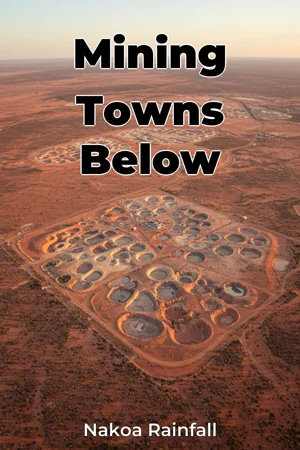
What lies beneath our feet in the shadow of the mining industry, and how has it shaped human life and societal structures? "Mining Towns Below" delves into the fascinating and often overlooked world of subsurface communities that have emerged near mining operations, using Coober Pedy in Australia as a central case study, while drawing comparisons to similar environments worldwide. This book explores the intersection of history, earth sciences, and geography to reveal a unique story of human adaptation, resource exploitation, and the creation of subterranean settlements. The central argument of "Mining Towns Below" is that the development of underground communities in mining regions represents a distinct form of human-environment interaction, driven by both the necessity of resource extraction and the desire for sustainable living. This argument challenges conventional notions of urban development and highlights the ingenuity and resilience of communities facing harsh environmental conditions. Understanding these subterranean settlements offers valuable insights into the future of sustainable living, novel architectural approaches, and innovative methods of resource management. The book begins by establishing the geological and historical context of mining towns such as Coober Pedy, explaining the formation of opal deposits and the subsequent rush of miners seeking their fortune. The narrative then transitions to the core concept of subterranean living, exploring the environmental advantages (temperature regulation, protection from extreme weather) and disadvantages (ventilation challenges, confined spaces) of these underground dwellings. It then examines the historical and social forces that drove people to create homes beneath the earth, focusing on the social structures, economic activities, and cultural practices that have evolved in these unique communities. A significant portion of the book is dedicated to understanding the technical aspects of building and maintaining underground structures. It looks at the engineering challenges and innovative solutions employed to ensure the safety and habitability of these subterranean environments. This section incorporates geological data, architectural designs, and case studies of various underground structures, including homes, businesses, and even churches. The book also considers the environmental impact of mining and subterranean living. It addresses issues such as waste management, water usage, and the sustainability of these communities in the face of climate change and resource depletion. It analyzes the long-term effects of mining activities on the surrounding environment, both above and below ground. To support its arguments, "Mining Towns Below" draws upon a variety of sources, including historical records, geological surveys, architectural plans, and ethnographic studies. It features interviews with residents of Coober Pedy and similar communities, providing firsthand accounts of the challenges and rewards of subterranean living. The book bridges connections between earth sciences, history, and urban planning by examining how mining has shaped geological landscapes, influenced historical migration patterns, and inspired alternative forms of urban development. This interdisciplinary approach offers a more comprehensive understanding of the complex relationship between humans and their environment. "Mining Towns Below" adopts a narrative non-fiction style, blending scholarly research with engaging storytelling to make the material accessible to a broad audience. It aims to appeal to readers interested in history, geography, earth sciences, architecture, and sustainable living. The book’s scope is limited geographically to mining towns with substantial subsurface development, acknowledging that other forms of underground settlements exist for different purposes (e.g., military bunkers, transportation tunnels). The book does not delve into the specific intricacies of mining engineering, keeping its focus on the communities and their unique ways of life. The information contained in "Mining Towns Below" has practical applications for urban planners, architects, and policymakers seeking sustainable and resilient solutions to the challenges of urbanization and climate change. By examining the successes and failures of subterranean communities, we can gain valuable insights into creating more livable and environmentally responsible environments in the future. While the concept of subterranean living holds considerable promise, it also sparks debate regarding its scalability, long-term sustainability, and potential social implications. The book confronts these debates head-on, offering a balanced and nuanced perspective on the future of underground communities.
What lies beneath our feet in the shadow of the mining industry, and how has it shaped human life and societal structures? "Mining Towns Below" delves into the fascinating and often overlooked world of subsurface communities that have emerged near mining operations, using Coober Pedy in Australia as a central case study, while drawing comparisons to similar environments worldwide. This book explores the intersection of history, earth sciences, and geography to reveal a unique story of human adaptation, resource exploitation, and the creation of subterranean settlements. The central argument of "Mining Towns Below" is that the development of underground communities in mining regions represents a distinct form of human-environment interaction, driven by both the necessity of resource extraction and the desire for sustainable living. This argument challenges conventional notions of urban development and highlights the ingenuity and resilience of communities facing harsh environmental conditions. Understanding these subterranean settlements offers valuable insights into the future of sustainable living, novel architectural approaches, and innovative methods of resource management. The book begins by establishing the geological and historical context of mining towns such as Coober Pedy, explaining the formation of opal deposits and the subsequent rush of miners seeking their fortune. The narrative then transitions to the core concept of subterranean living, exploring the environmental advantages (temperature regulation, protection from extreme weather) and disadvantages (ventilation challenges, confined spaces) of these underground dwellings. It then examines the historical and social forces that drove people to create homes beneath the earth, focusing on the social structures, economic activities, and cultural practices that have evolved in these unique communities. A significant portion of the book is dedicated to understanding the technical aspects of building and maintaining underground structures. It looks at the engineering challenges and innovative solutions employed to ensure the safety and habitability of these subterranean environments. This section incorporates geological data, architectural designs, and case studies of various underground structures, including homes, businesses, and even churches. The book also considers the environmental impact of mining and subterranean living. It addresses issues such as waste management, water usage, and the sustainability of these communities in the face of climate change and resource depletion. It analyzes the long-term effects of mining activities on the surrounding environment, both above and below ground. To support its arguments, "Mining Towns Below" draws upon a variety of sources, including historical records, geological surveys, architectural plans, and ethnographic studies. It features interviews with residents of Coober Pedy and similar communities, providing firsthand accounts of the challenges and rewards of subterranean living. The book bridges connections between earth sciences, history, and urban planning by examining how mining has shaped geological landscapes, influenced historical migration patterns, and inspired alternative forms of urban development. This interdisciplinary approach offers a more comprehensive understanding of the complex relationship between humans and their environment. "Mining Towns Below" adopts a narrative non-fiction style, blending scholarly research with engaging storytelling to make the material accessible to a broad audience. It aims to appeal to readers interested in history, geography, earth sciences, architecture, and sustainable living. The book’s scope is limited geographically to mining towns with substantial subsurface development, acknowledging that other forms of underground settlements exist for different purposes (e.g., military bunkers, transportation tunnels). The book does not delve into the specific intricacies of mining engineering, keeping its focus on the communities and their unique ways of life. The information contained in "Mining Towns Below" has practical applications for urban planners, architects, and policymakers seeking sustainable and resilient solutions to the challenges of urbanization and climate change. By examining the successes and failures of subterranean communities, we can gain valuable insights into creating more livable and environmentally responsible environments in the future. While the concept of subterranean living holds considerable promise, it also sparks debate regarding its scalability, long-term sustainability, and potential social implications. The book confronts these debates head-on, offering a balanced and nuanced perspective on the future of underground communities.
"Mining Towns Below" explores the fascinating world of underground communities that have emerged near mining operations, focusing on places like Coober Pedy, Australia. It examines how these subterranean settlements represent a unique form of human-environment interaction, driven by both the need for resource extraction and the desire for sustainable living. The book highlights how these communities have adapted to harsh environmental conditions, offering insights into sustainable living and innovative architectural approaches. For example, underground dwellings provide natural temperature regulation, offering protection from extreme weather conditions. The book progresses from establishing the geological and historical context of these mining towns to examining the technical aspects of building and maintaining underground structures. It considers the environmental impact of mining and subterranean living, addressing issues like waste management and water usage. Drawing upon historical records, geological surveys, and interviews with residents, "Mining Towns Below" bridges connections between earth sciences, history, and urban planning. It also considers the long-term effects of mining activities on the surrounding environment, both above and below ground.
Book Details
ISBN
9788235227911
Publisher
Publifye AS
Your Licenses
You don't own any licenses for this book
Purchase a license below to unlock this book and download the EPUB.
Purchase License
Select a tier to unlock this book
Need bulk licensing?
Contact us for enterprise agreements.