
About This Book
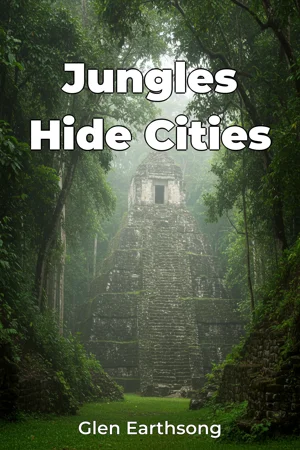
What if vast, undiscovered cities lie hidden beneath the seemingly impenetrable rainforests of our planet? "Jungles Hide Cities" unveils the groundbreaking discoveries made possible by LiDAR (Light Detection and Ranging) technology, and presents compelling evidence of extensive, previously unknown ancient ruins buried beneath dense jungle canopies. This interdisciplinary work bridges the gap between history, earth sciences, and geography, revealing a new understanding of human civilization and its interaction with the environment. The book argues that the application of advanced remote sensing techniques, specifically LiDAR, is revolutionizing our comprehension of past civilizations. It challenges long-held assumptions about the limitations of ancient societies and their ability to thrive in challenging environments. We explore the significance of these findings, emphasizing how they reshape our understanding of human history, technological advancement, and the impact of past societies on the environment. We will provide the reader with a fundamental background in remote sensing technologies, specifically focusing on how LiDAR works and its advantages over traditional archaeological methods in dense environments. A basic understanding of archaeological survey techniques, geographical information systems (GIS), and climate science will prove beneficial but is not essential as we explain these clearly. The central argument posits that rainforests, often perceived as barriers to civilization, were in fact home to sophisticated, densely populated societies that significantly altered their landscapes. These societies, contrary to popular belief, possessed advanced knowledge of resource management, engineering, and urban planning. This viewpoint compels us to reconsider the narrative of human progress, appreciating the ingenuity and adaptability of past civilizations in diverse ecological settings. The book is structured systematically. It begins by introducing the core concepts of LiDAR technology and its application in archaeological research. The initial chapters present case studies from various regions, detailing the discovery and analysis of hidden urban centers. We then shift to exploring the societal structures, economic systems, and environmental practices of these rediscovered civilizations. The penultimate section explores the implications of these discoveries for our understanding of human history, technological development, and environmental adaptation. Finally, we conclude with a discussion of the ethical considerations involved in researching and preserving these sites, along with potential applications for sustainable development and heritage management. The evidence presented will largely consist of LiDAR-derived maps, archaeological data from limited excavations, and comparative analyses of known historical sites. We analyze the LiDAR data and compare it with surface-level archaeological findings, historical records, and environmental data to provide a holistic view of these ancient societies. "Jungles Hide Cities" draws connections between archaeology, remote sensing, climate science, and historical anthropology. The integration of these disciplines provides a more comprehensive understanding of the interplay between human activity and the environment. The book offers a fresh perspective by utilizing cutting-edge technology to challenge established historical narratives. It moves beyond traditional, ground-based archaeology to reveal a hidden history of human ingenuity and adaptation. We present a shift from conventional archaeological methods by focusing on a non-invasive methodology to identify large-scale environmental and structural changes. The approach is factual and evidence-based, presented in a clear and accessible style suitable for a broad audience. While maintaining academic rigor, the book avoids jargon and employs narrative techniques to engage the reader and make complex information understandable. The target audience includes anyone interested in archaeology, history, geography, environmental studies, and technological innovation. The book will appeal to readers curious about the past and interested in the potential of technology to reshape our understanding of human history and our planet. As a work of non-fiction in the history, earth sciences, and geography genres, "Jungles Hide Cities" adheres to the principles of accuracy, objectivity, and clear communication. The book focuses primarily on the application of LiDAR technology to uncover hidden urban centers in rainforest environments. The scope is limited to regions where LiDAR data has been extensively collected and analyzed. While the book will reference other archaeological sites and historical periods for comparative purposes, the primary focus remains on the discoveries made through LiDAR technology in rainforest regions. The insights gained from this research can be applied to a variety of real-world situations. The knowledge of sustainable land management practices employed by ancient rainforest civilizations can inform modern conservation efforts. Understanding how past societies adapted to environmental change can help us in addressing current climate challenges. The book will touch on debates surrounding the role of human activity in shaping rainforest ecosystems. The extent of human impact on the environment during ancient times will be explored, potentially challenging prevailing narratives about pristine landscapes.
What if vast, undiscovered cities lie hidden beneath the seemingly impenetrable rainforests of our planet? "Jungles Hide Cities" unveils the groundbreaking discoveries made possible by LiDAR (Light Detection and Ranging) technology, and presents compelling evidence of extensive, previously unknown ancient ruins buried beneath dense jungle canopies. This interdisciplinary work bridges the gap between history, earth sciences, and geography, revealing a new understanding of human civilization and its interaction with the environment. The book argues that the application of advanced remote sensing techniques, specifically LiDAR, is revolutionizing our comprehension of past civilizations. It challenges long-held assumptions about the limitations of ancient societies and their ability to thrive in challenging environments. We explore the significance of these findings, emphasizing how they reshape our understanding of human history, technological advancement, and the impact of past societies on the environment. We will provide the reader with a fundamental background in remote sensing technologies, specifically focusing on how LiDAR works and its advantages over traditional archaeological methods in dense environments. A basic understanding of archaeological survey techniques, geographical information systems (GIS), and climate science will prove beneficial but is not essential as we explain these clearly. The central argument posits that rainforests, often perceived as barriers to civilization, were in fact home to sophisticated, densely populated societies that significantly altered their landscapes. These societies, contrary to popular belief, possessed advanced knowledge of resource management, engineering, and urban planning. This viewpoint compels us to reconsider the narrative of human progress, appreciating the ingenuity and adaptability of past civilizations in diverse ecological settings. The book is structured systematically. It begins by introducing the core concepts of LiDAR technology and its application in archaeological research. The initial chapters present case studies from various regions, detailing the discovery and analysis of hidden urban centers. We then shift to exploring the societal structures, economic systems, and environmental practices of these rediscovered civilizations. The penultimate section explores the implications of these discoveries for our understanding of human history, technological development, and environmental adaptation. Finally, we conclude with a discussion of the ethical considerations involved in researching and preserving these sites, along with potential applications for sustainable development and heritage management. The evidence presented will largely consist of LiDAR-derived maps, archaeological data from limited excavations, and comparative analyses of known historical sites. We analyze the LiDAR data and compare it with surface-level archaeological findings, historical records, and environmental data to provide a holistic view of these ancient societies. "Jungles Hide Cities" draws connections between archaeology, remote sensing, climate science, and historical anthropology. The integration of these disciplines provides a more comprehensive understanding of the interplay between human activity and the environment. The book offers a fresh perspective by utilizing cutting-edge technology to challenge established historical narratives. It moves beyond traditional, ground-based archaeology to reveal a hidden history of human ingenuity and adaptation. We present a shift from conventional archaeological methods by focusing on a non-invasive methodology to identify large-scale environmental and structural changes. The approach is factual and evidence-based, presented in a clear and accessible style suitable for a broad audience. While maintaining academic rigor, the book avoids jargon and employs narrative techniques to engage the reader and make complex information understandable. The target audience includes anyone interested in archaeology, history, geography, environmental studies, and technological innovation. The book will appeal to readers curious about the past and interested in the potential of technology to reshape our understanding of human history and our planet. As a work of non-fiction in the history, earth sciences, and geography genres, "Jungles Hide Cities" adheres to the principles of accuracy, objectivity, and clear communication. The book focuses primarily on the application of LiDAR technology to uncover hidden urban centers in rainforest environments. The scope is limited to regions where LiDAR data has been extensively collected and analyzed. While the book will reference other archaeological sites and historical periods for comparative purposes, the primary focus remains on the discoveries made through LiDAR technology in rainforest regions. The insights gained from this research can be applied to a variety of real-world situations. The knowledge of sustainable land management practices employed by ancient rainforest civilizations can inform modern conservation efforts. Understanding how past societies adapted to environmental change can help us in addressing current climate challenges. The book will touch on debates surrounding the role of human activity in shaping rainforest ecosystems. The extent of human impact on the environment during ancient times will be explored, potentially challenging prevailing narratives about pristine landscapes.
"Jungles Hide Cities" explores how cutting-edge LiDAR technology is revolutionizing our understanding of ancient civilizations hidden beneath dense rainforests. This interdisciplinary approach, blending history, earth sciences, and geography, uncovers evidence of sophisticated societies that thrived in challenging environments. The book reveals how these rainforest civilizations, often overlooked, possessed advanced knowledge of resource management and urban planning, challenging long-held assumptions about their limitations. LiDAR's ability to penetrate dense canopies allows researchers to map vast, previously unknown urban centers and landscapes, offering a new perspective on human history and environmental adaptation. The book systematically introduces LiDAR technology and its applications, presenting case studies of hidden cities discovered across various regions. It then delves into the societal structures, economic systems, and environmental practices of these rediscovered civilizations. By integrating remote sensing data with archaeological findings and historical records, "Jungles Hide Cities" provides a holistic view of these ancient societies and their impact on the environment. This fresh perspective reshapes our understanding of human ingenuity and the interplay between human activity and the environment. The book progresses from explaining the technology to showcasing specific discoveries, then analyzing the societal implications of the findings. It concludes by discussing ethical considerations for preserving these sites and their relevance to sustainable development. This book will appeal to anyone interested in archaeology, history, and the power of technology to unveil the secrets of our past.
Book Details
ISBN
9788235227874
Publisher
Publifye AS
Your Licenses
You don't own any licenses for this book
Purchase a license below to unlock this book and download the EPUB.
Purchase License
Select a tier to unlock this book
Need bulk licensing?
Contact us for enterprise agreements.