
About This Book
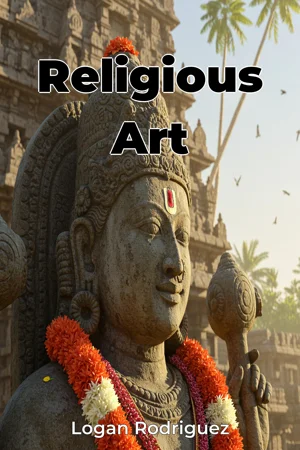
Could a painting truly embody the divine, or a sculpture serve as a tangible bridge to the sacred? This book, *Religious Art*, delves into the profound significance of religious paintings, sculptures, and sacred iconography in the context of worship across diverse cultures and historical periods. It explores how these artistic expressions are not merely decorative elements but integral components of religious practice, shaping beliefs, facilitating spiritual experiences, and reinforcing communal identity. The book focuses on three key facets of religious art: its symbolic language, its role in ritual practice, and its power to evoke emotional and spiritual responses. It begins by examining the intricate symbolism embedded within religious artworks, decoding the visual narratives and allegorical meanings that convey complex theological concepts. Understanding this symbolic language is crucial for appreciating the depth and nuance of religious expression. Subsequently, the book investigates how these artistic creations function within specific ritual contexts, illuminating their role in ceremonies, processions, and personal devotions. Finally, it analyzes the psychological and emotional impact of religious art, exploring how it inspires awe, reverence, and a sense of connection to the divine. To fully appreciate the subject, readers will benefit from a basic understanding of art history and comparative religion. We provide a framework for understanding these complex intersections with clear definitions and numerous examples. The central argument posits that religious art is not simply a representation of faith, but an active participant in the construction and maintenance of religious belief. It asserts that these physical manifestations of faith are not static objects but dynamic agents that mediate between the human and the divine, shaping religious experience and reinforcing communal bonds. The book unfolds in a structured manner. Part one introduces the fundamental concepts of religious art, iconography, and their relationship to worship. Part two comprises three thematic chapters. The first examines the use of religious painting to communicate theological principles in Christianity and Buddhism, comparing the styles and impact on their respective congregations. The second delves into the creation and employment of religious sculpture in ancient Greece and Hinduism, exploring their role as physical manifestations of deities and their relationship to temple architecture. The third analyzes the use of sacred iconography in Islam and Judaism. Part three synthesizes these diverse examples, culminating in a discussion of the evolving role of religious art in the modern world, its challenges, and its continued relevance in an increasingly secular society. The analysis draws upon a wide array of evidence, including art historical analysis, anthropological studies of religious practices, theological texts, and firsthand accounts of religious experiences. The book also incorporates visual analysis of specific artworks, providing detailed descriptions and interpretations of their symbolic content and artistic techniques. The book establishes connections to several other fields. Firstly, it intersects with psychology by examining the emotional and cognitive effects of religious art on viewers. Secondly, it links to sociology by analyzing the role of religious art in shaping social identities and reinforcing communal norms. Thirdly, it connects to cultural studies by exploring the ways in which religious art reflects and shapes cultural values and beliefs. This book distinguishes itself by adopting a comparative and interdisciplinary approach, analyzing religious art across diverse cultural and religious contexts. It offers a fresh perspective by emphasizing the active role of art in shaping religious belief and practice, moving beyond traditional art historical approaches that focus primarily on aesthetics or historical context. The tone of the book is scholarly yet accessible, aiming to engage both academic audiences and general readers interested in art, religion, and cultural history. The writing style is clear, concise, and engaging, avoiding jargon and technical terms whenever possible. The book is targeted toward students, scholars, and general readers interested in art history, religious studies, cultural studies, and anthropology. It will be of particular value to those seeking a deeper understanding of the relationship between art, religion, and culture. It fulfills the expectations of academic rigor while remaining accessible to a broad audience. The scope of the book is broad, encompassing a wide range of religious traditions and historical periods. However, it is limited by its focus on painting, sculpture, and iconography, excluding other forms of religious expression such as music, dance, and drama. The understanding of religious art can enhance cultural awareness and promote interfaith dialogue. Furthermore, the principles of visual communication and symbolic interpretation explored in the book can be applied to a wide range of fields, including marketing, advertising, and political communication. The book acknowledges the ongoing debates surrounding the interpretation and representation of religious imagery, particularly in relation to issues of cultural appropriation, religious freedom, and iconoclasm. It engages with these debates in a nuanced and respectful manner, presenting diverse perspectives and encouraging critical reflection.
Could a painting truly embody the divine, or a sculpture serve as a tangible bridge to the sacred? This book, *Religious Art*, delves into the profound significance of religious paintings, sculptures, and sacred iconography in the context of worship across diverse cultures and historical periods. It explores how these artistic expressions are not merely decorative elements but integral components of religious practice, shaping beliefs, facilitating spiritual experiences, and reinforcing communal identity. The book focuses on three key facets of religious art: its symbolic language, its role in ritual practice, and its power to evoke emotional and spiritual responses. It begins by examining the intricate symbolism embedded within religious artworks, decoding the visual narratives and allegorical meanings that convey complex theological concepts. Understanding this symbolic language is crucial for appreciating the depth and nuance of religious expression. Subsequently, the book investigates how these artistic creations function within specific ritual contexts, illuminating their role in ceremonies, processions, and personal devotions. Finally, it analyzes the psychological and emotional impact of religious art, exploring how it inspires awe, reverence, and a sense of connection to the divine. To fully appreciate the subject, readers will benefit from a basic understanding of art history and comparative religion. We provide a framework for understanding these complex intersections with clear definitions and numerous examples. The central argument posits that religious art is not simply a representation of faith, but an active participant in the construction and maintenance of religious belief. It asserts that these physical manifestations of faith are not static objects but dynamic agents that mediate between the human and the divine, shaping religious experience and reinforcing communal bonds. The book unfolds in a structured manner. Part one introduces the fundamental concepts of religious art, iconography, and their relationship to worship. Part two comprises three thematic chapters. The first examines the use of religious painting to communicate theological principles in Christianity and Buddhism, comparing the styles and impact on their respective congregations. The second delves into the creation and employment of religious sculpture in ancient Greece and Hinduism, exploring their role as physical manifestations of deities and their relationship to temple architecture. The third analyzes the use of sacred iconography in Islam and Judaism. Part three synthesizes these diverse examples, culminating in a discussion of the evolving role of religious art in the modern world, its challenges, and its continued relevance in an increasingly secular society. The analysis draws upon a wide array of evidence, including art historical analysis, anthropological studies of religious practices, theological texts, and firsthand accounts of religious experiences. The book also incorporates visual analysis of specific artworks, providing detailed descriptions and interpretations of their symbolic content and artistic techniques. The book establishes connections to several other fields. Firstly, it intersects with psychology by examining the emotional and cognitive effects of religious art on viewers. Secondly, it links to sociology by analyzing the role of religious art in shaping social identities and reinforcing communal norms. Thirdly, it connects to cultural studies by exploring the ways in which religious art reflects and shapes cultural values and beliefs. This book distinguishes itself by adopting a comparative and interdisciplinary approach, analyzing religious art across diverse cultural and religious contexts. It offers a fresh perspective by emphasizing the active role of art in shaping religious belief and practice, moving beyond traditional art historical approaches that focus primarily on aesthetics or historical context. The tone of the book is scholarly yet accessible, aiming to engage both academic audiences and general readers interested in art, religion, and cultural history. The writing style is clear, concise, and engaging, avoiding jargon and technical terms whenever possible. The book is targeted toward students, scholars, and general readers interested in art history, religious studies, cultural studies, and anthropology. It will be of particular value to those seeking a deeper understanding of the relationship between art, religion, and culture. It fulfills the expectations of academic rigor while remaining accessible to a broad audience. The scope of the book is broad, encompassing a wide range of religious traditions and historical periods. However, it is limited by its focus on painting, sculpture, and iconography, excluding other forms of religious expression such as music, dance, and drama. The understanding of religious art can enhance cultural awareness and promote interfaith dialogue. Furthermore, the principles of visual communication and symbolic interpretation explored in the book can be applied to a wide range of fields, including marketing, advertising, and political communication. The book acknowledges the ongoing debates surrounding the interpretation and representation of religious imagery, particularly in relation to issues of cultural appropriation, religious freedom, and iconoclasm. It engages with these debates in a nuanced and respectful manner, presenting diverse perspectives and encouraging critical reflection.
"Religious Art" explores the profound connection between artistic expression and religious experience across various cultures and historical periods. It delves into how religious paintings, sculptures, and sacred iconography serve as integral components of worship, shaping beliefs and fostering spiritual connections. The book illuminates the symbolic language embedded within these artworks, revealing the complex theological concepts they convey. For instance, the use of religious painting to communicate theological principles in Christianity and Buddhism, showcasing diverse styles and their impact. This exploration progresses across several chapters, beginning with the fundamentals of religious art and iconography. It then examines the role of religious sculpture in ancient Greece and Hinduism, highlighting their function as physical manifestations of deities. The book emphasizes that religious art is not merely a representation of faith but an active participant in constructing and maintaining religious belief. By adopting a comparative and interdisciplinary approach, this book offers a fresh perspective on the dynamic relationship between art, religion, and culture.
Book Details
ISBN
9788235227843
Publisher
Publifye AS
Your Licenses
You don't own any licenses for this book
Purchase a license below to unlock this book and download the EPUB.
Purchase License
Select a tier to unlock this book
Need bulk licensing?
Contact us for enterprise agreements.