
About This Book
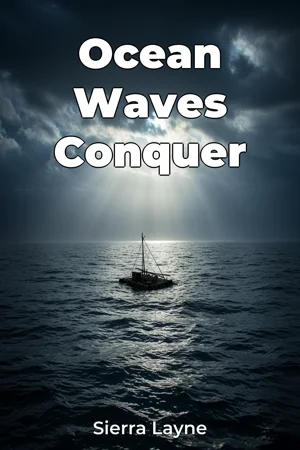
Could you survive adrift at sea after a catastrophic storm? "Ocean Waves Conquer" explores the harrowing realities of maritime survival, demanding a deep understanding of both the ocean's power and the essential skills needed to endure its wrath. This book delves into the critical intersection of Earth Sciences Geography and Adventure, focusing on how individuals can confront and potentially overcome the challenges of surviving severe sea storms using raft construction techniques and celestial navigation strategies. This is more than a survival guide; it is an examination of human resilience against the backdrop of one of nature’s most formidable forces. The book primarily addresses two key areas: understanding storm dynamics in various oceanic regions and mastering the art of raft-based survival. It will investigate the geographical distribution of major sea storms, including hurricanes, typhoons, and rogue waves, analyzing their formation, intensity patterns, and predictable behaviors within specific Earth Sciences Geography contexts. Concurrently, it details the practical skills crucial for survival, such as constructing stable and navigable rafts from limited resources, procuring fresh water and food, and employing celestial navigation to chart a course towards rescue. These topics are vital because, in an era of increasing extreme weather events, a fundamental understanding of oceanic survival could mean the difference between life and death for mariners and coastal inhabitants alike. The central argument of "Ocean Waves Conquer" is that, armed with the knowledge of Earth Sciences Geography and the practical skills of raft construction and navigation, individuals significantly increase their chances of survival when confronted with maritime disasters. This proposition is essential because it bridges the gap between theoretical understanding and pragmatic action, empowering readers with actionable strategies. The book is structured to guide the reader progressively through these concepts. It begins by introducing the science behind major sea storms, mapping their frequency and intensity across different oceanic regions. It then transitions into a detailed exploration of raft construction techniques, emphasizing resourcefulness and adaptability across diverse environments. The section on celestial navigation provides a step-by-step guide, illustrating how to determine one's position using the sun, stars, and other celestial bodies. The culmination of these ideas is presented through case studies of historical and recent maritime disasters, analyzing survival strategies employed and lessons learned. Practical implications are further emphasized with a comprehensive survival checklist that incorporates both technological aids and traditional methods. The book's conclusions will be supported by diverse evidence, including meteorological data, historical accounts of shipwrecks and survival stories, and expert engineering analysis of raft designs. Furthermore, it draws on empirical data from modern survival training programs and simulations, providing a robust and evidence-based approach. "Ocean Waves Conquer" is not confined to a single discipline; it integrates aspects of meteorology, engineering, and historical studies, expanding the reader's perspective. Connections to disaster management and emergency response are apparent, emphasizing the importance of preparedness in coastal communities. Additionally, ethical considerations of environmental stewardship are woven into the discussion, highlighting the impact of climate change on storm patterns and the responsibility of minimizing environmental footprints. A unique aspect of the book is its emphasis on adapting traditional survival skills to modern challenges. It recognizes the value of technological aids, such as satellite communication devices, while also underscoring the importance of time-tested techniques like celestial navigation, which remain viable when technology fails. The book adopts a professional yet accessible tone, blending scientific accuracy with practical application, making complex concepts understandable for a broad audience. It aims to engage readers with compelling narratives and real-world scenarios while providing clear, actionable advice. The target audience includes avid sailors, maritime professionals, adventure enthusiasts, and anyone living in coastal regions susceptible to severe weather. It will also appeal to educational institutions focused on Earth Sciences Geography, survival training, or maritime studies. Aligned with the conventions of the Adventure and Earth Sciences Geography genres, "Ocean Waves Conquer" delivers both thrilling narratives and factual insights into the natural world. The book's scope is deliberately focused on survival strategies within raft-based scenarios, acknowledging that other aspects of maritime disasters, such as search and rescue operations, fall outside its primary focus. The information presented in "Ocean Waves Conquer" has immediate real-world applications, from informing emergency preparedness plans to improving survival training programs. It serves as a valuable resource for anyone seeking to understand the ocean's power and the skills needed to confront it. The book will address the ongoing debates surrounding climate change and its influence on the intensity and frequency of sea storms. While not taking a politically charged stance, it acknowledges the scientific consensus on the issue and its relevance to maritime survival.
Could you survive adrift at sea after a catastrophic storm? "Ocean Waves Conquer" explores the harrowing realities of maritime survival, demanding a deep understanding of both the ocean's power and the essential skills needed to endure its wrath. This book delves into the critical intersection of Earth Sciences Geography and Adventure, focusing on how individuals can confront and potentially overcome the challenges of surviving severe sea storms using raft construction techniques and celestial navigation strategies. This is more than a survival guide; it is an examination of human resilience against the backdrop of one of nature’s most formidable forces. The book primarily addresses two key areas: understanding storm dynamics in various oceanic regions and mastering the art of raft-based survival. It will investigate the geographical distribution of major sea storms, including hurricanes, typhoons, and rogue waves, analyzing their formation, intensity patterns, and predictable behaviors within specific Earth Sciences Geography contexts. Concurrently, it details the practical skills crucial for survival, such as constructing stable and navigable rafts from limited resources, procuring fresh water and food, and employing celestial navigation to chart a course towards rescue. These topics are vital because, in an era of increasing extreme weather events, a fundamental understanding of oceanic survival could mean the difference between life and death for mariners and coastal inhabitants alike. The central argument of "Ocean Waves Conquer" is that, armed with the knowledge of Earth Sciences Geography and the practical skills of raft construction and navigation, individuals significantly increase their chances of survival when confronted with maritime disasters. This proposition is essential because it bridges the gap between theoretical understanding and pragmatic action, empowering readers with actionable strategies. The book is structured to guide the reader progressively through these concepts. It begins by introducing the science behind major sea storms, mapping their frequency and intensity across different oceanic regions. It then transitions into a detailed exploration of raft construction techniques, emphasizing resourcefulness and adaptability across diverse environments. The section on celestial navigation provides a step-by-step guide, illustrating how to determine one's position using the sun, stars, and other celestial bodies. The culmination of these ideas is presented through case studies of historical and recent maritime disasters, analyzing survival strategies employed and lessons learned. Practical implications are further emphasized with a comprehensive survival checklist that incorporates both technological aids and traditional methods. The book's conclusions will be supported by diverse evidence, including meteorological data, historical accounts of shipwrecks and survival stories, and expert engineering analysis of raft designs. Furthermore, it draws on empirical data from modern survival training programs and simulations, providing a robust and evidence-based approach. "Ocean Waves Conquer" is not confined to a single discipline; it integrates aspects of meteorology, engineering, and historical studies, expanding the reader's perspective. Connections to disaster management and emergency response are apparent, emphasizing the importance of preparedness in coastal communities. Additionally, ethical considerations of environmental stewardship are woven into the discussion, highlighting the impact of climate change on storm patterns and the responsibility of minimizing environmental footprints. A unique aspect of the book is its emphasis on adapting traditional survival skills to modern challenges. It recognizes the value of technological aids, such as satellite communication devices, while also underscoring the importance of time-tested techniques like celestial navigation, which remain viable when technology fails. The book adopts a professional yet accessible tone, blending scientific accuracy with practical application, making complex concepts understandable for a broad audience. It aims to engage readers with compelling narratives and real-world scenarios while providing clear, actionable advice. The target audience includes avid sailors, maritime professionals, adventure enthusiasts, and anyone living in coastal regions susceptible to severe weather. It will also appeal to educational institutions focused on Earth Sciences Geography, survival training, or maritime studies. Aligned with the conventions of the Adventure and Earth Sciences Geography genres, "Ocean Waves Conquer" delivers both thrilling narratives and factual insights into the natural world. The book's scope is deliberately focused on survival strategies within raft-based scenarios, acknowledging that other aspects of maritime disasters, such as search and rescue operations, fall outside its primary focus. The information presented in "Ocean Waves Conquer" has immediate real-world applications, from informing emergency preparedness plans to improving survival training programs. It serves as a valuable resource for anyone seeking to understand the ocean's power and the skills needed to confront it. The book will address the ongoing debates surrounding climate change and its influence on the intensity and frequency of sea storms. While not taking a politically charged stance, it acknowledges the scientific consensus on the issue and its relevance to maritime survival.
"Ocean Waves Conquer" dives into the critical skills and knowledge needed for maritime survival following catastrophic sea storms. It merges Earth Sciences Geography with real-world Adventure, highlighting how understanding storm dynamics and mastering survival techniques can dramatically increase one's chances of enduring unimaginable conditions at sea. The book explores the geographical distribution of major sea storms, such as hurricanes and rogue waves, detailing their formation and intensity patterns. It also delves into practical survival skills like raft construction and celestial navigation, essential for charting a course toward rescue when technology fails. This book uniquely emphasizes the blend of traditional and modern survival methods. It acknowledges the importance of technological aids, while underscoring time-tested techniques. Through historical accounts and modern survival training, it presents a comprehensive, evidence-based approach. The book progresses from the science behind sea storms to raft construction and celestial navigation, culminating in case studies of maritime disasters and a survival checklist, providing a practical guide for anyone facing the ocean's wrath.
Book Details
ISBN
9788235227690
Publisher
Publifye AS
Your Licenses
You don't own any licenses for this book
Purchase a license below to unlock this book and download the EPUB.
Purchase License
Select a tier to unlock this book
Need bulk licensing?
Contact us for enterprise agreements.