
About This Book
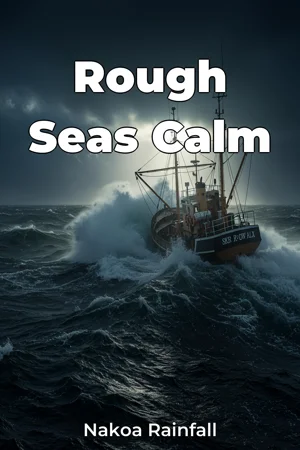
Can human ingenuity and collective resilience truly conquer the overwhelming power of nature? Rough Seas Calm explores this question through the perilous lives of 19th-century fishermen navigating the unpredictable North Atlantic. This book delves into the historical context of these fishing communities, the development of maritime skills under pressure, and the critical importance of teamwork in extreme environments, demonstrating how these factors combined to determine survival or demise. These topics are vital as they provide insight into human adaptability, the evolution of skilled labor, and the enduring power of community in the face of adversity. The book situates the reader in the socio-economic landscape of coastal communities during the 1800s, a time when fishing was not merely an occupation but a way of life intrinsically linked to survival. Understanding the rudimentary technologies available and the economic pressures faced by these communities is essential for appreciating the fishermen's reliance on skill and collaboration. Prior knowledge of basic maritime history or an awareness of 19th-century social structures would benefit the reader but is not essential. Rough Seas Calm posits that the survival of fishermen during severe storms was less a matter of individual heroism and more a product of deeply ingrained skills, adaptive learning, and a sophisticated system of cooperative labor. This argument challenges romanticized notions of solitary bravery, emphasizing the often-overlooked complexities of collective action and knowledge sharing. Examining the fishing industry through historical records, oral histories, and technological advancements, this book provides a comprehensive view of maritime work and emphasizes the shared knowledge systems of the fishing communities of the 19th century. The book follows a logical structure. It begins by introducing the harsh realities of 19th-century North Atlantic fishing and the environmental challenges fishermen routinely faced. It proceeds to examine the development of critical skills such as navigation, boat handling, and weather prediction through experiential learning. The core of the book investigates teamwork as a survival mechanism, analyzing communication protocols, shared responsibilities, and leadership dynamics during storms. Finally, the book culminates by considering the long-term impact of these experiences on community resilience and the transmission of maritime knowledge across generations. This non-fiction account will rely on a variety of primary and secondary sources. Logbooks, maritime insurance records, and newspaper accounts will provide detailed information on storm events and their consequences. Oral histories collected from descendants of fishing families offer personal perspectives and insights into cultural practices. Furthermore, ship-building schematics and historical weather data are employed to analyze the technological and environmental factors at play. This book intersects with fields such as environmental history (analyzing human interaction with the natural world), economic history (examining the fishing industry's role in regional economies), and sociology (investigating community structures and social resilience). These interdisciplinary connections enrich the understanding of the fishermen's experiences, highlighting the complex interplay of environmental, economic, and social forces. Rough Seas Calm adopts a narrative non-fiction style, weaving together factual accounts with compelling stories of individual fishermen and their communities. This approach aims to engage a broad audience while maintaining scholarly rigor and clarity. The target audience includes readers interested in maritime history, adventure narratives, and studies of human resilience. The book's exploration of teamwork and skill development may also appeal to those in leadership studies or organizational behavior. Anyone interested in learning about the history of working communities will find this book valuable. As a work of historical non-fiction, the book adheres to the genre's conventions of accuracy, objectivity, and reliance on verifiable sources. While providing a comprehensive overview of 19th-century North Atlantic fishing, the book focuses primarily on the experiences of fishermen from specific coastal communities, acknowledging that regional variations existed. The findings presented in Rough Seas Calm offer practical lessons for contemporary contexts. The book's insights into teamwork, risk management, and adaptive learning can be applied to various fields, from emergency response to project management, providing valuable strategies for navigating complex and uncertain situations. The book recognizes ongoing discussions about the impact of climate change on maritime industries.
Can human ingenuity and collective resilience truly conquer the overwhelming power of nature? Rough Seas Calm explores this question through the perilous lives of 19th-century fishermen navigating the unpredictable North Atlantic. This book delves into the historical context of these fishing communities, the development of maritime skills under pressure, and the critical importance of teamwork in extreme environments, demonstrating how these factors combined to determine survival or demise. These topics are vital as they provide insight into human adaptability, the evolution of skilled labor, and the enduring power of community in the face of adversity. The book situates the reader in the socio-economic landscape of coastal communities during the 1800s, a time when fishing was not merely an occupation but a way of life intrinsically linked to survival. Understanding the rudimentary technologies available and the economic pressures faced by these communities is essential for appreciating the fishermen's reliance on skill and collaboration. Prior knowledge of basic maritime history or an awareness of 19th-century social structures would benefit the reader but is not essential. Rough Seas Calm posits that the survival of fishermen during severe storms was less a matter of individual heroism and more a product of deeply ingrained skills, adaptive learning, and a sophisticated system of cooperative labor. This argument challenges romanticized notions of solitary bravery, emphasizing the often-overlooked complexities of collective action and knowledge sharing. Examining the fishing industry through historical records, oral histories, and technological advancements, this book provides a comprehensive view of maritime work and emphasizes the shared knowledge systems of the fishing communities of the 19th century. The book follows a logical structure. It begins by introducing the harsh realities of 19th-century North Atlantic fishing and the environmental challenges fishermen routinely faced. It proceeds to examine the development of critical skills such as navigation, boat handling, and weather prediction through experiential learning. The core of the book investigates teamwork as a survival mechanism, analyzing communication protocols, shared responsibilities, and leadership dynamics during storms. Finally, the book culminates by considering the long-term impact of these experiences on community resilience and the transmission of maritime knowledge across generations. This non-fiction account will rely on a variety of primary and secondary sources. Logbooks, maritime insurance records, and newspaper accounts will provide detailed information on storm events and their consequences. Oral histories collected from descendants of fishing families offer personal perspectives and insights into cultural practices. Furthermore, ship-building schematics and historical weather data are employed to analyze the technological and environmental factors at play. This book intersects with fields such as environmental history (analyzing human interaction with the natural world), economic history (examining the fishing industry's role in regional economies), and sociology (investigating community structures and social resilience). These interdisciplinary connections enrich the understanding of the fishermen's experiences, highlighting the complex interplay of environmental, economic, and social forces. Rough Seas Calm adopts a narrative non-fiction style, weaving together factual accounts with compelling stories of individual fishermen and their communities. This approach aims to engage a broad audience while maintaining scholarly rigor and clarity. The target audience includes readers interested in maritime history, adventure narratives, and studies of human resilience. The book's exploration of teamwork and skill development may also appeal to those in leadership studies or organizational behavior. Anyone interested in learning about the history of working communities will find this book valuable. As a work of historical non-fiction, the book adheres to the genre's conventions of accuracy, objectivity, and reliance on verifiable sources. While providing a comprehensive overview of 19th-century North Atlantic fishing, the book focuses primarily on the experiences of fishermen from specific coastal communities, acknowledging that regional variations existed. The findings presented in Rough Seas Calm offer practical lessons for contemporary contexts. The book's insights into teamwork, risk management, and adaptive learning can be applied to various fields, from emergency response to project management, providing valuable strategies for navigating complex and uncertain situations. The book recognizes ongoing discussions about the impact of climate change on maritime industries.
"Rough Seas Calm" explores the lives of 19th-century fishermen in the North Atlantic, revealing how their maritime skills, adaptive learning, and robust teamwork enabled them to face unimaginable adversity. It highlights the crucial role of environmental and economic factors in shaping these coastal communities, demonstrating how the fishermen's survival depended less on individual heroism and more on shared knowledge and cooperation. This historical adventure showcases human resilience in the face of nature's overwhelming power. The book examines the fishing industry through historical records, oral histories, and technological advancements, providing a comprehensive view of maritime work. Beginning with an introduction to the harsh realities of North Atlantic fishing, it progresses to examine the development of critical skills such as navigation and weather prediction, and culminates in a study of how these experiences shaped community resilience and the transmission of maritime knowledge across generations.
Book Details
ISBN
9788235227645
Publisher
Publifye AS
Your Licenses
You don't own any licenses for this book
Purchase a license below to unlock this book and download the EPUB.
Purchase License
Select a tier to unlock this book
Need bulk licensing?
Contact us for enterprise agreements.