
About This Book
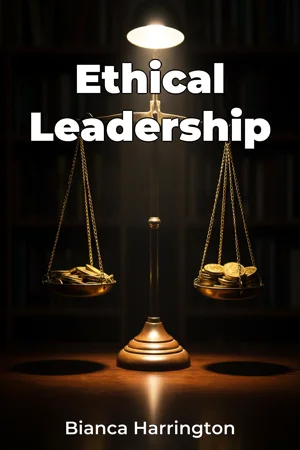
What if ethical lapses aren't just isolated incidents but systemic failures rooted in leadership and corporate structures? This book, "Ethical Leadership," delves into the critical role ethics plays in modern leadership, corporate integrity, and strategic decision-making. These interconnected topics are vital because ethical failures erode trust, damage reputations, and ultimately undermine organizational success. We are living in an age of increased scrutiny, where stakeholders demand transparency and accountability, making ethical leadership not just a desirable trait, but a business imperative. This book provides a comprehensive exploration of ethical leadership, beginning with a contextual understanding of ethical frameworks and their evolution throughout the history of business management. We examine the philosophical underpinnings of ethical thought, tracing their influence on contemporary business practices. This historical context provides a foundation for understanding current ethical challenges. Foundational concepts like utilitarianism, deontology, and virtue ethics are explored to provide a concrete basis for analysis. Our central argument posits that ethical leadership is not merely about adhering to compliance regulations; it is about cultivating a culture of integrity that permeates every aspect of the organization. This culture fosters ethical decision-making at all levels, promoting long-term sustainable success. We provide a roadmap for organizations seeking to go beyond superficial ethical codes and cultivate a genuinely ethical environment. The book is structured to guide the reader through a progressive understanding of ethical leadership. It first introduces core ethical principles and their relevance to business. A series of case studies then explore real-world ethical dilemmas faced by leaders across diverse industries. We then examine the practical tools and strategies for building ethical organizations, including the development of robust ethical codes, effective training programs, and transparent reporting mechanisms. Finally, the book culminates with a discussion of the future of ethical leadership, considering the impact of emerging technologies and globalization. To support this argument, we draw upon a diverse range of evidence, including academic research, industry reports, and detailed case studies of both successful and unsuccessful ethical leadership initiatives. Original research and survey data from leadership development programs are examined. Additionally, the book analyzes public statements and internal communications from various companies to assess the practical implementation of ethical principles. This book connects to several other fields, including organizational behavior, corporate governance, and strategic management. By examining the psychological factors that influence ethical decision-making, the book strengthens its argument. We also draw on theories of corporate governance to explain how boards of directors can promote ethical behavior. Connections to strategic management are included as well, highlighting how ethical leadership can be a source of competitive advantage. This book offers a unique perspective by emphasizing the importance of emotional intelligence in ethical leadership. Leaders are not just expected to know what is right, but to also possess the empathy and social skills necessary to navigate complex ethical dilemmas and inspire others to act ethically. This approach moves beyond traditional compliance-based models, offering a more holistic and effective framework for ethical leadership. The tone is academic yet accessible, presenting complex concepts in a clear and engaging manner, suitable for professionals and students alike. The writing style avoids jargon and emphasizes practical examples and real-world applications. The target audience includes current and aspiring leaders, business professionals, and students of management and ethics. This book provides readers with the knowledge and skills necessary to lead ethically and build organizations characterized by integrity and social responsibility. As a work in the business management genre, the book presents a practical focus on actionable strategies using credible research for readers to improve ethical outcomes in real businesses. The scope of this book is limited to ethical considerations within business organizations; it does not delve into broader ethical issues such as environmental sustainability, except as they directly impact corporate decision-making and stakeholder relations. The principles and strategies outlined in this book can be applied to a wide range of organizations, from small startups to large multinational corporations. Readers will learn how to develop ethical codes, implement ethical training programs, and foster a culture of ethical decision-making at all levels of their organizations. This book also touches on ongoing debates surrounding corporate social responsibility and the role of businesses in addressing societal challenges. We emphasize that ethical leadership is not just about maximizing profits, but also about creating value for all stakeholders. This perspective encourages a more nuanced and responsible approach to business.
What if ethical lapses aren't just isolated incidents but systemic failures rooted in leadership and corporate structures? This book, "Ethical Leadership," delves into the critical role ethics plays in modern leadership, corporate integrity, and strategic decision-making. These interconnected topics are vital because ethical failures erode trust, damage reputations, and ultimately undermine organizational success. We are living in an age of increased scrutiny, where stakeholders demand transparency and accountability, making ethical leadership not just a desirable trait, but a business imperative. This book provides a comprehensive exploration of ethical leadership, beginning with a contextual understanding of ethical frameworks and their evolution throughout the history of business management. We examine the philosophical underpinnings of ethical thought, tracing their influence on contemporary business practices. This historical context provides a foundation for understanding current ethical challenges. Foundational concepts like utilitarianism, deontology, and virtue ethics are explored to provide a concrete basis for analysis. Our central argument posits that ethical leadership is not merely about adhering to compliance regulations; it is about cultivating a culture of integrity that permeates every aspect of the organization. This culture fosters ethical decision-making at all levels, promoting long-term sustainable success. We provide a roadmap for organizations seeking to go beyond superficial ethical codes and cultivate a genuinely ethical environment. The book is structured to guide the reader through a progressive understanding of ethical leadership. It first introduces core ethical principles and their relevance to business. A series of case studies then explore real-world ethical dilemmas faced by leaders across diverse industries. We then examine the practical tools and strategies for building ethical organizations, including the development of robust ethical codes, effective training programs, and transparent reporting mechanisms. Finally, the book culminates with a discussion of the future of ethical leadership, considering the impact of emerging technologies and globalization. To support this argument, we draw upon a diverse range of evidence, including academic research, industry reports, and detailed case studies of both successful and unsuccessful ethical leadership initiatives. Original research and survey data from leadership development programs are examined. Additionally, the book analyzes public statements and internal communications from various companies to assess the practical implementation of ethical principles. This book connects to several other fields, including organizational behavior, corporate governance, and strategic management. By examining the psychological factors that influence ethical decision-making, the book strengthens its argument. We also draw on theories of corporate governance to explain how boards of directors can promote ethical behavior. Connections to strategic management are included as well, highlighting how ethical leadership can be a source of competitive advantage. This book offers a unique perspective by emphasizing the importance of emotional intelligence in ethical leadership. Leaders are not just expected to know what is right, but to also possess the empathy and social skills necessary to navigate complex ethical dilemmas and inspire others to act ethically. This approach moves beyond traditional compliance-based models, offering a more holistic and effective framework for ethical leadership. The tone is academic yet accessible, presenting complex concepts in a clear and engaging manner, suitable for professionals and students alike. The writing style avoids jargon and emphasizes practical examples and real-world applications. The target audience includes current and aspiring leaders, business professionals, and students of management and ethics. This book provides readers with the knowledge and skills necessary to lead ethically and build organizations characterized by integrity and social responsibility. As a work in the business management genre, the book presents a practical focus on actionable strategies using credible research for readers to improve ethical outcomes in real businesses. The scope of this book is limited to ethical considerations within business organizations; it does not delve into broader ethical issues such as environmental sustainability, except as they directly impact corporate decision-making and stakeholder relations. The principles and strategies outlined in this book can be applied to a wide range of organizations, from small startups to large multinational corporations. Readers will learn how to develop ethical codes, implement ethical training programs, and foster a culture of ethical decision-making at all levels of their organizations. This book also touches on ongoing debates surrounding corporate social responsibility and the role of businesses in addressing societal challenges. We emphasize that ethical leadership is not just about maximizing profits, but also about creating value for all stakeholders. This perspective encourages a more nuanced and responsible approach to business.
"Ethical Leadership" explores the pivotal role of ethics in today's business world, emphasizing that ethical lapses often stem from systemic failures in leadership and corporate structures. It argues that in an age of increased scrutiny, ethical leadership is no longer optional but a business imperative. The book examines how building a culture of integrity, rather than mere compliance, fosters ethical decision-making and sustainable success. This approach extends beyond conventional compliance models, advocating for a more integrated and effective ethical leadership framework. The book begins by establishing a historical context of ethical frameworks, tracing their influence on modern business practices, and linking concepts like utilitarianism to management. Through case studies and research, the book highlights real-world ethical dilemmas and provides practical strategies for creating ethical organizations, including developing ethical codes and training programs. By connecting ethical leadership to organizational behavior, corporate governance, and strategic management, the book underscores its comprehensive approach. The approach moves from core ethical principles to practical tools for building ethical organizations. The book culminates by considering the future of ethical leadership in the face of technological advancements and globalization. It champions the idea that ethical leadership is not just about profit maximization but about creating value for all stakeholders.
Book Details
ISBN
9788235227355
Publisher
Publifye AS
Your Licenses
You don't own any licenses for this book
Purchase a license below to unlock this book and download the EPUB.
Purchase License
Select a tier to unlock this book
Need bulk licensing?
Contact us for enterprise agreements.