
About This Book
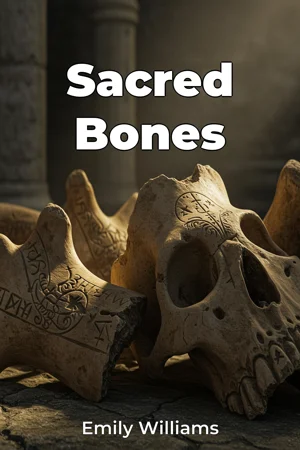
What secrets lie dormant within the silent remains of saints and the long-forgotten dead, and what enduring power do these relics hold across diverse cultures? "Sacred Bones" embarks on an exploration of the veneration of saintly relics and ancient religious burials, examining their profound spiritual importance across various faiths and historical periods. The book delves into how human societies have, for millennia, imbued the physical remains of certain individuals with extraordinary significance, transforming bones and burial sites into potent symbols of faith, power, and identity This book will cover three key interconnected topics: (1) the historical evolution of relic veneration, tracing its origins and transformations across different religious traditions; (2) the social and political functions of relics, demonstrating how they have been used to legitimize authority, consolidate power, and construct collective identities; and (3) the spiritual and psychological dimensions of relic veneration, exploring the beliefs, emotions, and experiences associated with these practices. These topics are important because they shed light on the enduring human need for connection to the sacred and the ways in which material objects can mediate that connection. The narrative proceeds by first laying the groundwork with a discussion on the anthropological and historical context of death rituals and ancestor veneration. This establishes a foundation for understanding how specific individuals came to be identified as "holy" or "sacred" after death. We then delve into the major religious traditions that feature relic veneration, beginning with early Christianity and its development of martyr cults, which emphasizes the role of relics in solidifying early Christian identity and challenging Roman imperial power. Subsequent chapters examine the role of relics in Buddhism, exploring the significance of stupas and bodily remains of enlightened figures, focusing on how these relics function as focal points for pilgrimage and meditation, reinforcing Buddhist teachings and community. The analysis also extends to other faiths, including Shinto and indigenous belief systems, to illustrate the global phenomenon of attributing spiritual power to human remains. The central argument of "Sacred Bones" is that the veneration of relics and ancient burials is a universal human phenomenon, reflecting a deep-seated need to connect with the past, affirm shared values, and transcend the limitations of mortal existence. This argument is important because it challenges simplistic interpretations of relic veneration as mere superstition, instead revealing it as a complex and multifaceted practice with profound social, political, and spiritual implications. The evidence presented in "Sacred Bones" draws from a range of sources, including archaeological findings, hagiographies, theological treatises, ethnographic studies, and historical accounts. The research methodology involves a comparative analysis of different religious traditions, combined with close readings of primary source materials and nuanced interpretations of secondary scholarship. This book connects to several other fields of study, including anthropology, archaeology, art history, sociology, and political science. By drawing on insights from these disciplines, "Sacred Bones" offers a holistic understanding of relic veneration and its significance in human societies. "Sacred Bones" adopts a rigorous yet accessible approach, presenting complex information in a clear and engaging style. The book is aimed at a broad audience, including students, scholars, and general readers with an interest in history, religion, and cultural studies. It offers a comprehensive and insightful analysis of a fascinating and often misunderstood phenomenon, providing readers with a deeper appreciation of the diverse ways in which human societies have engaged with the sacred. The book's scope is intentionally broad, encompassing a global perspective on relic veneration across different time periods and religious traditions. While it does not delve into minute details of every specific case, it provides a comprehensive overview of the key themes and issues involved. The book is valuable to readers interested in understanding how religious beliefs and practices shape human behavior and how material objects can serve as powerful symbols of faith and identity. "Sacred Bones" addresses several ongoing debates in the field, including the authenticity of relics, the ethics of displaying and selling human remains, and the relationship between relic veneration and religious fundamentalism. By engaging with these controversies, the book offers a nuanced and thought-provoking analysis of a complex and often contentious subject.
What secrets lie dormant within the silent remains of saints and the long-forgotten dead, and what enduring power do these relics hold across diverse cultures? "Sacred Bones" embarks on an exploration of the veneration of saintly relics and ancient religious burials, examining their profound spiritual importance across various faiths and historical periods. The book delves into how human societies have, for millennia, imbued the physical remains of certain individuals with extraordinary significance, transforming bones and burial sites into potent symbols of faith, power, and identity This book will cover three key interconnected topics: (1) the historical evolution of relic veneration, tracing its origins and transformations across different religious traditions; (2) the social and political functions of relics, demonstrating how they have been used to legitimize authority, consolidate power, and construct collective identities; and (3) the spiritual and psychological dimensions of relic veneration, exploring the beliefs, emotions, and experiences associated with these practices. These topics are important because they shed light on the enduring human need for connection to the sacred and the ways in which material objects can mediate that connection. The narrative proceeds by first laying the groundwork with a discussion on the anthropological and historical context of death rituals and ancestor veneration. This establishes a foundation for understanding how specific individuals came to be identified as "holy" or "sacred" after death. We then delve into the major religious traditions that feature relic veneration, beginning with early Christianity and its development of martyr cults, which emphasizes the role of relics in solidifying early Christian identity and challenging Roman imperial power. Subsequent chapters examine the role of relics in Buddhism, exploring the significance of stupas and bodily remains of enlightened figures, focusing on how these relics function as focal points for pilgrimage and meditation, reinforcing Buddhist teachings and community. The analysis also extends to other faiths, including Shinto and indigenous belief systems, to illustrate the global phenomenon of attributing spiritual power to human remains. The central argument of "Sacred Bones" is that the veneration of relics and ancient burials is a universal human phenomenon, reflecting a deep-seated need to connect with the past, affirm shared values, and transcend the limitations of mortal existence. This argument is important because it challenges simplistic interpretations of relic veneration as mere superstition, instead revealing it as a complex and multifaceted practice with profound social, political, and spiritual implications. The evidence presented in "Sacred Bones" draws from a range of sources, including archaeological findings, hagiographies, theological treatises, ethnographic studies, and historical accounts. The research methodology involves a comparative analysis of different religious traditions, combined with close readings of primary source materials and nuanced interpretations of secondary scholarship. This book connects to several other fields of study, including anthropology, archaeology, art history, sociology, and political science. By drawing on insights from these disciplines, "Sacred Bones" offers a holistic understanding of relic veneration and its significance in human societies. "Sacred Bones" adopts a rigorous yet accessible approach, presenting complex information in a clear and engaging style. The book is aimed at a broad audience, including students, scholars, and general readers with an interest in history, religion, and cultural studies. It offers a comprehensive and insightful analysis of a fascinating and often misunderstood phenomenon, providing readers with a deeper appreciation of the diverse ways in which human societies have engaged with the sacred. The book's scope is intentionally broad, encompassing a global perspective on relic veneration across different time periods and religious traditions. While it does not delve into minute details of every specific case, it provides a comprehensive overview of the key themes and issues involved. The book is valuable to readers interested in understanding how religious beliefs and practices shape human behavior and how material objects can serve as powerful symbols of faith and identity. "Sacred Bones" addresses several ongoing debates in the field, including the authenticity of relics, the ethics of displaying and selling human remains, and the relationship between relic veneration and religious fundamentalism. By engaging with these controversies, the book offers a nuanced and thought-provoking analysis of a complex and often contentious subject.
"Sacred Bones" explores the widespread practice of venerating saintly and religious relics and ancient burials, examining their spiritual and historical importance across diverse cultures and faiths. For millennia, societies have imbued the remains of certain individuals with extraordinary significance, transforming bones and burial sites into potent symbols of faith, power, and identity. Did you know that relic veneration isn't just about superstition; it reflects a deep-seated human need to connect with the past and affirm shared values? The book traces the historical evolution of relic veneration, examining how it has been used to legitimize authority, consolidate power, and construct collective identities. Consider, for example, how early Christianity developed martyr cults, with relics playing a key role in solidifying identity and challenging Roman rule. Subsequent chapters explore the role of relics in Buddhism, Shinto, and other indigenous belief systems. This approach reveals relic veneration as a complex and multifaceted practice with profound social, political, and spiritual implications. The narrative begins by laying the groundwork with a discussion on death rituals and ancestor veneration, establishing a foundation for understanding how specific individuals came to be identified as "holy" after death, before delving into major religious traditions. "Sacred Bones" offers a comprehensive and insightful analysis, adopting a rigorous yet accessible approach suitable for anyone interested in history, religion, and cultural studies.
Book Details
ISBN
9788235227270
Publisher
Publifye AS
Your Licenses
You don't own any licenses for this book
Purchase a license below to unlock this book and download the EPUB.
Purchase License
Select a tier to unlock this book
Need bulk licensing?
Contact us for enterprise agreements.