
About This Book
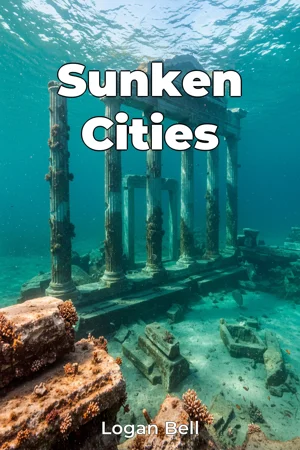
What secrets lie dormant beneath the ocean's surface, concealed by the relentless tides and forgotten by time? "Sunken Cities" explores the captivating world of submerged settlements, delving into the history, mythology, and archaeological realities of civilizations lost to the sea. This book examines not only the iconic legend of Atlantis but also ventures into the lesser-known yet equally compelling stories of lost urban centers around the globe. This journey into the deep focuses on three main themes: the geological and environmental factors contributing to submersion; the cultural impact and enduring myths surrounding these lost cities; and the modern archaeological techniques used to uncover and interpret their remains. Understanding these aspects is essential for appreciating the complex interplay between human civilization and the volatile forces of nature that have shaped our world. Within these pages, readers will discover the historical, social, and geological contexts that led to the abandonment and eventual inundation of these settlements. A basic understanding of coastal geology, ancient seafaring practices, and the dynamics of rising sea levels will provide a richer understanding of the processes involved. The central argument of "Sunken Cities" is that the study of sunken cities provides valuable insights into past civilizations and offers crucial lessons for addressing contemporary challenges related to climate change, coastal management, and the preservation of cultural heritage. By examining the successes and failures of past societies in adapting to environmental shifts, we can gain knowledge to inform our approaches to current and future crises. The book will begin by introducing the concept of sunken cities and establishing a framework for analyzing their rise and fall. The subsequent sections will be divided geographically, with each focusing on specific regions and their submerged sites. One major section will explore the Mediterranean, including the classical myths surrounding Atlantis and the archaeological discoveries at Pavlopetri, Greece, one of the oldest submerged cities. Another section will investigate cities lost to rising sea levels in Asia, such as Dwarka in India and other settlements lost to tsunamis and coastal erosion. A final section will analyze the broader implications of sunken cities, providing a synthesis of the lessons learned and offering insights into the future of coastal communities facing similar threats. The evidence presented will draw extensively from archaeological reports, geological surveys, historical texts, and underwater photography. Unique data sources, such as sonar mapping of submerged structures and analysis of sediment cores to reconstruct past environments, will be presented to support the arguments. "Sunken Cities" connects to several other fields, including marine archaeology, environmental science, and anthropology. Marine archaeology provides the tools and techniques for investigating submerged sites, while environmental science offers insights into the geological and climatic processes that led to their submersion. Anthropology helps to understand the cultural and social contexts of the societies that inhabited these cities. This book adopts a narrative non-fiction approach, combining rigorous research with compelling storytelling to bring the stories of these lost cities to life. The writing style is accessible yet informative, catering to a broad audience interested in history, archaeology, and the environment. The target audience includes history enthusiasts, archaeology buffs, environmentalists, and anyone fascinated by the mysteries of the deep. The book will be valuable to those seeking a well-researched and engaging exploration of a topic that blends historical intrigue with contemporary relevance. As a work of non-fiction, "Sunken Cities" adheres to the highest standards of accuracy and objectivity, presenting information in a balanced and unbiased manner. While the book aims to provide a comprehensive overview, it acknowledges the limitations of current knowledge and the ongoing nature of archaeological research. For example, it does not delve into pseudoarchaeology, which is beyond its scope. The information in "Sunken Cities" has real-world applications for coastal planning, disaster preparedness, and cultural heritage management. By understanding the factors that led to the submersion of past settlements, we can develop strategies to protect vulnerable coastal communities and preserve our shared cultural heritage for future generations. The field of sunken cities is not without its debates, particularly regarding the interpretation of archaeological evidence and the allocation of resources for underwater exploration. "Sunken Cities" acknowledges these controversies and presents different perspectives, encouraging readers to critically evaluate the evidence and draw their own informed conclusions.
What secrets lie dormant beneath the ocean's surface, concealed by the relentless tides and forgotten by time? "Sunken Cities" explores the captivating world of submerged settlements, delving into the history, mythology, and archaeological realities of civilizations lost to the sea. This book examines not only the iconic legend of Atlantis but also ventures into the lesser-known yet equally compelling stories of lost urban centers around the globe. This journey into the deep focuses on three main themes: the geological and environmental factors contributing to submersion; the cultural impact and enduring myths surrounding these lost cities; and the modern archaeological techniques used to uncover and interpret their remains. Understanding these aspects is essential for appreciating the complex interplay between human civilization and the volatile forces of nature that have shaped our world. Within these pages, readers will discover the historical, social, and geological contexts that led to the abandonment and eventual inundation of these settlements. A basic understanding of coastal geology, ancient seafaring practices, and the dynamics of rising sea levels will provide a richer understanding of the processes involved. The central argument of "Sunken Cities" is that the study of sunken cities provides valuable insights into past civilizations and offers crucial lessons for addressing contemporary challenges related to climate change, coastal management, and the preservation of cultural heritage. By examining the successes and failures of past societies in adapting to environmental shifts, we can gain knowledge to inform our approaches to current and future crises. The book will begin by introducing the concept of sunken cities and establishing a framework for analyzing their rise and fall. The subsequent sections will be divided geographically, with each focusing on specific regions and their submerged sites. One major section will explore the Mediterranean, including the classical myths surrounding Atlantis and the archaeological discoveries at Pavlopetri, Greece, one of the oldest submerged cities. Another section will investigate cities lost to rising sea levels in Asia, such as Dwarka in India and other settlements lost to tsunamis and coastal erosion. A final section will analyze the broader implications of sunken cities, providing a synthesis of the lessons learned and offering insights into the future of coastal communities facing similar threats. The evidence presented will draw extensively from archaeological reports, geological surveys, historical texts, and underwater photography. Unique data sources, such as sonar mapping of submerged structures and analysis of sediment cores to reconstruct past environments, will be presented to support the arguments. "Sunken Cities" connects to several other fields, including marine archaeology, environmental science, and anthropology. Marine archaeology provides the tools and techniques for investigating submerged sites, while environmental science offers insights into the geological and climatic processes that led to their submersion. Anthropology helps to understand the cultural and social contexts of the societies that inhabited these cities. This book adopts a narrative non-fiction approach, combining rigorous research with compelling storytelling to bring the stories of these lost cities to life. The writing style is accessible yet informative, catering to a broad audience interested in history, archaeology, and the environment. The target audience includes history enthusiasts, archaeology buffs, environmentalists, and anyone fascinated by the mysteries of the deep. The book will be valuable to those seeking a well-researched and engaging exploration of a topic that blends historical intrigue with contemporary relevance. As a work of non-fiction, "Sunken Cities" adheres to the highest standards of accuracy and objectivity, presenting information in a balanced and unbiased manner. While the book aims to provide a comprehensive overview, it acknowledges the limitations of current knowledge and the ongoing nature of archaeological research. For example, it does not delve into pseudoarchaeology, which is beyond its scope. The information in "Sunken Cities" has real-world applications for coastal planning, disaster preparedness, and cultural heritage management. By understanding the factors that led to the submersion of past settlements, we can develop strategies to protect vulnerable coastal communities and preserve our shared cultural heritage for future generations. The field of sunken cities is not without its debates, particularly regarding the interpretation of archaeological evidence and the allocation of resources for underwater exploration. "Sunken Cities" acknowledges these controversies and presents different perspectives, encouraging readers to critically evaluate the evidence and draw their own informed conclusions.
"Sunken Cities" explores the fascinating world of submerged settlements, blending history, mythology, and archaeological discoveries to uncover civilizations lost to the sea. The book examines the geological and environmental factors that caused these cities to sink, as well as the cultural impact and enduring myths they’ve inspired. Readers will discover how marine archaeology and insights from environmental science are used to study these underwater sites. The book progresses geographically, starting with the Mediterranean, including the legendary Atlantis and the submerged city of Pavlopetri in Greece, one of the oldest underwater cities. It then moves to Asia, exploring cities like Dwarka in India, lost to rising sea levels and tsunamis. By studying these sites, the book reveals valuable lessons for addressing contemporary issues like climate change and coastal management, demonstrating how past civilizations' struggles offer insights for our future.
Book Details
ISBN
9788235227232
Publisher
Publifye AS
Your Licenses
You don't own any licenses for this book
Purchase a license below to unlock this book and download the EPUB.
Purchase License
Select a tier to unlock this book
Need bulk licensing?
Contact us for enterprise agreements.