
About This Book
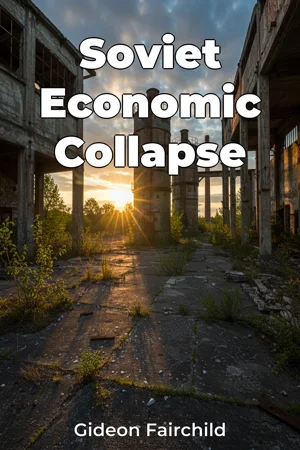
Why did the seemingly invincible Soviet Union, a superpower for nearly half a century, collapse so rapidly and unexpectedly? This book, *Soviet Economic Collapse*, delves into the intricate web of economic, historical, and political factors that precipitated the USSR's dissolution. We explore the structural weaknesses inherent in the Soviet economic system, the chronic misallocation of resources, and the ultimately self-defeating nature of the reforms attempted under late-era Soviet leadership. These themes are critical to understanding not only the past but also the challenges faced by centrally planned economies and authoritarian regimes even today. The book situates the Soviet economic system within its historical context, examining its origins in the aftermath of the Russian Revolution and its subsequent evolution through periods of rapid industrialization, wartime mobilization, and Cold War competition. Understanding this history is vital to appreciating the deep-seated structural problems that ultimately proved fatal. The central argument is that the Soviet Union's centrally planned economy, while initially successful in achieving specific goals like industrialization and military parity with the West, was fundamentally unsustainable due to its inability to adapt to changing global economic conditions, incentivize innovation, and efficiently allocate resources. *Soviet Economic Collapse* is structured to provide a comprehensive analysis: First, it introduces the core principles of Soviet economic planning, contrasting them with market-based systems. Second, it meticulously examines three major points which contributed to the collapse. These include: 1) The inherent inefficiencies of central planning, including its inability to accurately gauge consumer demand, leading to chronic shortages and surpluses. 2) The crippling burden of military spending, which diverted resources from civilian production and technological development. 3) The failure of Gorbachev's perestroika reforms, which, instead of revitalizing the economy, destabilized it further by introducing market mechanisms without addressing underlying structural problems. Finally, the book culminates in an assessment of the long-term consequences of the Soviet collapse, including its impact on the former Soviet republics and the global balance of power. The evidence presented draws upon a wide range of sources, including archival data from the Soviet era, statistical yearbooks, scholarly analyses of Soviet economic performance, and firsthand accounts from individuals who lived and worked within the Soviet system. The analysis also incorporates econometric modeling to quantify the impact of various factors on the Soviet economy. This book connects to other fields, such as political science, by analyzing the interplay between economic decline and political instability. It connects to sociology by exploring the social consequences of economic hardship and the erosion of public trust in the Soviet system. It further intersects with international relations by examining the geopolitical ramifications of the Soviet collapse. This book offers a unique perspective by focusing not only on the political events surrounding the collapse but also on the underlying economic forces that made it inevitable. It takes a balanced approach, acknowledging the achievements of the Soviet system while rigorously analyzing its fatal flaws. The writing style is academic yet accessible, aiming to make complex economic concepts understandable to a broad audience. While thoroughly researched and rigorous in its analysis, it avoids unnecessary jargon and uses clear, concise language. The target audience includes students and scholars of economics, history, and political science, as well as policymakers and anyone interested in understanding the rise and fall of great powers. This book would be valuable to anyone seeking to understand the challenges of economic development, the limitations of central planning, and the importance of institutional reform. As a work of economic and world history, the book adheres to the conventions of rigorous research, citation, and objective analysis. Biases are avoided through the presentation of diverse viewpoints and a reliance on verifiable data. The scope of the book is limited to the internal economic factors contributing to the Soviet collapse, with less emphasis on external pressures such as Western containment policies, although these are acknowledged. The book does not aim to provide a comprehensive history of the Soviet Union but rather to focus on the economic dimensions of its decline. The information presented has real-world applications for understanding contemporary economic challenges, such as the transition from planned to market economies, the role of state intervention in the economy, and the importance of sound economic policies for long-term stability. There are ongoing debates about the relative importance of various factors contributing to the Soviet collapse. This book addresses these debates by presenting a nuanced analysis that acknowledges the complexity of the issue and avoids simplistic explanations.
Why did the seemingly invincible Soviet Union, a superpower for nearly half a century, collapse so rapidly and unexpectedly? This book, *Soviet Economic Collapse*, delves into the intricate web of economic, historical, and political factors that precipitated the USSR's dissolution. We explore the structural weaknesses inherent in the Soviet economic system, the chronic misallocation of resources, and the ultimately self-defeating nature of the reforms attempted under late-era Soviet leadership. These themes are critical to understanding not only the past but also the challenges faced by centrally planned economies and authoritarian regimes even today. The book situates the Soviet economic system within its historical context, examining its origins in the aftermath of the Russian Revolution and its subsequent evolution through periods of rapid industrialization, wartime mobilization, and Cold War competition. Understanding this history is vital to appreciating the deep-seated structural problems that ultimately proved fatal. The central argument is that the Soviet Union's centrally planned economy, while initially successful in achieving specific goals like industrialization and military parity with the West, was fundamentally unsustainable due to its inability to adapt to changing global economic conditions, incentivize innovation, and efficiently allocate resources. *Soviet Economic Collapse* is structured to provide a comprehensive analysis: First, it introduces the core principles of Soviet economic planning, contrasting them with market-based systems. Second, it meticulously examines three major points which contributed to the collapse. These include: 1) The inherent inefficiencies of central planning, including its inability to accurately gauge consumer demand, leading to chronic shortages and surpluses. 2) The crippling burden of military spending, which diverted resources from civilian production and technological development. 3) The failure of Gorbachev's perestroika reforms, which, instead of revitalizing the economy, destabilized it further by introducing market mechanisms without addressing underlying structural problems. Finally, the book culminates in an assessment of the long-term consequences of the Soviet collapse, including its impact on the former Soviet republics and the global balance of power. The evidence presented draws upon a wide range of sources, including archival data from the Soviet era, statistical yearbooks, scholarly analyses of Soviet economic performance, and firsthand accounts from individuals who lived and worked within the Soviet system. The analysis also incorporates econometric modeling to quantify the impact of various factors on the Soviet economy. This book connects to other fields, such as political science, by analyzing the interplay between economic decline and political instability. It connects to sociology by exploring the social consequences of economic hardship and the erosion of public trust in the Soviet system. It further intersects with international relations by examining the geopolitical ramifications of the Soviet collapse. This book offers a unique perspective by focusing not only on the political events surrounding the collapse but also on the underlying economic forces that made it inevitable. It takes a balanced approach, acknowledging the achievements of the Soviet system while rigorously analyzing its fatal flaws. The writing style is academic yet accessible, aiming to make complex economic concepts understandable to a broad audience. While thoroughly researched and rigorous in its analysis, it avoids unnecessary jargon and uses clear, concise language. The target audience includes students and scholars of economics, history, and political science, as well as policymakers and anyone interested in understanding the rise and fall of great powers. This book would be valuable to anyone seeking to understand the challenges of economic development, the limitations of central planning, and the importance of institutional reform. As a work of economic and world history, the book adheres to the conventions of rigorous research, citation, and objective analysis. Biases are avoided through the presentation of diverse viewpoints and a reliance on verifiable data. The scope of the book is limited to the internal economic factors contributing to the Soviet collapse, with less emphasis on external pressures such as Western containment policies, although these are acknowledged. The book does not aim to provide a comprehensive history of the Soviet Union but rather to focus on the economic dimensions of its decline. The information presented has real-world applications for understanding contemporary economic challenges, such as the transition from planned to market economies, the role of state intervention in the economy, and the importance of sound economic policies for long-term stability. There are ongoing debates about the relative importance of various factors contributing to the Soviet collapse. This book addresses these debates by presenting a nuanced analysis that acknowledges the complexity of the issue and avoids simplistic explanations.
*Soviet Economic Collapse* examines the economic factors leading to the USSR's unexpected downfall. It argues that the Soviet Union's centrally planned economy, while initially successful in industrializing and achieving military parity, ultimately failed due to its structural inability to adapt, incentivize innovation, and efficiently allocate resources. One critical insight is that the chronic misallocation of resources led to widespread shortages and surpluses. Another is the crippling effect of excessive military spending, which diverted resources from civilian production and technological advancement. The book explores the Soviet economic system's historical context, tracing its roots from the Russian Revolution through periods of rapid industrialization and Cold War competition. It then meticulously examines the inherent inefficiencies of central planning, the burden of military spending, and the failure of Gorbachev's *perestroika* reforms. Ultimately, the book assesses the long-term consequences of the Soviet collapse on former Soviet republics and the global balance of power. It offers a balanced perspective by acknowledging the achievements alongside the fatal flaws, making complex economic concepts accessible to a broad audience interested in economic history and the challenges of authoritarian regimes.
Book Details
ISBN
9788235227089
Publisher
Publifye AS
Your Licenses
You don't own any licenses for this book
Purchase a license below to unlock this book and download the EPUB.
Purchase License
Select a tier to unlock this book
Need bulk licensing?
Contact us for enterprise agreements.