
About This Book
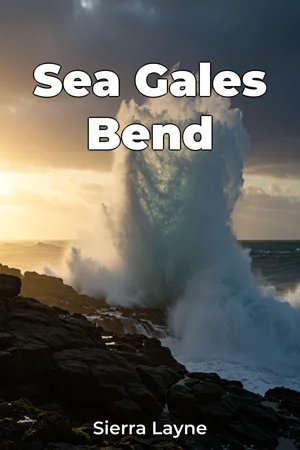
Have you ever wondered how sailors and coastal communities withstand the relentless force of ocean storms? "Sea Gales Bend" explores the critical intersection of human understanding, physical resilience, and environmental science in the face of extreme weather. This book delves into the art and science of ocean storm resistance, focusing on the pivotal role of body positioning in mitigating the dangers posed by these powerful forces. We will explore two key concepts: the fluid dynamics of wave impact and the biomechanics of human stability. Understanding how waves interact with solid surfaces and how the human body responds to sudden, extreme forces is paramount. We will also examine the meteorological patterns that give rise to intense coastal storms and their growing impact due to climate change. These topics are significant because they offer practical knowledge for anyone living, working, or recreating near the ocean, and they contribute to informed discussions around coastal safety and environmental adaptation. Throughout history, coastal communities have developed indigenous techniques for weathering storms. This book synthesizes these traditions with modern scientific understanding. A basic familiarity with physics, particularly mechanics and fluid dynamics, will be helpful but is not strictly required, as key concepts are explained in a manner accessible to a broad audience. Our central argument is that proactive application of body positioning techniques, informed by an understanding of wave dynamics and meteorological forecasting, can significantly increase the likelihood of survival and minimize injury during ocean storm events. This argument is vital because, as climate change intensifies, coastal regions are experiencing more frequent and severe storms, making effective coping strategies ever more essential. "Sea Gales Bend" is structured to progressively build your understanding. First, we introduce the fundamental principles of wave formation, storm surge, and the physics of impact. The book then develops its core ideas through three major sections. The first examines specific body positioning strategies for minimizing wave impact, considering variables like wave size, angle of approach, and surrounding terrain. This section draws upon historical accounts, survivor testimonies, and experimental data. The second analyzes case studies of successful and unsuccessful storm survival, highlighting the role of preparation, awareness, and adaptability. The third section integrates meteorological forecasting techniques with body positioning strategies, enabling readers to proactively respond to changing storm conditions. Finally, we discuss the practical applications of this knowledge for coastal residents, emergency responders, and recreational water users. The book relies on a combination of historical records, scientific literature, meteorological data, and original field research. We present diverse data sources, including wave tank experiments, analysis of storm surge patterns, and interviews with survivors and first responders. A unique aspect of our methodology is the use of computational fluid dynamics to model wave impact on the human body in various positions. "Sea Gales Bend" also connects to several other fields. Coastal engineering informs the design of seawalls and other protective structures. Emergency management strategies play a critical role in evacuation planning and post-storm response. Human physiology provides vital insights into the body's response to stress and trauma during storm events. These connections enhance our understanding of storm resilience as a multifaceted challenge that requires a holistic approach. A key innovative element of this book is the integration of traditional maritime knowledge with cutting-edge scientific analysis, yielding a practical and highly relevant approach to storm survival. The tone is informative and engaging, balancing scientific rigor with accessibility for a general audience. We adopt a conversational approach when describing historical instances and survivor accounts. The target audience includes coastal residents, surfers, kayakers, sailors, lifeguards, emergency responders, and anyone interested in coastal safety and climate change adaptation. This book is valuable because it offers actionable strategies for mitigating risk in the face of increasingly unpredictable weather patterns. Being non-fiction in the earth sciences and adventure genres, the book blends scientific accuracy with compelling real-world narratives. We present complex scientific information with clarity and precision, while maintaining a strong narrative thread through survivor stories and historical analyses. The book focuses specifically on the impact of ocean storms on human body positioning and does not delve into the broader aspects of coastal infrastructure development or large-scale climate modeling, although these factors are acknowledged as contributing factors. The knowledge presented in this book can be applied practically by readers to enhance their personal safety and preparedness during ocean storm events, informing decisions about evacuation routes, safe zones, and effective self-defense strategies. While this book offers practical guidance for mitigating risk during ocean storms, it also acknowledges the inherent uncertainties and complexities of these events. The debate around the efficacy of different coastal protection strategies is touched upon, but the central focus remains individual and small group preparedness.
Have you ever wondered how sailors and coastal communities withstand the relentless force of ocean storms? "Sea Gales Bend" explores the critical intersection of human understanding, physical resilience, and environmental science in the face of extreme weather. This book delves into the art and science of ocean storm resistance, focusing on the pivotal role of body positioning in mitigating the dangers posed by these powerful forces. We will explore two key concepts: the fluid dynamics of wave impact and the biomechanics of human stability. Understanding how waves interact with solid surfaces and how the human body responds to sudden, extreme forces is paramount. We will also examine the meteorological patterns that give rise to intense coastal storms and their growing impact due to climate change. These topics are significant because they offer practical knowledge for anyone living, working, or recreating near the ocean, and they contribute to informed discussions around coastal safety and environmental adaptation. Throughout history, coastal communities have developed indigenous techniques for weathering storms. This book synthesizes these traditions with modern scientific understanding. A basic familiarity with physics, particularly mechanics and fluid dynamics, will be helpful but is not strictly required, as key concepts are explained in a manner accessible to a broad audience. Our central argument is that proactive application of body positioning techniques, informed by an understanding of wave dynamics and meteorological forecasting, can significantly increase the likelihood of survival and minimize injury during ocean storm events. This argument is vital because, as climate change intensifies, coastal regions are experiencing more frequent and severe storms, making effective coping strategies ever more essential. "Sea Gales Bend" is structured to progressively build your understanding. First, we introduce the fundamental principles of wave formation, storm surge, and the physics of impact. The book then develops its core ideas through three major sections. The first examines specific body positioning strategies for minimizing wave impact, considering variables like wave size, angle of approach, and surrounding terrain. This section draws upon historical accounts, survivor testimonies, and experimental data. The second analyzes case studies of successful and unsuccessful storm survival, highlighting the role of preparation, awareness, and adaptability. The third section integrates meteorological forecasting techniques with body positioning strategies, enabling readers to proactively respond to changing storm conditions. Finally, we discuss the practical applications of this knowledge for coastal residents, emergency responders, and recreational water users. The book relies on a combination of historical records, scientific literature, meteorological data, and original field research. We present diverse data sources, including wave tank experiments, analysis of storm surge patterns, and interviews with survivors and first responders. A unique aspect of our methodology is the use of computational fluid dynamics to model wave impact on the human body in various positions. "Sea Gales Bend" also connects to several other fields. Coastal engineering informs the design of seawalls and other protective structures. Emergency management strategies play a critical role in evacuation planning and post-storm response. Human physiology provides vital insights into the body's response to stress and trauma during storm events. These connections enhance our understanding of storm resilience as a multifaceted challenge that requires a holistic approach. A key innovative element of this book is the integration of traditional maritime knowledge with cutting-edge scientific analysis, yielding a practical and highly relevant approach to storm survival. The tone is informative and engaging, balancing scientific rigor with accessibility for a general audience. We adopt a conversational approach when describing historical instances and survivor accounts. The target audience includes coastal residents, surfers, kayakers, sailors, lifeguards, emergency responders, and anyone interested in coastal safety and climate change adaptation. This book is valuable because it offers actionable strategies for mitigating risk in the face of increasingly unpredictable weather patterns. Being non-fiction in the earth sciences and adventure genres, the book blends scientific accuracy with compelling real-world narratives. We present complex scientific information with clarity and precision, while maintaining a strong narrative thread through survivor stories and historical analyses. The book focuses specifically on the impact of ocean storms on human body positioning and does not delve into the broader aspects of coastal infrastructure development or large-scale climate modeling, although these factors are acknowledged as contributing factors. The knowledge presented in this book can be applied practically by readers to enhance their personal safety and preparedness during ocean storm events, informing decisions about evacuation routes, safe zones, and effective self-defense strategies. While this book offers practical guidance for mitigating risk during ocean storms, it also acknowledges the inherent uncertainties and complexities of these events. The debate around the efficacy of different coastal protection strategies is touched upon, but the central focus remains individual and small group preparedness.
"Sea Gales Bend" explores the science of surviving ocean storms, focusing on the surprising power of body positioning and understanding wave dynamics. It reveals how proactive techniques, combined with meteorological forecasting, can significantly improve survival rates during increasingly frequent and severe coastal storms. For example, understanding how waves interact with solid surfaces is paramount in mitigating wave impact. The book synthesizes traditional maritime knowledge with modern scientific analysis, offering actionable strategies for coastal residents, emergency responders, and recreational water users. It progresses from the fundamentals of wave formation and storm surge to specific body positioning strategies, case studies of storm survival, and the integration of meteorological forecasting. This approach connects human biomechanics with fluid dynamics, providing readers with a practical guide to coastal safety and climate change adaptation.
Book Details
ISBN
9788235227058
Publisher
Publifye AS
Your Licenses
You don't own any licenses for this book
Purchase a license below to unlock this book and download the EPUB.
Purchase License
Select a tier to unlock this book
Need bulk licensing?
Contact us for enterprise agreements.