
About This Book
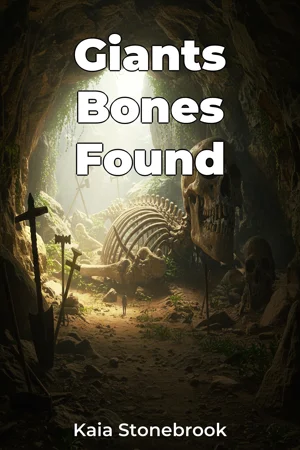
What if the myths and legends dismissed as fantasy held a kernel of truth, pointing towards a reality stranger than we currently accept? "Giants Bones Found" explores the compelling evidence suggesting the existence of exceptionally large human remains, meticulously unearthed and analyzed through archaeological methods. This book proposes a reevaluation of accepted historical narratives, particularly in light of discoveries that seem to align with accounts found within the Book of Numbers and other ancient texts. This investigation is critical because it challenges conventional understandings of human history and evolutionary biology. If giants existed, their presence and interaction with smaller humans would drastically alter our understanding of civilization's origins, technological advancements, and the development of religious beliefs. The implications extend beyond historical curiosity, potentially reshaping current anthropological and archaeological paradigms. The context for this inquiry lies within the intersection of biblical studies, ancient history, and physical anthropology. While the Book of Numbers offers textual accounts of giants encountered by the Israelites, modern archaeology provides the tangible findings – bones, tools, and structures – that may corroborate these narratives. Readers should have a basic understanding of archaeological principles, historical analysis, and skeletal anatomy to fully appreciate the presented arguments. The central argument of "Giants Bones Found" is that substantial archaeological evidence, often overlooked or dismissed, supports the existence of hominids significantly larger than modern humans. This evidence, when combined with the historical accounts and cultural narratives from various regions of the world, presents a compelling case for reconsidering the established timeline of human evolution and interaction. The book unfolds in a structured progression. First, it introduces the concept of giants in mythology and religious texts, specifically focusing on the Book of Numbers and its descriptions. Second, the core of the book presents archaeological findings from various sites worldwide, detailing skeletal remains, artifacts, and architectural anomalies indicative of giant-sized beings. These findings are analyzed using standard archaeological methods, including carbon dating, DNA analysis, and comparative anatomy. Third, the book explores the historical accounts of giants in different cultures. It examines the correlation between those accounts and the found bones, to establish a pattern of proof. Finally, the book concludes with an exploration into why such evidence might have been suppressed or misinterpreted in mainstream science and offers suggestions for future research directions. The evidence presented in this book primarily consists of documented archaeological discoveries, including skeletal dimensions, geological context, and associated artifacts. It also incorporates textual analyses of ancient religious and historical documents. A unique aspect involves the cross-referencing of these archaeological findings with the specific descriptions outlined in the Book of Numbers, seeking correlations between textual accounts and physical evidence. "Giants Bones Found" bridges the gap between history, science, and religion. It connects to anthropology by questioning established narratives of human origin and evolution, to biblical studies by offering potential archaeological support for ancient texts, and to mythology by grounding legendary figures in tangible realities. These interdisciplinary connections strengthen the argument by providing multiple perspectives on the presented evidence. This book stands apart by directly confronting the dismissal of giant remains within mainstream science. It offers a novel perspective by meticulously comparing archaeological data with specific details from the Book of Numbers, providing a framework for interpreting ambiguous findings. The tone is objective and analytical, avoiding sensational claims while presenting a compelling case for further investigation. The target audience includes readers interested in archaeology, ancient history, biblical studies, and alternative historical narratives. It appeals to those who are open to challenging conventional wisdom and exploring the mysteries of human origins. As a non-fiction work, "Giants Bones Found" adheres to the principles of factual accuracy, evidence-based argumentation, and transparency in methodology. It acknowledges potential biases and limitations while presenting a clear and well-supported analysis of the available evidence. The scope of the book is limited to examining archaeological evidence and textual accounts relevant to the existence of giant-sized hominids. It does not delve into speculative theories about extraterrestrial involvement or other unsubstantiated claims. Readers can apply the information in this book to critically evaluate historical narratives and archaeological findings. It encourages a more nuanced and open-minded approach to interpreting evidence that challenges established paradigms. The book addresses the controversy surrounding the interpretation of anomalous archaeological findings. It acknowledges the skepticism within the scientific community regarding claims of giant remains and provides a counter-argument based on the presented evidence.
What if the myths and legends dismissed as fantasy held a kernel of truth, pointing towards a reality stranger than we currently accept? "Giants Bones Found" explores the compelling evidence suggesting the existence of exceptionally large human remains, meticulously unearthed and analyzed through archaeological methods. This book proposes a reevaluation of accepted historical narratives, particularly in light of discoveries that seem to align with accounts found within the Book of Numbers and other ancient texts. This investigation is critical because it challenges conventional understandings of human history and evolutionary biology. If giants existed, their presence and interaction with smaller humans would drastically alter our understanding of civilization's origins, technological advancements, and the development of religious beliefs. The implications extend beyond historical curiosity, potentially reshaping current anthropological and archaeological paradigms. The context for this inquiry lies within the intersection of biblical studies, ancient history, and physical anthropology. While the Book of Numbers offers textual accounts of giants encountered by the Israelites, modern archaeology provides the tangible findings – bones, tools, and structures – that may corroborate these narratives. Readers should have a basic understanding of archaeological principles, historical analysis, and skeletal anatomy to fully appreciate the presented arguments. The central argument of "Giants Bones Found" is that substantial archaeological evidence, often overlooked or dismissed, supports the existence of hominids significantly larger than modern humans. This evidence, when combined with the historical accounts and cultural narratives from various regions of the world, presents a compelling case for reconsidering the established timeline of human evolution and interaction. The book unfolds in a structured progression. First, it introduces the concept of giants in mythology and religious texts, specifically focusing on the Book of Numbers and its descriptions. Second, the core of the book presents archaeological findings from various sites worldwide, detailing skeletal remains, artifacts, and architectural anomalies indicative of giant-sized beings. These findings are analyzed using standard archaeological methods, including carbon dating, DNA analysis, and comparative anatomy. Third, the book explores the historical accounts of giants in different cultures. It examines the correlation between those accounts and the found bones, to establish a pattern of proof. Finally, the book concludes with an exploration into why such evidence might have been suppressed or misinterpreted in mainstream science and offers suggestions for future research directions. The evidence presented in this book primarily consists of documented archaeological discoveries, including skeletal dimensions, geological context, and associated artifacts. It also incorporates textual analyses of ancient religious and historical documents. A unique aspect involves the cross-referencing of these archaeological findings with the specific descriptions outlined in the Book of Numbers, seeking correlations between textual accounts and physical evidence. "Giants Bones Found" bridges the gap between history, science, and religion. It connects to anthropology by questioning established narratives of human origin and evolution, to biblical studies by offering potential archaeological support for ancient texts, and to mythology by grounding legendary figures in tangible realities. These interdisciplinary connections strengthen the argument by providing multiple perspectives on the presented evidence. This book stands apart by directly confronting the dismissal of giant remains within mainstream science. It offers a novel perspective by meticulously comparing archaeological data with specific details from the Book of Numbers, providing a framework for interpreting ambiguous findings. The tone is objective and analytical, avoiding sensational claims while presenting a compelling case for further investigation. The target audience includes readers interested in archaeology, ancient history, biblical studies, and alternative historical narratives. It appeals to those who are open to challenging conventional wisdom and exploring the mysteries of human origins. As a non-fiction work, "Giants Bones Found" adheres to the principles of factual accuracy, evidence-based argumentation, and transparency in methodology. It acknowledges potential biases and limitations while presenting a clear and well-supported analysis of the available evidence. The scope of the book is limited to examining archaeological evidence and textual accounts relevant to the existence of giant-sized hominids. It does not delve into speculative theories about extraterrestrial involvement or other unsubstantiated claims. Readers can apply the information in this book to critically evaluate historical narratives and archaeological findings. It encourages a more nuanced and open-minded approach to interpreting evidence that challenges established paradigms. The book addresses the controversy surrounding the interpretation of anomalous archaeological findings. It acknowledges the skepticism within the scientific community regarding claims of giant remains and provides a counter-argument based on the presented evidence.
"Giants Bones Found" delves into the intriguing possibility that giants, often relegated to myth, may have actually existed. The book explores archaeological evidence, such as unusually large skeletal remains, and aligns these discoveries with historical texts, including the Book of Numbers, challenging conventional understandings of human origins. It invites readers to reconsider the established timeline of human evolution by examining overlooked or dismissed findings, particularly in the context of ancient narratives. Could the stories of giants be more than just legends? The book uniquely cross-references archaeological data with specific details from the Book of Numbers, creating a framework for interpreting ambiguous findings related to giant bones. It meticulously analyzes skeletal remains, artifacts, and architectural anomalies, presenting a case for hominids significantly larger than modern humans. This approach allows for the reevaluation of accepted historical narratives and explores why such evidence might have been suppressed or misinterpreted. Unfolding systematically, "Giants Bones Found" begins by examining the concept of giants in mythology and religious texts, then transitions to presenting archaeological findings from various sites worldwide. It analyzes these findings using standard archaeological methods and correlates them with historical accounts. Ultimately, the book encourages a critical evaluation of historical narratives and a more open-minded approach to evidence that challenges established paradigms within science and history.
Book Details
ISBN
9788235226990
Publisher
Publifye AS
Your Licenses
You don't own any licenses for this book
Purchase a license below to unlock this book and download the EPUB.
Purchase License
Select a tier to unlock this book
Need bulk licensing?
Contact us for enterprise agreements.