
About This Book
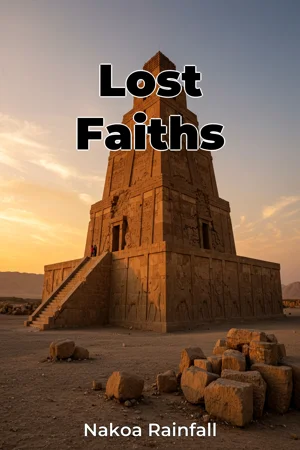
What happens to the gods when their worshippers disappear? 'Lost Faiths' embarks on a journey through the ruins of belief, exploring the fascinating and often tragic stories of extinct religions, forgotten deities, and spiritual traditions that have vanished from the world stage. This book seeks to understand why these faiths faded, what their legacies are, and what their disappearance tells us about the nature of belief itself. We delve into three core areas. First, we examine the *rise and fall of complex pantheons*, such as those of ancient Mesopotamia and Egypt, tracing the social, political, and environmental factors that contributed to their decline. These lost pantheons offer unique insights into how complex societies structured their worldviews and moral codes. Second, we investigate *localized and indigenous spiritual practices* that were eradicated or absorbed by dominant religions, whether through conquest, conversion, or cultural assimilation. Understanding these traditions is crucial for preserving the memory of marginalized communities and their unique perspectives on the universe. Finally, we analyze *the enduring impact of these lost faiths* on art, literature, philosophy, and even contemporary religious practices, demonstrating that their influence extends far beyond their own time. Grounded in historical research, archaeological findings, and comparative religious studies, 'Lost Faiths' draws upon a wide range of sources, including ancient texts, inscriptions, archaeological reports, and ethnographic studies. This book argues that the study of extinct religions offers a vital perspective on the dynamism of belief systems and the fragility of cultural heritage. By understanding why some faiths disappear, we gain a deeper appreciation for the diverse ways humans have sought meaning and purpose throughout history and a sharper understanding of the factors that sustain or erode religious traditions. The book is structured in three parts. Part One introduces the concept of religious extinction, exploring the various causes and consequences of such disappearances. Part Two examines specific case studies, from the polytheistic religions of the ancient Mediterranean to indigenous traditions in the Americas, Africa, and Oceania. Each case study is carefully analyzed, drawing upon primary and secondary sources to reconstruct the beliefs, rituals, and social contexts of these lost faiths. Part Three considers the broader implications of religious extinction, exploring its impact on cultural identity, social memory, and the ongoing evolution of religious thought. 'Lost Faiths' connects to various fields, including anthropology, sociology, and archaeology. Anthropology provides insights into the cultural contexts of extinct religions, while sociology helps us understand the social dynamics that contribute to their decline. Archaeology provides tangible evidence of past religious practices, allowing us to reconstruct the material culture of lost faiths. This interdisciplinary approach allows for a more nuanced and comprehensive understanding of religious extinction. This book is written in an accessible and engaging style, appealing to a broad audience interested in history, religion, and cultural studies. While grounded in scholarly research, the book avoids jargon and presents its arguments in a clear and compelling manner. 'Lost Faiths' is intended for anyone curious about the diversity of human spiritual experience and the forces that shape religious belief. The scope of 'Lost Faiths' is broad, covering a wide range of extinct religions from around the world. While it is impossible to provide an exhaustive account of every lost faith, the book focuses on representative examples that illustrate the key themes and arguments. 'Lost Faiths' recognizes the limitations of our knowledge about extinct religions and acknowledges the ongoing debates among scholars in this field. Where evidence is limited or contested, the book presents different perspectives and encourages readers to critically evaluate the available information. Some interpretations around specific lost faiths are still subject to academic discussion, and the book aims to present that information in a balanced and objective manner. By examining the remnants of once-vibrant belief systems, 'Lost Faiths' encourages readers to reflect on the ever-changing landscape of human spirituality and the importance of preserving cultural heritage for future generations.
What happens to the gods when their worshippers disappear? 'Lost Faiths' embarks on a journey through the ruins of belief, exploring the fascinating and often tragic stories of extinct religions, forgotten deities, and spiritual traditions that have vanished from the world stage. This book seeks to understand why these faiths faded, what their legacies are, and what their disappearance tells us about the nature of belief itself. We delve into three core areas. First, we examine the *rise and fall of complex pantheons*, such as those of ancient Mesopotamia and Egypt, tracing the social, political, and environmental factors that contributed to their decline. These lost pantheons offer unique insights into how complex societies structured their worldviews and moral codes. Second, we investigate *localized and indigenous spiritual practices* that were eradicated or absorbed by dominant religions, whether through conquest, conversion, or cultural assimilation. Understanding these traditions is crucial for preserving the memory of marginalized communities and their unique perspectives on the universe. Finally, we analyze *the enduring impact of these lost faiths* on art, literature, philosophy, and even contemporary religious practices, demonstrating that their influence extends far beyond their own time. Grounded in historical research, archaeological findings, and comparative religious studies, 'Lost Faiths' draws upon a wide range of sources, including ancient texts, inscriptions, archaeological reports, and ethnographic studies. This book argues that the study of extinct religions offers a vital perspective on the dynamism of belief systems and the fragility of cultural heritage. By understanding why some faiths disappear, we gain a deeper appreciation for the diverse ways humans have sought meaning and purpose throughout history and a sharper understanding of the factors that sustain or erode religious traditions. The book is structured in three parts. Part One introduces the concept of religious extinction, exploring the various causes and consequences of such disappearances. Part Two examines specific case studies, from the polytheistic religions of the ancient Mediterranean to indigenous traditions in the Americas, Africa, and Oceania. Each case study is carefully analyzed, drawing upon primary and secondary sources to reconstruct the beliefs, rituals, and social contexts of these lost faiths. Part Three considers the broader implications of religious extinction, exploring its impact on cultural identity, social memory, and the ongoing evolution of religious thought. 'Lost Faiths' connects to various fields, including anthropology, sociology, and archaeology. Anthropology provides insights into the cultural contexts of extinct religions, while sociology helps us understand the social dynamics that contribute to their decline. Archaeology provides tangible evidence of past religious practices, allowing us to reconstruct the material culture of lost faiths. This interdisciplinary approach allows for a more nuanced and comprehensive understanding of religious extinction. This book is written in an accessible and engaging style, appealing to a broad audience interested in history, religion, and cultural studies. While grounded in scholarly research, the book avoids jargon and presents its arguments in a clear and compelling manner. 'Lost Faiths' is intended for anyone curious about the diversity of human spiritual experience and the forces that shape religious belief. The scope of 'Lost Faiths' is broad, covering a wide range of extinct religions from around the world. While it is impossible to provide an exhaustive account of every lost faith, the book focuses on representative examples that illustrate the key themes and arguments. 'Lost Faiths' recognizes the limitations of our knowledge about extinct religions and acknowledges the ongoing debates among scholars in this field. Where evidence is limited or contested, the book presents different perspectives and encourages readers to critically evaluate the available information. Some interpretations around specific lost faiths are still subject to academic discussion, and the book aims to present that information in a balanced and objective manner. By examining the remnants of once-vibrant belief systems, 'Lost Faiths' encourages readers to reflect on the ever-changing landscape of human spirituality and the importance of preserving cultural heritage for future generations.
"Lost Faiths" explores the captivating, yet often somber, stories of extinct religions and forgotten deities, examining why these belief systems vanished and their lasting impact. The book delves into the rise and fall of complex pantheons, like those of ancient Egypt, revealing how social, political, and environmental factors contributed to their decline. It also investigates localized spiritual traditions eradicated by dominant religions, emphasizing the importance of preserving the memory of marginalized communities. Drawing from historical research, archaeological findings, and comparative religious studies, the book adopts an interdisciplinary approach, integrating insights from anthropology, sociology, and archaeology. "Lost Faiths" is structured in three parts, beginning with an introduction to religious extinction, then moving to case studies from ancient civilizations, and concluding with the broader implications for cultural identity and religious thought. This approach makes the book a valuable resource for those interested in understanding the dynamism of belief systems and the fragility of cultural heritage.
Book Details
ISBN
9788235226792
Publisher
Publifye AS
Your Licenses
You don't own any licenses for this book
Purchase a license below to unlock this book and download the EPUB.
Purchase License
Select a tier to unlock this book
Need bulk licensing?
Contact us for enterprise agreements.