
About This Book
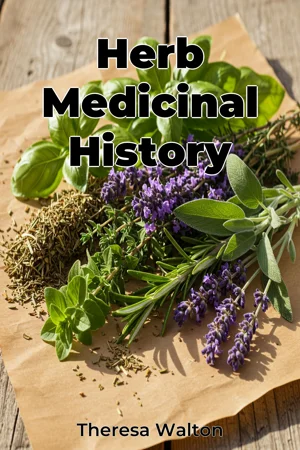
Have you ever considered that the oregano in your kitchen cabinet has roots stretching back to ancient healing practices? "Herb Medicinal History" explores the fascinating dual role of culinary herbs in both nourishing our bodies and serving as vital components of traditional medicine across diverse cultures, from European apothecaries to Asian healing systems and Indigenous practices. This book delves into the historical uses, cultural significance, and medicinal properties of common herbs, providing a comprehensive view of their impact on human health and well-being. The key themes of this book revolve around the historical context of herbal medicine, the ethno-botanical uses of specific herbs, and the scientific validation of their medicinal properties. Understanding the historical context is crucial because it reveals how different societies have developed unique relationships with their local flora, shaping their medicinal practices and culinary traditions. Ethnobotany offers insights into how herbs have been utilized for centuries, often predating modern scientific understanding. Examining the scientific evidence provides a balanced perspective, bridging traditional knowledge with contemporary research. This book's central argument is that culinary herbs represent a rich, underappreciated resource of both nutritional and medicinal value, with a history deeply intertwined with human civilization. By understanding the historical uses, cultural significance, and scientifically-validated benefits of these herbs, we can gain a more holistic understanding of health and well-being, informing both culinary practices and personal healthcare choices. "Herb Medicinal History" begins by introducing the global history of herbal medicine, highlighting the key figures and milestones that shaped its development. The book proceeds with detailed profiles of approximately twenty common culinary herbs, organized by botanical family and geographical origin. Each profile includes the herb's traditional uses in different cultures, its chemical composition, and a review of the scientific literature supporting its medicinal properties. The analysis extends into the culinary applications along with how these practices assisted in the evolution of herbal remedies. The culmination of the book explores the implications of this knowledge for modern healthcare and culinary practices, advocating for a more integrated approach to health that values both traditional wisdom and scientific rigor. The evidence presented in this book draws from a wide range of sources, including historical texts, ethnobotanical surveys, and peer-reviewed scientific studies. Unique data sources include digitized versions of historical pharmacopoeias and herbals, providing direct access to centuries-old information. This book connects to several other fields, including history, anthropology, and pharmacology. The historical context allows for exploring changes in medical practices. Anthropological insights shed light on the cultural significance of herbs. The connection with pharmacology provides insights into the modes of action of various compounds. This book takes a balanced and evidence-based approach, integrating historical context, ethno-botanical data, and scientific research to provide a comprehensive and nuanced understanding of the medicinal properties of culinary herbs. The writing style aims to be accessible to a broad audience, avoiding jargon and focusing on clear, concise explanations. The target audience includes health enthusiasts, culinary professionals, students of history and anthropology, and anyone interested in learning more about the intersection of food, medicine, and culture. This book will appeal to readers who are interested in understanding the historical perspective of using common herbs like basil, thyme, oregano, rosemary, sage, and lavender. As a work of non-fiction within the genres of History, Health & Fitness, and Health Fitness, this book adheres to standards of accuracy, objectivity, and thoroughness, providing well-researched information and clearly cited sources. The scope of the book focuses specifically on herbs with culinary applications and a documented history of medicinal use, excluding purely medicinal plants or those lacking significant historical or cultural context. The information presented in this book can be applied in various practical ways, from informing healthy cooking habits to guiding the selection of herbal remedies for common ailments. Readers can use this knowledge to make more informed choices about the foods they eat and the healthcare practices they adopt. While many of the traditional uses of culinary herbs have been validated by modern science, some remain subjects of debate. This book addresses these controversies by presenting a balanced view of the available evidence, acknowledging the limitations of current research and the need for further investigation.
Have you ever considered that the oregano in your kitchen cabinet has roots stretching back to ancient healing practices? "Herb Medicinal History" explores the fascinating dual role of culinary herbs in both nourishing our bodies and serving as vital components of traditional medicine across diverse cultures, from European apothecaries to Asian healing systems and Indigenous practices. This book delves into the historical uses, cultural significance, and medicinal properties of common herbs, providing a comprehensive view of their impact on human health and well-being. The key themes of this book revolve around the historical context of herbal medicine, the ethno-botanical uses of specific herbs, and the scientific validation of their medicinal properties. Understanding the historical context is crucial because it reveals how different societies have developed unique relationships with their local flora, shaping their medicinal practices and culinary traditions. Ethnobotany offers insights into how herbs have been utilized for centuries, often predating modern scientific understanding. Examining the scientific evidence provides a balanced perspective, bridging traditional knowledge with contemporary research. This book's central argument is that culinary herbs represent a rich, underappreciated resource of both nutritional and medicinal value, with a history deeply intertwined with human civilization. By understanding the historical uses, cultural significance, and scientifically-validated benefits of these herbs, we can gain a more holistic understanding of health and well-being, informing both culinary practices and personal healthcare choices. "Herb Medicinal History" begins by introducing the global history of herbal medicine, highlighting the key figures and milestones that shaped its development. The book proceeds with detailed profiles of approximately twenty common culinary herbs, organized by botanical family and geographical origin. Each profile includes the herb's traditional uses in different cultures, its chemical composition, and a review of the scientific literature supporting its medicinal properties. The analysis extends into the culinary applications along with how these practices assisted in the evolution of herbal remedies. The culmination of the book explores the implications of this knowledge for modern healthcare and culinary practices, advocating for a more integrated approach to health that values both traditional wisdom and scientific rigor. The evidence presented in this book draws from a wide range of sources, including historical texts, ethnobotanical surveys, and peer-reviewed scientific studies. Unique data sources include digitized versions of historical pharmacopoeias and herbals, providing direct access to centuries-old information. This book connects to several other fields, including history, anthropology, and pharmacology. The historical context allows for exploring changes in medical practices. Anthropological insights shed light on the cultural significance of herbs. The connection with pharmacology provides insights into the modes of action of various compounds. This book takes a balanced and evidence-based approach, integrating historical context, ethno-botanical data, and scientific research to provide a comprehensive and nuanced understanding of the medicinal properties of culinary herbs. The writing style aims to be accessible to a broad audience, avoiding jargon and focusing on clear, concise explanations. The target audience includes health enthusiasts, culinary professionals, students of history and anthropology, and anyone interested in learning more about the intersection of food, medicine, and culture. This book will appeal to readers who are interested in understanding the historical perspective of using common herbs like basil, thyme, oregano, rosemary, sage, and lavender. As a work of non-fiction within the genres of History, Health & Fitness, and Health Fitness, this book adheres to standards of accuracy, objectivity, and thoroughness, providing well-researched information and clearly cited sources. The scope of the book focuses specifically on herbs with culinary applications and a documented history of medicinal use, excluding purely medicinal plants or those lacking significant historical or cultural context. The information presented in this book can be applied in various practical ways, from informing healthy cooking habits to guiding the selection of herbal remedies for common ailments. Readers can use this knowledge to make more informed choices about the foods they eat and the healthcare practices they adopt. While many of the traditional uses of culinary herbs have been validated by modern science, some remain subjects of debate. This book addresses these controversies by presenting a balanced view of the available evidence, acknowledging the limitations of current research and the need for further investigation.
"Herb Medicinal History" explores the intriguing connection between culinary herbs and traditional medicine, revealing their significant role in human health and well-being across cultures. From European apothecaries to Asian healing systems, common herbs like oregano and thyme have served dual purposes, nourishing our bodies while also acting as vital herbal remedies. The book highlights how different societies have uniquely utilized local flora, shaping both medicinal practices and culinary traditions. The book examines approximately twenty common culinary herbs, detailing their traditional uses, chemical compositions, and scientific validation. It progresses through the global history of herbal medicine, profiling key herbs by botanical family and geographical origin, and culminating in an exploration of modern healthcare and culinary implications. This approach integrates historical context, ethnobotanical data, and scientific research, providing a balanced and comprehensive understanding. By understanding the rich history and scientifically-validated benefits of these herbs, readers can gain a more holistic perspective on health fitness and well-being. "Herb Medicinal History" uncovers a wealth of information, advocating for an integrated approach that values both traditional wisdom and scientific rigor, informing modern culinary practices and healthcare choices.
Book Details
ISBN
9788235226464
Publisher
Publifye AS
Your Licenses
You don't own any licenses for this book
Purchase a license below to unlock this book and download the EPUB.
Purchase License
Select a tier to unlock this book
Need bulk licensing?
Contact us for enterprise agreements.