
About This Book
How did a small desert settlement transform into a global metropolis in a matter of decades? "Dubai Desert Transformation" explores the multifaceted evolution of Dubai from its historical roots to its current status as a leading hub for tourism, real estate, and financial services, examining the strategic decisions and socioeconomic factors that propelled this dramatic shift. This book delves into the heart of Dubai's economic diversification strategy, a critical case study in overcoming resource dependence and forging a sustainable future. This book is crucial because it provides a comprehensive analysis applicable to other nations or regions seeking to diversify their economies beyond reliance on a single commodity. It examines the delicate balance between rapid development and cultural preservation, offering insights into urban planning, economic policy, and international relations. It is also a useful resource in understanding the complexities of globalization and its impacts on regional economies. Historically, Dubai's economy was heavily reliant on oil revenues. This book provides the necessary historical context, tracing Dubai's development from a pearling and trading center to its oil boom era, setting the stage for understanding the subsequent strategic imperative to diversify. Readers will gain a comprehensive grasp of the political and economic landscape that shaped Dubai's trajectory. The central argument of "Dubai Desert Transformation" is that Dubai’s success stems from a deliberate, long-term vision coupled with effective policy implementation, strategic investment, and a willingness to embrace innovation. The book demonstrates how leadership played an instrumental role in fostering an environment conducive to entrepreneurship and attracting foreign investment. This argument is significant because it challenges conventional narratives of resource-dependent economies and offers a model for proactive economic transformation applicable in other contexts. The book is organized into distinct sections. First, it introduces the historical context of Dubai, highlighting its pre-oil economy and the initial discovery of oil reserves. Second, it examines the shift toward diversification, analyzing the development of the tourism sector, the growth of the real estate market, and the establishment of Dubai as a financial hub. These sections will detail the specific policies and initiatives—free zones, infrastructure projects, and marketing campaigns—that facilitated this diversification. Third, the book explores the social and cultural impacts of this rapid transformation, considering issues such as labor migration, cultural identity, and environmental sustainability. Finally, it culminates in an assessment of Dubai's achievements, challenges, and future prospects, offering practical lessons for other nations pursuing similar paths. "Dubai Desert Transformation" draws upon a variety of sources, including government reports, economic data, academic research, and interviews with key stakeholders, using quantitative analysis of economic indicators, policy analysis of government strategies, and qualitative insights from interviews and case studies. It also integrates urban planning theories and models to assess Dubai's physical development. The insights go beyond economics and history, extending to urban planning (analyzing Dubai's unique urban sprawl and architectural innovations), sociology (examining the impacts of rapid urbanization on social structures and cultural norms), and political science (assessing the role of governance and policy in shaping economic outcomes). These connections showcase the interdisciplinary nature of Dubai's transformation. This book offers a unique perspective by focusing not only on the economic achievements of Dubai but also on the social, cultural, and environmental consequences of its rapid development. It provides a nuanced analysis of both the successes and challenges of Dubai's transformation, avoiding simplistic narratives or celebratory accounts. The tone and writing style of "Dubai Desert Transformation" are academic yet accessible, aiming to engage both scholars and general readers interested in economics, history, and urban development. The book avoids jargon while maintaining intellectual rigor. The intended audience includes students and researchers in economics, history, urban studies, and Middle Eastern studies, as well as policymakers and business professionals interested in economic development and investment opportunities and those looking for insights into the dynamics of rapid urbanization and globalization. As a work of history and economics, this book prioritizes factual accuracy and evidence-based analysis. It avoids speculative or anecdotal narratives, focusing instead on verifiable data and rigorous research. It embraces the conventions of academic writing, including clear citations and a comprehensive bibliography. The scope of "Dubai Desert Transformation" is primarily focused on the period from the discovery of oil to the present day, examining the key policies, events, and actors that shaped Dubai's transformation. While it acknowledges the broader regional context, its primary focus remains on Dubai itself. The information can be applied to policymakers in other developing countries that seek to diversify their economies, businesses interested in investing in Dubai or similar markets, and urban planners seeking to learn from Dubai's development model. The book addresses controversies surrounding Dubai’s labor practices, environmental impact, and dependence on foreign workers, providing a balanced and critical assessment of these issues.
How did a small desert settlement transform into a global metropolis in a matter of decades? "Dubai Desert Transformation" explores the multifaceted evolution of Dubai from its historical roots to its current status as a leading hub for tourism, real estate, and financial services, examining the strategic decisions and socioeconomic factors that propelled this dramatic shift. This book delves into the heart of Dubai's economic diversification strategy, a critical case study in overcoming resource dependence and forging a sustainable future. This book is crucial because it provides a comprehensive analysis applicable to other nations or regions seeking to diversify their economies beyond reliance on a single commodity. It examines the delicate balance between rapid development and cultural preservation, offering insights into urban planning, economic policy, and international relations. It is also a useful resource in understanding the complexities of globalization and its impacts on regional economies. Historically, Dubai's economy was heavily reliant on oil revenues. This book provides the necessary historical context, tracing Dubai's development from a pearling and trading center to its oil boom era, setting the stage for understanding the subsequent strategic imperative to diversify. Readers will gain a comprehensive grasp of the political and economic landscape that shaped Dubai's trajectory. The central argument of "Dubai Desert Transformation" is that Dubai’s success stems from a deliberate, long-term vision coupled with effective policy implementation, strategic investment, and a willingness to embrace innovation. The book demonstrates how leadership played an instrumental role in fostering an environment conducive to entrepreneurship and attracting foreign investment. This argument is significant because it challenges conventional narratives of resource-dependent economies and offers a model for proactive economic transformation applicable in other contexts. The book is organized into distinct sections. First, it introduces the historical context of Dubai, highlighting its pre-oil economy and the initial discovery of oil reserves. Second, it examines the shift toward diversification, analyzing the development of the tourism sector, the growth of the real estate market, and the establishment of Dubai as a financial hub. These sections will detail the specific policies and initiatives—free zones, infrastructure projects, and marketing campaigns—that facilitated this diversification. Third, the book explores the social and cultural impacts of this rapid transformation, considering issues such as labor migration, cultural identity, and environmental sustainability. Finally, it culminates in an assessment of Dubai's achievements, challenges, and future prospects, offering practical lessons for other nations pursuing similar paths. "Dubai Desert Transformation" draws upon a variety of sources, including government reports, economic data, academic research, and interviews with key stakeholders, using quantitative analysis of economic indicators, policy analysis of government strategies, and qualitative insights from interviews and case studies. It also integrates urban planning theories and models to assess Dubai's physical development. The insights go beyond economics and history, extending to urban planning (analyzing Dubai's unique urban sprawl and architectural innovations), sociology (examining the impacts of rapid urbanization on social structures and cultural norms), and political science (assessing the role of governance and policy in shaping economic outcomes). These connections showcase the interdisciplinary nature of Dubai's transformation. This book offers a unique perspective by focusing not only on the economic achievements of Dubai but also on the social, cultural, and environmental consequences of its rapid development. It provides a nuanced analysis of both the successes and challenges of Dubai's transformation, avoiding simplistic narratives or celebratory accounts. The tone and writing style of "Dubai Desert Transformation" are academic yet accessible, aiming to engage both scholars and general readers interested in economics, history, and urban development. The book avoids jargon while maintaining intellectual rigor. The intended audience includes students and researchers in economics, history, urban studies, and Middle Eastern studies, as well as policymakers and business professionals interested in economic development and investment opportunities and those looking for insights into the dynamics of rapid urbanization and globalization. As a work of history and economics, this book prioritizes factual accuracy and evidence-based analysis. It avoids speculative or anecdotal narratives, focusing instead on verifiable data and rigorous research. It embraces the conventions of academic writing, including clear citations and a comprehensive bibliography. The scope of "Dubai Desert Transformation" is primarily focused on the period from the discovery of oil to the present day, examining the key policies, events, and actors that shaped Dubai's transformation. While it acknowledges the broader regional context, its primary focus remains on Dubai itself. The information can be applied to policymakers in other developing countries that seek to diversify their economies, businesses interested in investing in Dubai or similar markets, and urban planners seeking to learn from Dubai's development model. The book addresses controversies surrounding Dubai’s labor practices, environmental impact, and dependence on foreign workers, providing a balanced and critical assessment of these issues.
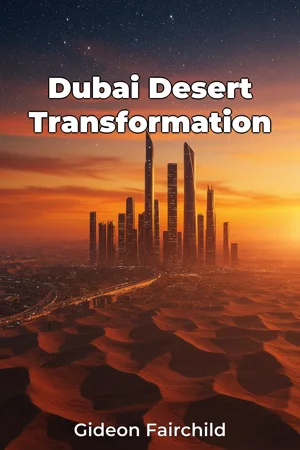
"Dubai Desert Transformation" explores the astounding evolution of Dubai from a small desert settlement into a global hub for tourism, real estate, and finance. The book examines how strategic decisions and socioeconomic factors propelled this transformation, particularly Dubai's successful economic diversification away from oil dependence. One intriguing aspect is how Dubai's leadership fostered an environment conducive to entrepreneurship, attracting significant foreign investment. The book also delves into urban planning innovations that facilitated rapid growth. The book progresses by first establishing the historical context of Dubai, from its pre-oil economy to the initial discovery of oil reserves. It then analyzes the shift toward diversification through the development of tourism, real estate, and finance sectors. Finally, the book assesses the social, cultural, and environmental impacts of this transformation. A key takeaway is the delicate balance Dubai strikes between rapid development and cultural preservation, which offers valuable insights for other nations undergoing similar transformations.
Book Details
ISBN
9788235226440
Publisher
Publifye AS
Your Licenses
You don't own any licenses for this book
Purchase a license below to unlock this book and download the EPUB.
Purchase License
Select a tier to unlock this book
Need bulk licensing?
Contact us for enterprise agreements.