
About This Book
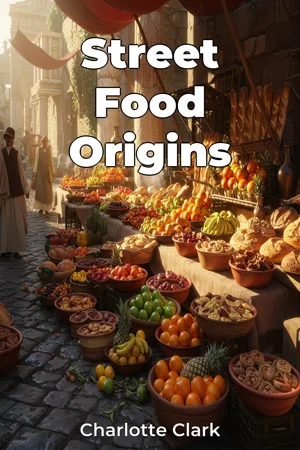
From the bustling marketplaces of ancient Rome to the vibrant night markets of modern Bangkok, what is it about street food that has captivated humanity for millennia? "Street Food Origins" embarks on a journey through time and across continents to unearth the rich history and cultural significance of urban food vendor traditions, culminating in an exploration of contemporary global street food culture and its signature dishes. This book delves into three key areas: the historical evolution of street food, its sociological impact on urban life, and its reflection of cultural identity. Understanding these topics is crucial because street food is not merely about inexpensive sustenance; it's a dynamic historical record, a vital component of urban economies, and a tangible expression of cultural heritage. It illuminates social structures, trade networks, and culinary innovations that have shaped societies worldwide. We begin by establishing a historical context, tracing the earliest forms of street vending back to ancient civilizations. While no prior knowledge is strictly required, a general understanding of world history will enrich the reader's experience. We will explore how factors such as urbanization, migration, and technological advancements have influenced the development of street food traditions. The central argument of "Street Food Origins" is that street food is a persistent and powerful force that both reflects and shapes urban culture. Its evolution is inextricably linked to the social, economic, and political landscapes of the cities it inhabits. This argument challenges the perception of street food as simply a modern phenomenon, revealing its deep roots and ongoing importance. The book's structure is designed to build a comprehensive understanding of this culinary landscape. First, an introduction will define street food and its various forms, distinguishing it from other culinary traditions. The subsequent sections will examine key periods and geographical regions: (1) Antiquity to the Middle Ages, focusing on the Roman Empire, medieval Europe, and early Asian empires; (2) The Early Modern Period to the Industrial Revolution, tracing the rise of street food in rapidly urbanizing cities; (3) The Modern Era, exploring the globalization of street food and its impact on contemporary food culture and global tourism. The book culminates with an analysis of current trends, including the rise of food trucks, the influence of social media, and the challenges faced by street food vendors in an increasingly regulated world. Supporting this narrative is a diverse range of evidence, including archaeological findings, historical documents, culinary texts, and contemporary sociological studies. Unique data sources include historical market records, census data on street vendor populations, and ethnographic studies of street food cultures around the world. Interdisciplinary connections enrich the study; sociology provides insights into the social dynamics of street food consumption, economics sheds light on its role in urban economies, and anthropology helps to understand its cultural symbolism. "Street Food Origins" stands out by taking a truly global and longitudinal approach, examining street food not as a static phenomenon but as a constantly evolving tradition shaped by historical forces and cultural exchange. The tone is informative and engaging, aiming to appeal to a broad audience with an interest in food history, urban studies, and cultural anthropology. The writing style blends historical analysis with vivid descriptions of street food experiences, creating an accessible and immersive reading experience. The target audience includes food enthusiasts, culinary historians, urban planners, and anyone interested in the intersection of food and culture. The book offers a unique perspective on the history of urban life and the evolution of culinary traditions. As a work of history and food writing, the book aims to be both scholarly rigorous and accessible, adhering to the conventions of academic research while maintaining a narrative flow that engages the reader. The scope of "Street Food Origins" is broad, covering a vast geographical area and a long historical period. However, it is intentionally limited to urban contexts, focusing on street food as an integral part of city life. The book's information can be applied practically by urban planners seeking to integrate street food into city design, by policymakers aiming to support street food vendors, and by food entrepreneurs looking to understand the cultural significance of their craft. The book also addresses ongoing debates surrounding street food, such as issues of food safety, hygiene standards, and the impact of globalization on local culinary traditions. "Street Food Origins" navigates these complexities, offering a nuanced and informed perspective on the challenges and opportunities facing street food vendors and consumers alike.
From the bustling marketplaces of ancient Rome to the vibrant night markets of modern Bangkok, what is it about street food that has captivated humanity for millennia? "Street Food Origins" embarks on a journey through time and across continents to unearth the rich history and cultural significance of urban food vendor traditions, culminating in an exploration of contemporary global street food culture and its signature dishes. This book delves into three key areas: the historical evolution of street food, its sociological impact on urban life, and its reflection of cultural identity. Understanding these topics is crucial because street food is not merely about inexpensive sustenance; it's a dynamic historical record, a vital component of urban economies, and a tangible expression of cultural heritage. It illuminates social structures, trade networks, and culinary innovations that have shaped societies worldwide. We begin by establishing a historical context, tracing the earliest forms of street vending back to ancient civilizations. While no prior knowledge is strictly required, a general understanding of world history will enrich the reader's experience. We will explore how factors such as urbanization, migration, and technological advancements have influenced the development of street food traditions. The central argument of "Street Food Origins" is that street food is a persistent and powerful force that both reflects and shapes urban culture. Its evolution is inextricably linked to the social, economic, and political landscapes of the cities it inhabits. This argument challenges the perception of street food as simply a modern phenomenon, revealing its deep roots and ongoing importance. The book's structure is designed to build a comprehensive understanding of this culinary landscape. First, an introduction will define street food and its various forms, distinguishing it from other culinary traditions. The subsequent sections will examine key periods and geographical regions: (1) Antiquity to the Middle Ages, focusing on the Roman Empire, medieval Europe, and early Asian empires; (2) The Early Modern Period to the Industrial Revolution, tracing the rise of street food in rapidly urbanizing cities; (3) The Modern Era, exploring the globalization of street food and its impact on contemporary food culture and global tourism. The book culminates with an analysis of current trends, including the rise of food trucks, the influence of social media, and the challenges faced by street food vendors in an increasingly regulated world. Supporting this narrative is a diverse range of evidence, including archaeological findings, historical documents, culinary texts, and contemporary sociological studies. Unique data sources include historical market records, census data on street vendor populations, and ethnographic studies of street food cultures around the world. Interdisciplinary connections enrich the study; sociology provides insights into the social dynamics of street food consumption, economics sheds light on its role in urban economies, and anthropology helps to understand its cultural symbolism. "Street Food Origins" stands out by taking a truly global and longitudinal approach, examining street food not as a static phenomenon but as a constantly evolving tradition shaped by historical forces and cultural exchange. The tone is informative and engaging, aiming to appeal to a broad audience with an interest in food history, urban studies, and cultural anthropology. The writing style blends historical analysis with vivid descriptions of street food experiences, creating an accessible and immersive reading experience. The target audience includes food enthusiasts, culinary historians, urban planners, and anyone interested in the intersection of food and culture. The book offers a unique perspective on the history of urban life and the evolution of culinary traditions. As a work of history and food writing, the book aims to be both scholarly rigorous and accessible, adhering to the conventions of academic research while maintaining a narrative flow that engages the reader. The scope of "Street Food Origins" is broad, covering a vast geographical area and a long historical period. However, it is intentionally limited to urban contexts, focusing on street food as an integral part of city life. The book's information can be applied practically by urban planners seeking to integrate street food into city design, by policymakers aiming to support street food vendors, and by food entrepreneurs looking to understand the cultural significance of their craft. The book also addresses ongoing debates surrounding street food, such as issues of food safety, hygiene standards, and the impact of globalization on local culinary traditions. "Street Food Origins" navigates these complexities, offering a nuanced and informed perspective on the challenges and opportunities facing street food vendors and consumers alike.
"Street Food Origins" explores the captivating world of urban food vendor traditions throughout history. From ancient Rome to modern Bangkok, street food has been a persistent force, reflecting and shaping urban culture. The book unearths intriguing facts, such as how street food acted as a vital component of urban economies and how its evolution is inextricably linked to social, economic, and political landscapes. It also highlights the role of street food as a tangible expression of cultural heritage, illuminating social structures and culinary innovations. The book progresses chronologically, starting with antiquity and moving through the Middle Ages, the Early Modern Period, and the Industrial Revolution, before culminating in an analysis of current trends like food trucks and social media's influence. It uses diverse evidence, including archaeological findings and sociological studies, to support its narrative. This approach differentiates it by taking a global and longitudinal view, appealing to food enthusiasts and culinary historians interested in the intersection of food history, urban studies, and cultural anthropology.
Book Details
ISBN
9788235226358
Publisher
Publifye AS
Your Licenses
You don't own any licenses for this book
Purchase a license below to unlock this book and download the EPUB.
Purchase License
Select a tier to unlock this book
Need bulk licensing?
Contact us for enterprise agreements.