
About This Book
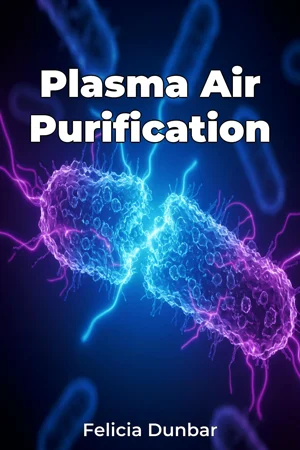
Can the very air we breathe be purified, not just filtered, but fundamentally transformed into a weapon against pathogens? "Plasma Air Purification" delves into the science of cold plasma technology, exploring how it generates reactive oxygen species and the mechanisms by which it neutralizes harmful microorganisms. This book is crucial because of the increasing need for effective air purification methods in hospitals, public spaces, and even homes, driven by the rise of antibiotic-resistant bacteria and novel viruses. This book examines three central themes: the fundamental physics and chemistry of cold plasma generation, the multifaceted biological effects of reactive oxygen species (ROS), and the specific mechanisms by which plasma neutralizes various pathogens. Understanding these areas is vital for developing and optimizing plasma-based air purification systems. The journey to understand plasma air purification builds upon a foundation of knowledge in plasma physics, microbiology, and biochemistry. The concepts of ionization, free radical chemistry, and microbial cell structure are essential for fully grasping the book’s arguments. We trace the historical development of plasma technology, from its early industrial applications to its more recent adoption in biomedical fields, providing context for its current role in air purification. Our central argument is that cold plasma technology offers a scientifically sound and practically viable solution for air purification, exceeding the capabilities of traditional filtration methods by actively neutralizing airborne pathogens. This argument is supported by the unique ability of cold plasma to generate a diverse range of ROS, which can disrupt microbial cell structures and inactivate viruses. The book is structured to guide the reader through a comprehensive exploration of plasma air purification. First, we introduce the fundamental concepts of plasma physics and chemistry relevant to air purification. Then, we develop the understanding of ROS by exploring their generation, characteristics, and interaction with biological molecules. Subsequently, we delve into the specific mechanisms by which plasma neutralizes various types of pathogens, including bacteria, viruses, and fungi, describing the observed effects on their cellular structures and infectious capabilities. We show the evidence with extensive experimental data, including spectroscopic analysis of plasma composition, in vitro studies of pathogen inactivation, and in vivo evaluations of air purification efficacy. The book’s findings are grounded in peer-reviewed scientific publications and original experimental results, ensuring a rigorous and evidence-based approach. This book sits at the intersection of plasma physics, microbiology, and environmental science. The understanding of plasma generation relies on physics. Its application to pathogen inactivation is rooted in microbiology. Its deployment for air purification relates to environmental science. This interdisciplinary approach enhances the book’s argument by providing a holistic perspective on the technology's capabilities and limitations. What distinguishes this book is its comprehensive and quantitative analysis of pathogen inactivation mechanisms. We clarify the roles of different reactive species and the factors influencing their effectiveness. By providing this level of detail, we aim to move beyond descriptive accounts of plasma air purification to a predictive understanding that can guide the design of more efficient systems. The tone is academic yet accessible, with a clear and concise writing style that makes complex scientific concepts understandable to a broad audience. Our target audience includes researchers and engineers in the fields of plasma technology, environmental science, and healthcare, as well as public health officials and anyone interested in learning about advanced air purification methods. The book offers immediate value by providing a comprehensive overview of the field, identifying research gaps, and suggesting directions for future development. As a non-fiction science book, "Plasma Air Purification" prioritizes factual accuracy, objectivity, and transparency. We clearly distinguish between established knowledge and speculative interpretations, and we acknowledge the limitations of current research. The book's scope is intentionally limited to cold plasma technology for air purification. We acknowledge and address the ongoing debates surrounding the long-term health effects of exposure to low levels of ROS and the potential for pathogens to develop resistance to plasma treatment. The information presented in this book can be directly applied to the design and optimization of plasma-based air purification systems for various settings, improving air quality and reducing the spread of infectious diseases.
Can the very air we breathe be purified, not just filtered, but fundamentally transformed into a weapon against pathogens? "Plasma Air Purification" delves into the science of cold plasma technology, exploring how it generates reactive oxygen species and the mechanisms by which it neutralizes harmful microorganisms. This book is crucial because of the increasing need for effective air purification methods in hospitals, public spaces, and even homes, driven by the rise of antibiotic-resistant bacteria and novel viruses. This book examines three central themes: the fundamental physics and chemistry of cold plasma generation, the multifaceted biological effects of reactive oxygen species (ROS), and the specific mechanisms by which plasma neutralizes various pathogens. Understanding these areas is vital for developing and optimizing plasma-based air purification systems. The journey to understand plasma air purification builds upon a foundation of knowledge in plasma physics, microbiology, and biochemistry. The concepts of ionization, free radical chemistry, and microbial cell structure are essential for fully grasping the book’s arguments. We trace the historical development of plasma technology, from its early industrial applications to its more recent adoption in biomedical fields, providing context for its current role in air purification. Our central argument is that cold plasma technology offers a scientifically sound and practically viable solution for air purification, exceeding the capabilities of traditional filtration methods by actively neutralizing airborne pathogens. This argument is supported by the unique ability of cold plasma to generate a diverse range of ROS, which can disrupt microbial cell structures and inactivate viruses. The book is structured to guide the reader through a comprehensive exploration of plasma air purification. First, we introduce the fundamental concepts of plasma physics and chemistry relevant to air purification. Then, we develop the understanding of ROS by exploring their generation, characteristics, and interaction with biological molecules. Subsequently, we delve into the specific mechanisms by which plasma neutralizes various types of pathogens, including bacteria, viruses, and fungi, describing the observed effects on their cellular structures and infectious capabilities. We show the evidence with extensive experimental data, including spectroscopic analysis of plasma composition, in vitro studies of pathogen inactivation, and in vivo evaluations of air purification efficacy. The book’s findings are grounded in peer-reviewed scientific publications and original experimental results, ensuring a rigorous and evidence-based approach. This book sits at the intersection of plasma physics, microbiology, and environmental science. The understanding of plasma generation relies on physics. Its application to pathogen inactivation is rooted in microbiology. Its deployment for air purification relates to environmental science. This interdisciplinary approach enhances the book’s argument by providing a holistic perspective on the technology's capabilities and limitations. What distinguishes this book is its comprehensive and quantitative analysis of pathogen inactivation mechanisms. We clarify the roles of different reactive species and the factors influencing their effectiveness. By providing this level of detail, we aim to move beyond descriptive accounts of plasma air purification to a predictive understanding that can guide the design of more efficient systems. The tone is academic yet accessible, with a clear and concise writing style that makes complex scientific concepts understandable to a broad audience. Our target audience includes researchers and engineers in the fields of plasma technology, environmental science, and healthcare, as well as public health officials and anyone interested in learning about advanced air purification methods. The book offers immediate value by providing a comprehensive overview of the field, identifying research gaps, and suggesting directions for future development. As a non-fiction science book, "Plasma Air Purification" prioritizes factual accuracy, objectivity, and transparency. We clearly distinguish between established knowledge and speculative interpretations, and we acknowledge the limitations of current research. The book's scope is intentionally limited to cold plasma technology for air purification. We acknowledge and address the ongoing debates surrounding the long-term health effects of exposure to low levels of ROS and the potential for pathogens to develop resistance to plasma treatment. The information presented in this book can be directly applied to the design and optimization of plasma-based air purification systems for various settings, improving air quality and reducing the spread of infectious diseases.
"Plasma Air Purification" explores the innovative use of cold plasma technology to actively neutralize airborne pathogens, going beyond traditional filtration methods. This technology hinges on generating reactive oxygen species (ROS) that disrupt microbial cell structures, offering a promising solution to combat antibiotic-resistant bacteria and novel viruses. The book highlights how plasma air purification can fundamentally transform our approach to air quality in healthcare, public spaces, and homes. The book delves into the physics and chemistry of cold plasma, examining how ROS interact with biological molecules to inactivate pathogens like bacteria, viruses, and fungi. It presents experimental data, including spectroscopic analysis and in vitro studies, to support its claims. Understanding plasma physics, microbiology, and biochemistry are crucial for appreciating the book's in-depth analysis. The book progresses systematically, first introducing plasma physics and chemistry, then exploring ROS, and finally detailing pathogen neutralization mechanisms. What sets this book apart is its comprehensive and quantitative analysis, clarifying the roles of different reactive species and guiding the design of more efficient air purification systems. This makes it a valuable resource for researchers, engineers, and public health officials seeking advanced air purification strategies.
Book Details
ISBN
9788235226310
Publisher
Publifye AS
Your Licenses
You don't own any licenses for this book
Purchase a license below to unlock this book and download the EPUB.
Purchase License
Select a tier to unlock this book
Need bulk licensing?
Contact us for enterprise agreements.