
About This Book
Can ancient traditions adapt and flourish within the concrete confines of modern urban life? "Grass Crafts Endure" delves into this question by examining the enduring significance of Shona grass crafts amidst the rapid urbanization of Zimbabwe. This book explores how a seemingly traditional skill has not only survived but evolved, providing economic opportunities and preserving cultural identity for Shona people in urban settings. The study focuses on three key areas: the socio-economic impact of grass crafts on urban Shona communities, the adaptation and innovation within grass craft techniques and designs, and the role of these crafts in maintaining and expressing Shona cultural identity in a modern context. These topics are important because they illuminate the complex interplay between tradition and modernity, demonstrating how cultural practices can be both a source of livelihood and a powerful symbol of heritage in a globalized world. Historically, grass crafts have been integral to Shona culture, serving practical and ceremonial purposes for generations. The techniques and designs were traditionally passed down through families, embedding the craft within the social fabric of rural communities. However, with increasing urbanization, Shona people have migrated to cities in search of economic opportunities, facing the challenge of maintaining their cultural traditions in a new environment. This book explores how grass crafts have navigated this transition. The central argument of "Grass Crafts Endure" is that Shona grass crafts represent a dynamic and resilient form of cultural expression, capable of adapting to the demands of urban life while simultaneously preserving and reinforcing Shona identity. This argument is significant because it challenges the common assumption that traditional practices inevitably decline in the face of modernization. The book is structured as follows: it begins by introducing the historical and cultural context of Shona grass crafts, tracing their origins and traditional uses (a). It then examines the economic impact of these crafts in urban areas, analyzing how they provide income and employment opportunities for Shona artisans (b). The study then discusses the ways in which grass craft techniques and designs have been adapted to suit urban markets and consumer preferences (b). Finally, the work explores the role of grass crafts in maintaining and expressing Shona cultural identity within urban communities, focusing on cultural transmission (b), and concludes with a discussion of the implications for cultural preservation and sustainable development (c). The book offers practical suggestions for supporting Shona artisans and promoting the appreciation of their craft (d). The book will use a mixed-methods approach, incorporating ethnographic research, interviews with Shona artisans, and market analysis to support its arguments. Primary data will be gathered through fieldwork in urban areas of Zimbabwe, focusing on communities where Shona artisans are concentrated. Secondary data will be drawn from academic literature, government reports, and market surveys. "Grass Crafts Endure" connects to several other fields of study, including anthropology, economics, and cultural studies. Anthropological perspectives will inform the analysis of cultural identity and tradition. Economic theories will be used to understand the market dynamics of grass crafts. Cultural studies will provide a framework for examining the representation and interpretation of Shona culture. This book offers a unique perspective by focusing on the agency and innovation of Shona artisans themselves. It moves beyond a purely descriptive account of cultural change to explore how individuals actively shape and adapt their traditions to meet the challenges and opportunities of urban life. The book adopts an accessible yet scholarly tone, aiming to engage both academic and general audiences. While grounded in rigorous research, the writing style is designed to be clear and engaging, avoiding technical jargon and providing vivid examples. The target audience includes students and scholars of African studies, anthropology, economics, and cultural studies, as well as anyone interested in the intersection of tradition and modernity, sustainable development, and the preservation of cultural heritage. This book will be valuable to them because it provides a nuanced and insightful analysis of a complex social phenomenon, offering practical lessons for promoting cultural preservation and economic empowerment. As a work of social science and crafts & hobbies, the study is crafted to be both informative and engaging, containing visual elements where appropriate and practical information where possible. The scope of the book is limited to the study of Shona grass crafts in urban Zimbabwe, while acknowledging the diverse range of other cultural practices and economic activities within Shona communities. This focus allows for a deeper and more nuanced analysis of the specific challenges and opportunities faced by grass artisans. The information in this book can be applied practically by readers interested in supporting fair trade initiatives, promoting cultural tourism, or developing sustainable livelihood programs for marginalized communities. It offers valuable insights into the role of cultural heritage in promoting economic development and social inclusion. While the resilience of Shona grass crafts is celebrated, the book also acknowledges the challenges faced by artisans, including competition from mass-produced goods, limited access to markets, and the threat of cultural appropriation. These issues will be addressed in a balanced and nuanced way, recognizing the complexities of cultural preservation in a globalized world.
Can ancient traditions adapt and flourish within the concrete confines of modern urban life? "Grass Crafts Endure" delves into this question by examining the enduring significance of Shona grass crafts amidst the rapid urbanization of Zimbabwe. This book explores how a seemingly traditional skill has not only survived but evolved, providing economic opportunities and preserving cultural identity for Shona people in urban settings. The study focuses on three key areas: the socio-economic impact of grass crafts on urban Shona communities, the adaptation and innovation within grass craft techniques and designs, and the role of these crafts in maintaining and expressing Shona cultural identity in a modern context. These topics are important because they illuminate the complex interplay between tradition and modernity, demonstrating how cultural practices can be both a source of livelihood and a powerful symbol of heritage in a globalized world. Historically, grass crafts have been integral to Shona culture, serving practical and ceremonial purposes for generations. The techniques and designs were traditionally passed down through families, embedding the craft within the social fabric of rural communities. However, with increasing urbanization, Shona people have migrated to cities in search of economic opportunities, facing the challenge of maintaining their cultural traditions in a new environment. This book explores how grass crafts have navigated this transition. The central argument of "Grass Crafts Endure" is that Shona grass crafts represent a dynamic and resilient form of cultural expression, capable of adapting to the demands of urban life while simultaneously preserving and reinforcing Shona identity. This argument is significant because it challenges the common assumption that traditional practices inevitably decline in the face of modernization. The book is structured as follows: it begins by introducing the historical and cultural context of Shona grass crafts, tracing their origins and traditional uses (a). It then examines the economic impact of these crafts in urban areas, analyzing how they provide income and employment opportunities for Shona artisans (b). The study then discusses the ways in which grass craft techniques and designs have been adapted to suit urban markets and consumer preferences (b). Finally, the work explores the role of grass crafts in maintaining and expressing Shona cultural identity within urban communities, focusing on cultural transmission (b), and concludes with a discussion of the implications for cultural preservation and sustainable development (c). The book offers practical suggestions for supporting Shona artisans and promoting the appreciation of their craft (d). The book will use a mixed-methods approach, incorporating ethnographic research, interviews with Shona artisans, and market analysis to support its arguments. Primary data will be gathered through fieldwork in urban areas of Zimbabwe, focusing on communities where Shona artisans are concentrated. Secondary data will be drawn from academic literature, government reports, and market surveys. "Grass Crafts Endure" connects to several other fields of study, including anthropology, economics, and cultural studies. Anthropological perspectives will inform the analysis of cultural identity and tradition. Economic theories will be used to understand the market dynamics of grass crafts. Cultural studies will provide a framework for examining the representation and interpretation of Shona culture. This book offers a unique perspective by focusing on the agency and innovation of Shona artisans themselves. It moves beyond a purely descriptive account of cultural change to explore how individuals actively shape and adapt their traditions to meet the challenges and opportunities of urban life. The book adopts an accessible yet scholarly tone, aiming to engage both academic and general audiences. While grounded in rigorous research, the writing style is designed to be clear and engaging, avoiding technical jargon and providing vivid examples. The target audience includes students and scholars of African studies, anthropology, economics, and cultural studies, as well as anyone interested in the intersection of tradition and modernity, sustainable development, and the preservation of cultural heritage. This book will be valuable to them because it provides a nuanced and insightful analysis of a complex social phenomenon, offering practical lessons for promoting cultural preservation and economic empowerment. As a work of social science and crafts & hobbies, the study is crafted to be both informative and engaging, containing visual elements where appropriate and practical information where possible. The scope of the book is limited to the study of Shona grass crafts in urban Zimbabwe, while acknowledging the diverse range of other cultural practices and economic activities within Shona communities. This focus allows for a deeper and more nuanced analysis of the specific challenges and opportunities faced by grass artisans. The information in this book can be applied practically by readers interested in supporting fair trade initiatives, promoting cultural tourism, or developing sustainable livelihood programs for marginalized communities. It offers valuable insights into the role of cultural heritage in promoting economic development and social inclusion. While the resilience of Shona grass crafts is celebrated, the book also acknowledges the challenges faced by artisans, including competition from mass-produced goods, limited access to markets, and the threat of cultural appropriation. These issues will be addressed in a balanced and nuanced way, recognizing the complexities of cultural preservation in a globalized world.
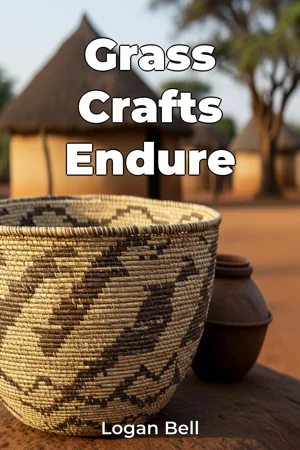
"Grass Crafts Endure" explores the survival and evolution of Shona grass crafts within Zimbabwe's urban landscape, revealing how these traditions persist amidst rapid urbanization. This book examines the economic significance of these crafts, noting how they provide crucial income for urban Shona communities. Moreover, it highlights the fascinating adaptation of traditional techniques to suit modern tastes, demonstrating the dynamic nature of cultural preservation in a globalized world. The study begins by establishing the historical roots of Shona grass crafts and then progresses to analyze their economic impact, adaptations in design, and role in maintaining cultural identity. It employs a mixed-methods approach, integrating ethnographic research with market analysis to uncover the intricate balance between tradition and modernity. These crafts, traditionally passed down through families, now serve as both a source of livelihood and a powerful symbol of cultural heritage, challenging assumptions about the decline of traditions in urban settings.
Book Details
ISBN
9788235226211
Publisher
Publifye AS
Your Licenses
You don't own any licenses for this book
Purchase a license below to unlock this book and download the EPUB.
Purchase License
Select a tier to unlock this book
Need bulk licensing?
Contact us for enterprise agreements.