
About This Book
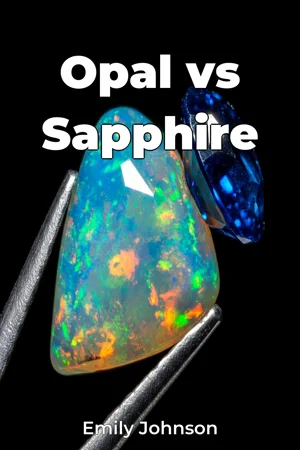
Have you ever considered precious gems as an alternative investment to stocks or bonds? "Opal vs Sapphire: A Comparative Analysis of Gemstone Investment Potential," delves into the world of precious gems, specifically opals and sapphires, to uncover their potential as viable and potentially lucrative investments. This book addresses the growing interest in diversifying investment portfolios beyond traditional assets, exploring tangible, beautiful, and historically significant gemstones. The book focuses primarily on two key aspects: valuation methodologies specific to opals and sapphires, and market analysis of these gems over recent decades. Understanding how these gems are appraised, graded, and valued is crucial. Furthermore, the book dissects historical price trends, geographical sourcing impacts, and emerging market influences to provide a holistic understanding of market dynamics. Why focus on these two gems? Opals and sapphires represent distinct positions in the gemstone market—opals, known for their unique play-of-color and often volatile pricing, contrast sharply with sapphires, celebrated for their durability, color consistency, and relative market stability. Understanding the historical context is essential. We examine the historical significance of opals and sapphires, from ancient adornments to symbols of royalty, tracing how their perception and value have evolved. Basic knowledge of gemology, including the Mohs hardness scale and the 4Cs (carat, cut, clarity, color) is helpful, but not mandatory, as these concepts will be explained. Our central argument is that while both opals and sapphires can offer investment opportunities, their risk profiles and potential returns differ significantly. Through rigorous analysis, we aim to equip readers with the knowledge to make informed decisions tailored to their investment goals and risk tolerance. This argument is vital because the gemstone market is often opaque and lacks the standardized regulations found in conventional financial markets, making informed decision-making paramount. The book is structured into three parts. Part 1 introduces gemological basics, market structures, and the historical significance. Part 2 offers in-depth analyses of opals and sapphires, respectively, covering their unique characteristics, grading systems, sourcing regions, and historical price performance. Part 3 compares and contrasts the two gems as investments, provides real-world case studies, discusses potential risks and rewards, and explores future market trends. Supporting the analysis are data from gemological laboratories (like GIA and AGS), market reports from leading auction houses (Christie's and Sotheby's), trade publications, and proprietary data collected from gemstone dealers and collectors. The methodologies used include statistical analysis of price data, comparative analysis of grading reports, and qualitative assessments of market sentiment. This book connects to several fields. Finance principles, such as portfolio diversification and risk management, inform our investment analysis. Art history and cultural studies provide context for the historical value and aesthetic appreciation of gemstones. Geology and material science underpin the understanding of gem formation, properties, and identification. "Opal vs Sapphire" offers a distinctive perspective by directly comparing and contrasting the investment potential of two very different gemstones, moving beyond generalized advice about precious gems as a whole. The book adopts a fact-based, analytical tone while remaining accessible to a broad audience. The target audience includes investors seeking alternative assets, gem enthusiasts interested in the financial aspects of precious stones, and art collectors looking to diversify their holdings. It is valuable to them because it offers a clear, data-driven assessment of a relatively unexplored investment class. As a finance and art genre book, it adheres to principles of asset management and art market analysis. The scope encompasses investment-grade opals and sapphires, excluding industrial-grade stones. The book primarily focuses on investment opportunities within established markets, with limited exploration of emerging markets. The information presented enables readers to assess the genuine market value and potential return on relevant gemstones. The book addresses debates surrounding gemstone valuation, particularly regarding the subjectivity inherent in grading and pricing opals, and tackles concerns about ethical sourcing and the impact of synthetic gems on the natural gemstone market.
Have you ever considered precious gems as an alternative investment to stocks or bonds? "Opal vs Sapphire: A Comparative Analysis of Gemstone Investment Potential," delves into the world of precious gems, specifically opals and sapphires, to uncover their potential as viable and potentially lucrative investments. This book addresses the growing interest in diversifying investment portfolios beyond traditional assets, exploring tangible, beautiful, and historically significant gemstones. The book focuses primarily on two key aspects: valuation methodologies specific to opals and sapphires, and market analysis of these gems over recent decades. Understanding how these gems are appraised, graded, and valued is crucial. Furthermore, the book dissects historical price trends, geographical sourcing impacts, and emerging market influences to provide a holistic understanding of market dynamics. Why focus on these two gems? Opals and sapphires represent distinct positions in the gemstone market—opals, known for their unique play-of-color and often volatile pricing, contrast sharply with sapphires, celebrated for their durability, color consistency, and relative market stability. Understanding the historical context is essential. We examine the historical significance of opals and sapphires, from ancient adornments to symbols of royalty, tracing how their perception and value have evolved. Basic knowledge of gemology, including the Mohs hardness scale and the 4Cs (carat, cut, clarity, color) is helpful, but not mandatory, as these concepts will be explained. Our central argument is that while both opals and sapphires can offer investment opportunities, their risk profiles and potential returns differ significantly. Through rigorous analysis, we aim to equip readers with the knowledge to make informed decisions tailored to their investment goals and risk tolerance. This argument is vital because the gemstone market is often opaque and lacks the standardized regulations found in conventional financial markets, making informed decision-making paramount. The book is structured into three parts. Part 1 introduces gemological basics, market structures, and the historical significance. Part 2 offers in-depth analyses of opals and sapphires, respectively, covering their unique characteristics, grading systems, sourcing regions, and historical price performance. Part 3 compares and contrasts the two gems as investments, provides real-world case studies, discusses potential risks and rewards, and explores future market trends. Supporting the analysis are data from gemological laboratories (like GIA and AGS), market reports from leading auction houses (Christie's and Sotheby's), trade publications, and proprietary data collected from gemstone dealers and collectors. The methodologies used include statistical analysis of price data, comparative analysis of grading reports, and qualitative assessments of market sentiment. This book connects to several fields. Finance principles, such as portfolio diversification and risk management, inform our investment analysis. Art history and cultural studies provide context for the historical value and aesthetic appreciation of gemstones. Geology and material science underpin the understanding of gem formation, properties, and identification. "Opal vs Sapphire" offers a distinctive perspective by directly comparing and contrasting the investment potential of two very different gemstones, moving beyond generalized advice about precious gems as a whole. The book adopts a fact-based, analytical tone while remaining accessible to a broad audience. The target audience includes investors seeking alternative assets, gem enthusiasts interested in the financial aspects of precious stones, and art collectors looking to diversify their holdings. It is valuable to them because it offers a clear, data-driven assessment of a relatively unexplored investment class. As a finance and art genre book, it adheres to principles of asset management and art market analysis. The scope encompasses investment-grade opals and sapphires, excluding industrial-grade stones. The book primarily focuses on investment opportunities within established markets, with limited exploration of emerging markets. The information presented enables readers to assess the genuine market value and potential return on relevant gemstones. The book addresses debates surrounding gemstone valuation, particularly regarding the subjectivity inherent in grading and pricing opals, and tackles concerns about ethical sourcing and the impact of synthetic gems on the natural gemstone market.
"Opal vs Sapphire" explores precious gems as alternative investments, moving beyond traditional assets like stocks and bonds. The book uniquely compares opals and sapphires, highlighting their distinct characteristics and investment potential. It reveals that while both offer opportunities, their risk profiles differ significantly; opals are known for volatile pricing due to their unique play-of-color, whereas sapphires offer more market stability. The book's central argument equips readers with knowledge for informed decisions in the often-opaque gemstone market. The book dissects valuation methodologies and market analysis, examining historical price trends and geographical sourcing impacts. Readers will gain insights into how these gems are appraised, graded, and valued, understanding factors influencing their price. The book delves into the historical significance of opals and sapphires, from ancient adornments to symbols of royalty, tracing their evolved perception and value. It is structured in three parts, starting with gemological basics, then analyzing opals and sapphires individually, before comparing them as investments and discussing future trends.
Book Details
ISBN
9788235226204
Publisher
Publifye AS
Your Licenses
You don't own any licenses for this book
Purchase a license below to unlock this book and download the EPUB.
Purchase License
Select a tier to unlock this book
Need bulk licensing?
Contact us for enterprise agreements.