
About This Book
Are you tired of conventional planning methods that consistently fall short of your goals? "Reverse Logic Advantage" introduces a transformative strategy: working backward from your desired outcome to unlock more efficient and effective pathways. This book challenges the traditional forward-planning approach, arguing that a reverse-engineered perspective provides unparalleled clarity and control in achieving success. The core of "Reverse Logic Advantage" revolves around three fundamental concepts. First, *Outcome Definition* emphasizes the critical importance of clearly articulating your goals. Fuzzy or ill-defined objectives lead to wasted effort and misdirected resources. Second, *Pathway Mapping* details the process of systematically identifying the necessary steps, resources, and potential obstacles by starting from the outcome and working back to the present. Finally, *Adaptive Iteration* highlights the need for continuous refinement and adjustment of the pathway based on real-world feedback and evolving circumstances, ensuring agility and resilience in the face of unforeseen challenges. These topics are significant because they provide a structured framework for anyone seeking to optimize their planning and execution strategies in both professional and personal contexts. While forward planning often relies on extrapolating current trends and projecting future possibilities, reverse logic leverages the certainty of a predefined endpoint to create a more targeted and efficient roadmap. This approach draws inspiration from diverse fields, including engineering design, military strategy, and even game theory, where working backward is a common problem-solving technique. A basic understanding of project management principles is helpful but not essential for grasping the concepts presented. The central argument of "Reverse Logic Advantage" is that a reverse-engineered approach to planning significantly increases the likelihood of achieving desired outcomes compared to traditional methods. This argument is crucial because it offers a practical alternative to the frequently ineffective strategies that dominate current management practices. By inverting the planning process, individuals and organizations can gain a more granular understanding of the necessary actions and proactively mitigate potential risks. The book begins by introducing the core principles of reverse logic and contrasting them with conventional forward planning. It then develops these ideas through three major sections. The first section delves into the specifics of *Outcome Definition*, providing tools and techniques for setting clear, measurable, and achievable objectives. The second section focuses on *Pathway Mapping*, outlining a step-by-step methodology for identifying the critical milestones, dependencies, and resources required to reach the defined outcome. This section includes practical examples and case studies illustrating the application of reverse logic in various scenarios. The third section explores *Adaptive Iteration*, emphasizing the importance of continuous monitoring, feedback, and adjustment throughout the execution process. The book culminates with a discussion of broader implications and real-world applications, demonstrating how reverse logic can be implemented across diverse domains, from personal goal setting to large-scale organizational initiatives. The evidence presented includes case studies, statistical analyses, and comparative evaluations of projects implemented using both forward and reverse planning methodologies. Unique data sources, such as post-project reviews and performance metrics from various organizations, are analyzed to provide empirical support for the effectiveness of reverse logic. "Reverse Logic Advantage" connects to other fields such as systems thinking, which emphasizes understanding the interrelationships between different components of a system, and behavioral economics, which explores the cognitive biases that can hinder effective decision-making. Furthermore, it resonates with the principles of lean management, which focuses on streamlining processes and eliminating waste. These connections enrich the argument by providing a broader theoretical framework for understanding the benefits of reverse logic. The unique perspective offered by "Reverse Logic Advantage" lies in its systematic and practical approach to inverting the planning process. Unlike other books on goal setting or project management, this work provides a comprehensive methodology specifically designed to leverage the advantages of working backward from the desired outcome. The writing style is accessible and pragmatic, avoiding jargon and focusing on clear, concise explanations of key concepts. The tone is authoritative yet encouraging, providing readers with the tools and motivation to implement reverse logic in their own lives and organizations. The target audience includes business professionals, project managers, entrepreneurs, and anyone seeking to improve their planning and execution skills. This book offers valuable insights and practical strategies for achieving greater success in any endeavor. As a self-help guide within the business and management genres, it prioritizes actionable advice and real-world examples. The scope of "Reverse Logic Advantage" is intentionally broad, covering a wide range of applications across various industries and contexts. However, it does not delve into highly technical or specialized areas, such as advanced statistical modeling or complex algorithmic optimization. The information in this book can be applied to a wide array of real-world scenarios, from setting personal fitness goals to launching a new product to implementing organizational change initiatives. By adopting the principles of reverse logic, readers can gain greater control over their outcomes and achieve their objectives more efficiently and effectively. While the benefits of reverse planning are generally well-regarded, some debate exists regarding the potential for rigidity and the need for flexibility in dynamic environments. This book addresses these concerns by emphasizing the importance of Adaptive Iteration and providing strategies for mitigating the risks associated with overly rigid planning.
Are you tired of conventional planning methods that consistently fall short of your goals? "Reverse Logic Advantage" introduces a transformative strategy: working backward from your desired outcome to unlock more efficient and effective pathways. This book challenges the traditional forward-planning approach, arguing that a reverse-engineered perspective provides unparalleled clarity and control in achieving success. The core of "Reverse Logic Advantage" revolves around three fundamental concepts. First, *Outcome Definition* emphasizes the critical importance of clearly articulating your goals. Fuzzy or ill-defined objectives lead to wasted effort and misdirected resources. Second, *Pathway Mapping* details the process of systematically identifying the necessary steps, resources, and potential obstacles by starting from the outcome and working back to the present. Finally, *Adaptive Iteration* highlights the need for continuous refinement and adjustment of the pathway based on real-world feedback and evolving circumstances, ensuring agility and resilience in the face of unforeseen challenges. These topics are significant because they provide a structured framework for anyone seeking to optimize their planning and execution strategies in both professional and personal contexts. While forward planning often relies on extrapolating current trends and projecting future possibilities, reverse logic leverages the certainty of a predefined endpoint to create a more targeted and efficient roadmap. This approach draws inspiration from diverse fields, including engineering design, military strategy, and even game theory, where working backward is a common problem-solving technique. A basic understanding of project management principles is helpful but not essential for grasping the concepts presented. The central argument of "Reverse Logic Advantage" is that a reverse-engineered approach to planning significantly increases the likelihood of achieving desired outcomes compared to traditional methods. This argument is crucial because it offers a practical alternative to the frequently ineffective strategies that dominate current management practices. By inverting the planning process, individuals and organizations can gain a more granular understanding of the necessary actions and proactively mitigate potential risks. The book begins by introducing the core principles of reverse logic and contrasting them with conventional forward planning. It then develops these ideas through three major sections. The first section delves into the specifics of *Outcome Definition*, providing tools and techniques for setting clear, measurable, and achievable objectives. The second section focuses on *Pathway Mapping*, outlining a step-by-step methodology for identifying the critical milestones, dependencies, and resources required to reach the defined outcome. This section includes practical examples and case studies illustrating the application of reverse logic in various scenarios. The third section explores *Adaptive Iteration*, emphasizing the importance of continuous monitoring, feedback, and adjustment throughout the execution process. The book culminates with a discussion of broader implications and real-world applications, demonstrating how reverse logic can be implemented across diverse domains, from personal goal setting to large-scale organizational initiatives. The evidence presented includes case studies, statistical analyses, and comparative evaluations of projects implemented using both forward and reverse planning methodologies. Unique data sources, such as post-project reviews and performance metrics from various organizations, are analyzed to provide empirical support for the effectiveness of reverse logic. "Reverse Logic Advantage" connects to other fields such as systems thinking, which emphasizes understanding the interrelationships between different components of a system, and behavioral economics, which explores the cognitive biases that can hinder effective decision-making. Furthermore, it resonates with the principles of lean management, which focuses on streamlining processes and eliminating waste. These connections enrich the argument by providing a broader theoretical framework for understanding the benefits of reverse logic. The unique perspective offered by "Reverse Logic Advantage" lies in its systematic and practical approach to inverting the planning process. Unlike other books on goal setting or project management, this work provides a comprehensive methodology specifically designed to leverage the advantages of working backward from the desired outcome. The writing style is accessible and pragmatic, avoiding jargon and focusing on clear, concise explanations of key concepts. The tone is authoritative yet encouraging, providing readers with the tools and motivation to implement reverse logic in their own lives and organizations. The target audience includes business professionals, project managers, entrepreneurs, and anyone seeking to improve their planning and execution skills. This book offers valuable insights and practical strategies for achieving greater success in any endeavor. As a self-help guide within the business and management genres, it prioritizes actionable advice and real-world examples. The scope of "Reverse Logic Advantage" is intentionally broad, covering a wide range of applications across various industries and contexts. However, it does not delve into highly technical or specialized areas, such as advanced statistical modeling or complex algorithmic optimization. The information in this book can be applied to a wide array of real-world scenarios, from setting personal fitness goals to launching a new product to implementing organizational change initiatives. By adopting the principles of reverse logic, readers can gain greater control over their outcomes and achieve their objectives more efficiently and effectively. While the benefits of reverse planning are generally well-regarded, some debate exists regarding the potential for rigidity and the need for flexibility in dynamic environments. This book addresses these concerns by emphasizing the importance of Adaptive Iteration and providing strategies for mitigating the risks associated with overly rigid planning.
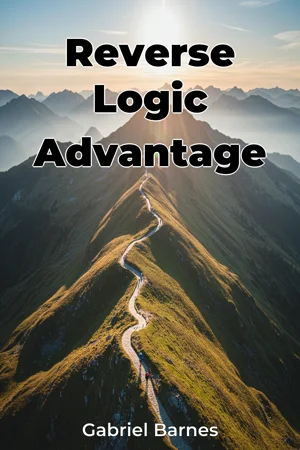
"Reverse Logic Advantage" introduces a powerful alternative to traditional planning by advocating for a reverse-engineered approach. Instead of starting with current conditions and projecting forward, this book guides readers to begin with a clearly defined outcome and then map the pathway backward to the present. This method offers enhanced clarity and control, providing a more targeted and efficient roadmap to success. The book emphasizes the importance of clearly articulating goals through "Outcome Definition" and systematically charting necessary steps with "Pathway Mapping," ensuring agility through "Adaptive Iteration." This book is unique because it presents a structured methodology designed to leverage the advantages of working backward, offering a practical alternative to frequently ineffective forward-planning strategies. By inverting the planning process, individuals and organizations gain a granular understanding of necessary actions, proactively mitigating potential risks. The book progresses by first introducing the core principles, then delving into the specifics of defining outcomes, mapping pathways with examples, and finally, exploring adaptive iteration. It connects to systems thinking, behavioral economics, and lean management to provide a broader theoretical framework for understanding the benefits of reverse planning, making it an invaluable tool for various business management and self-help applications.
Book Details
ISBN
9788235226181
Publisher
Publifye AS
Your Licenses
You don't own any licenses for this book
Purchase a license below to unlock this book and download the EPUB.
Purchase License
Select a tier to unlock this book
Need bulk licensing?
Contact us for enterprise agreements.