
About This Book
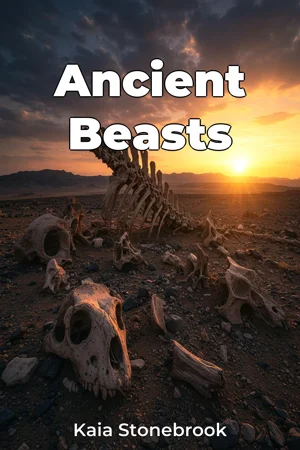
Have you ever wondered how ancient myths might reflect real encounters with the distant past? "Ancient Beasts" delves into the captivating intersection of paleontology, mythology, and folklore, exploring the surprising ways that prehistoric creatures and their fossilized remains have shaped human imagination and storytelling across cultures. This book investigates two primary areas: first, the science of paleontology, providing essential context for understanding the diverse array of creatures that roamed the Earth long before humanity's arrival. This includes an overview of fossilization processes, dating techniques, and the reconstruction of ancient ecosystems. Second, it examines a wide range of mythological traditions and folklore from around the globe, identifying recurring motifs and archetypes related to monstrous beings and hybrid creatures. The significance of these topics lies in understanding how early humans interpreted the natural world and how those interpretations continue to influence our cultural narratives. "Ancient Beasts" argues that many mythological beasts, often dismissed as pure fantasy, may have roots in the discovery of fossilized remains by ancient peoples. These discoveries, lacking the scientific framework we possess today, led to creative interpretations and the incorporation of these "ancient beasts" into cultural beliefs and narratives. This argument is important because it offers a fresh perspective on the origins of mythology and highlights the enduring human fascination with the unknown and the awe-inspiring power of nature. The book is structured in three parts: Part One introduces the basic concepts of paleontology and mythology, establishing a foundation for subsequent analysis. Part Two examines specific case studies, comparing paleontological findings with corresponding mythological accounts from different regions. For instance, the discovery of giant fossilized bones in various parts of the world is explored in relation to legends of giants and monstrous beings. Part Three synthesizes the evidence and draws broader conclusions about the relationship between prehistoric life, human imagination, and the development of cultural narratives. It concludes by exploring the lasting influence of these ancient beasts on modern literature, art, and popular culture. The evidence presented in "Ancient Beasts" draws from a variety of sources, including paleontological records, archaeological findings, and textual analysis of ancient myths and folklore. It incorporates comparative mythology, analyzing recurring themes and patterns across different cultural traditions. This book connects to several other fields of study. Anthropology provides insights into cultural practices and belief systems. Geology illuminates the context in which fossils are found. Archaeology supports us in the examination of ancient human settlements and artifacts. These interdisciplinary connections strengthen the central argument by providing a more holistic understanding of the interplay between science, history, and culture. "Ancient Beasts" takes an innovative approach by combining rigorous scientific analysis with in-depth cultural interpretation. It offers a unique perspective on the origins of mythology, suggesting that these stories are not merely products of imagination but also reflect real encounters with the physical remains of prehistoric life. The tone is informative and accessible, aiming to engage readers with a blend of scientific accuracy and compelling storytelling. The writing style is clear and concise, avoiding jargon and technical terms whenever possible. The target audience includes general readers interested in paleontology, mythology, folklore, and the history of science. It would also appeal to students and researchers in related fields, as well as anyone curious about the origins of cultural narratives and the intersection of science and imagination. As a work of non-fiction, "Ancient Beasts" adheres to the principles of accuracy, objectivity, and transparency. All sources are properly cited, and the analysis is based on credible evidence and sound reasoning. The scope of the book is global, encompassing a wide range of cultures and time periods. However, it is limited to those myths and legends that have a plausible connection to paleontological discoveries. It does not attempt to provide a comprehensive overview of all mythological traditions, but rather focuses on those that are relevant to the central argument. The information presented in this book has practical applications for educators, museum curators, and anyone interested in communicating science to a wider audience. It provides a framework for understanding how ancient cultures interpreted the natural world and how those interpretations continue to shape our understanding of ourselves and our place in the universe. While the central argument of "Ancient Beasts" is compelling, it is important to acknowledge that there are ongoing debates about the interpretation of myths and folklore. Some scholars argue that these stories are purely symbolic and have no connection to historical events or paleontological discoveries. "Ancient Beasts" addresses these alternative viewpoints and presents a balanced assessment of the available evidence.
Have you ever wondered how ancient myths might reflect real encounters with the distant past? "Ancient Beasts" delves into the captivating intersection of paleontology, mythology, and folklore, exploring the surprising ways that prehistoric creatures and their fossilized remains have shaped human imagination and storytelling across cultures. This book investigates two primary areas: first, the science of paleontology, providing essential context for understanding the diverse array of creatures that roamed the Earth long before humanity's arrival. This includes an overview of fossilization processes, dating techniques, and the reconstruction of ancient ecosystems. Second, it examines a wide range of mythological traditions and folklore from around the globe, identifying recurring motifs and archetypes related to monstrous beings and hybrid creatures. The significance of these topics lies in understanding how early humans interpreted the natural world and how those interpretations continue to influence our cultural narratives. "Ancient Beasts" argues that many mythological beasts, often dismissed as pure fantasy, may have roots in the discovery of fossilized remains by ancient peoples. These discoveries, lacking the scientific framework we possess today, led to creative interpretations and the incorporation of these "ancient beasts" into cultural beliefs and narratives. This argument is important because it offers a fresh perspective on the origins of mythology and highlights the enduring human fascination with the unknown and the awe-inspiring power of nature. The book is structured in three parts: Part One introduces the basic concepts of paleontology and mythology, establishing a foundation for subsequent analysis. Part Two examines specific case studies, comparing paleontological findings with corresponding mythological accounts from different regions. For instance, the discovery of giant fossilized bones in various parts of the world is explored in relation to legends of giants and monstrous beings. Part Three synthesizes the evidence and draws broader conclusions about the relationship between prehistoric life, human imagination, and the development of cultural narratives. It concludes by exploring the lasting influence of these ancient beasts on modern literature, art, and popular culture. The evidence presented in "Ancient Beasts" draws from a variety of sources, including paleontological records, archaeological findings, and textual analysis of ancient myths and folklore. It incorporates comparative mythology, analyzing recurring themes and patterns across different cultural traditions. This book connects to several other fields of study. Anthropology provides insights into cultural practices and belief systems. Geology illuminates the context in which fossils are found. Archaeology supports us in the examination of ancient human settlements and artifacts. These interdisciplinary connections strengthen the central argument by providing a more holistic understanding of the interplay between science, history, and culture. "Ancient Beasts" takes an innovative approach by combining rigorous scientific analysis with in-depth cultural interpretation. It offers a unique perspective on the origins of mythology, suggesting that these stories are not merely products of imagination but also reflect real encounters with the physical remains of prehistoric life. The tone is informative and accessible, aiming to engage readers with a blend of scientific accuracy and compelling storytelling. The writing style is clear and concise, avoiding jargon and technical terms whenever possible. The target audience includes general readers interested in paleontology, mythology, folklore, and the history of science. It would also appeal to students and researchers in related fields, as well as anyone curious about the origins of cultural narratives and the intersection of science and imagination. As a work of non-fiction, "Ancient Beasts" adheres to the principles of accuracy, objectivity, and transparency. All sources are properly cited, and the analysis is based on credible evidence and sound reasoning. The scope of the book is global, encompassing a wide range of cultures and time periods. However, it is limited to those myths and legends that have a plausible connection to paleontological discoveries. It does not attempt to provide a comprehensive overview of all mythological traditions, but rather focuses on those that are relevant to the central argument. The information presented in this book has practical applications for educators, museum curators, and anyone interested in communicating science to a wider audience. It provides a framework for understanding how ancient cultures interpreted the natural world and how those interpretations continue to shape our understanding of ourselves and our place in the universe. While the central argument of "Ancient Beasts" is compelling, it is important to acknowledge that there are ongoing debates about the interpretation of myths and folklore. Some scholars argue that these stories are purely symbolic and have no connection to historical events or paleontological discoveries. "Ancient Beasts" addresses these alternative viewpoints and presents a balanced assessment of the available evidence.
"Ancient Beasts" explores the fascinating intersection of paleontology, mythology, and folklore, arguing that ancient myths may be rooted in the discovery of prehistoric creatures' fossilized remains. The book unveils how early humans, lacking modern scientific understanding, creatively interpreted these findings, incorporating "ancient beasts" into their cultural narratives. For example, legends of giants across various cultures might stem from the discovery of giant fossilized bones. The book investigates the science behind paleontology, including fossilization and dating techniques. It also examines global mythological traditions, identifying recurring motifs of monstrous beings. Structured in three parts, "Ancient Beasts" progresses from introducing basic concepts to analyzing case studies and drawing broader conclusions about the relationship between prehistoric life and human imagination. Discover how discoveries of fossils influenced the origins of mythology and our enduring fascination with the unknown.
Book Details
ISBN
9788235225948
Publisher
Publifye AS
Your Licenses
You don't own any licenses for this book
Purchase a license below to unlock this book and download the EPUB.
Purchase License
Select a tier to unlock this book
Need bulk licensing?
Contact us for enterprise agreements.