
About This Book
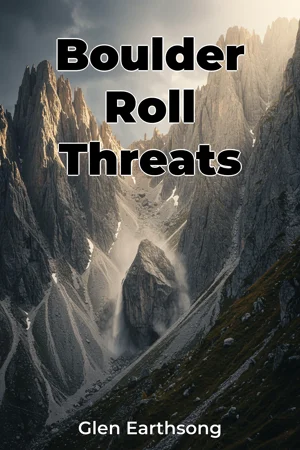
Have you ever considered the subtle threats lurking above as you ascend a steep mountain trail? 'Boulder Roll Threats' unveils the often underestimated dangers of rockfall on challenging hikes, offering vital knowledge for safe mountain exploration. This book acts as a practical guide and comprehensive analysis, addressing the convergence of mountain ecosystems, adventure activities, and the inherent geological instability that creates rockfall hazards. This book comprehensively explores three core areas: the mechanics of rockfall, the environmental factors exacerbating these events, and preventative strategies for hikers. We delve into the physics of falling rocks – mass, velocity, trajectory – and explore how these forces interact with terrain. Understanding these fundamental principles lets hikers better assess risk. Furthermore, the book emphasizes the environmental context, examining how freeze-thaw cycles, precipitation, and vegetation (or lack thereof) contribute to slope instability and increased rockfall frequency. Finally, we provide a detailed guide to risk assessment, route selection, and self-protection techniques, empowering readers to make informed decisions that minimize their exposure to danger. Our exploration begins with a contextual overview of mountain geology and geomorphology, giving readers the foundational knowledge necessary to understand rockfall processes. No prior expertise is required; we present scientific concepts clearly and concisely. The central argument of 'Boulder Roll Threats' asserts that a proactive understanding of rockfall dynamics – combined with situational awareness and practical safety measures – is crucial for mitigating risk and ensuring a safer experience in steep mountain environments. We emphasize that rockfall dangers are not simply random events but are predictable based on understanding the interplay of natural forces and geological conditions. The book's structure moves from theoretical principles to practical application. Initially, we introduce the geological and environmental factors that contribute to rockfall. Subsequent chapters delve into specific hazard zones and route selection strategies. We then examine personal protective equipment and techniques for reacting to rockfall events, including strategies for evasion and self-preservation. A concluding section focuses on trip planning and risk management protocols. Support for our arguments relies upon a synthesis of existing scientific literature on rockfall mechanics and environmental geology, field observations from various mountain regions prone to rockfall, and analysis of incident reports. We also incorporate data from geological surveys and meteorological records to illustrate the connection between environmental changes and rockfall activity. 'Boulder Roll Threats' bridges ecological studies of mountain environments with the practical concerns of adventure activities and geological hazards. It connects to climatology through discussion of the effects of climate change on slope stability, and to materials science through analysis of protective equipment. This interdisciplinary approach provides a holistic understanding of the rockfall threat. This book offers a unique, proactive strategy centered on hazard awareness and informed decision-making, shifting away from approaches centered solely on reaction. We maintain an accessible, fact-based tone, avoiding sensationalism. The target audience includes hikers, climbers, mountaineers, trail runners, and anyone who engages in outdoor activities in steep terrain. It is valuable for both seasoned adventurers and novice hikers, providing essential knowledge. As a work of non-fiction adventure and environmental science, this book prioritizes accuracy and evidence-based recommendations. The scope focuses specifically on rockfall dangers and evasion techniques in hiking and climbing contexts. The book does not cover avalanche safety or other mountain hazards in detail. The information presented allows hikers to assess routes based on rockfall potential, select appropriate gear, and react effectively if a rockfall event occurs. Recognition of terrain features, slope characteristics, and weather patterns assists in making informed real-time decisions. Although the underlying physics of rockfall is well-established, some ongoing debates surround the precise prediction of rockfall events, particularly regarding the influence of climate change and human activity on slope stability. We address these debates by presenting a balanced view of different perspectives.
Have you ever considered the subtle threats lurking above as you ascend a steep mountain trail? 'Boulder Roll Threats' unveils the often underestimated dangers of rockfall on challenging hikes, offering vital knowledge for safe mountain exploration. This book acts as a practical guide and comprehensive analysis, addressing the convergence of mountain ecosystems, adventure activities, and the inherent geological instability that creates rockfall hazards. This book comprehensively explores three core areas: the mechanics of rockfall, the environmental factors exacerbating these events, and preventative strategies for hikers. We delve into the physics of falling rocks – mass, velocity, trajectory – and explore how these forces interact with terrain. Understanding these fundamental principles lets hikers better assess risk. Furthermore, the book emphasizes the environmental context, examining how freeze-thaw cycles, precipitation, and vegetation (or lack thereof) contribute to slope instability and increased rockfall frequency. Finally, we provide a detailed guide to risk assessment, route selection, and self-protection techniques, empowering readers to make informed decisions that minimize their exposure to danger. Our exploration begins with a contextual overview of mountain geology and geomorphology, giving readers the foundational knowledge necessary to understand rockfall processes. No prior expertise is required; we present scientific concepts clearly and concisely. The central argument of 'Boulder Roll Threats' asserts that a proactive understanding of rockfall dynamics – combined with situational awareness and practical safety measures – is crucial for mitigating risk and ensuring a safer experience in steep mountain environments. We emphasize that rockfall dangers are not simply random events but are predictable based on understanding the interplay of natural forces and geological conditions. The book's structure moves from theoretical principles to practical application. Initially, we introduce the geological and environmental factors that contribute to rockfall. Subsequent chapters delve into specific hazard zones and route selection strategies. We then examine personal protective equipment and techniques for reacting to rockfall events, including strategies for evasion and self-preservation. A concluding section focuses on trip planning and risk management protocols. Support for our arguments relies upon a synthesis of existing scientific literature on rockfall mechanics and environmental geology, field observations from various mountain regions prone to rockfall, and analysis of incident reports. We also incorporate data from geological surveys and meteorological records to illustrate the connection between environmental changes and rockfall activity. 'Boulder Roll Threats' bridges ecological studies of mountain environments with the practical concerns of adventure activities and geological hazards. It connects to climatology through discussion of the effects of climate change on slope stability, and to materials science through analysis of protective equipment. This interdisciplinary approach provides a holistic understanding of the rockfall threat. This book offers a unique, proactive strategy centered on hazard awareness and informed decision-making, shifting away from approaches centered solely on reaction. We maintain an accessible, fact-based tone, avoiding sensationalism. The target audience includes hikers, climbers, mountaineers, trail runners, and anyone who engages in outdoor activities in steep terrain. It is valuable for both seasoned adventurers and novice hikers, providing essential knowledge. As a work of non-fiction adventure and environmental science, this book prioritizes accuracy and evidence-based recommendations. The scope focuses specifically on rockfall dangers and evasion techniques in hiking and climbing contexts. The book does not cover avalanche safety or other mountain hazards in detail. The information presented allows hikers to assess routes based on rockfall potential, select appropriate gear, and react effectively if a rockfall event occurs. Recognition of terrain features, slope characteristics, and weather patterns assists in making informed real-time decisions. Although the underlying physics of rockfall is well-established, some ongoing debates surround the precise prediction of rockfall events, particularly regarding the influence of climate change and human activity on slope stability. We address these debates by presenting a balanced view of different perspectives.
"Boulder Roll Threats" explores the often-overlooked dangers of rockfall in mountain environments, providing crucial knowledge for safe hiking and climbing adventures. It uniquely combines insights from mountain ecosystems, geological hazards, and adventure activities to help readers understand and mitigate risk. Did you know that freeze-thaw cycles significantly contribute to slope instability, increasing rockfall frequency? Or that understanding the physics of falling rocks—mass, velocity, and trajectory—allows hikers to better assess potential dangers? This book adopts a proactive approach, focusing on hazard awareness and informed decision-making rather than solely on reactive measures. It progresses from foundational knowledge of mountain geology and geomorphology to practical applications, such as hazard zone identification and route selection. The book also covers personal protective equipment and evasion techniques, empowering readers to make informed decisions about their safety. Ultimately, "Boulder Roll Threats" emphasizes that rockfall dangers are predictable through understanding the interplay of natural forces and geological conditions, offering a safer experience in steep terrain.
Book Details
ISBN
9788235225917
Publisher
Publifye AS
Your Licenses
You don't own any licenses for this book
Purchase a license below to unlock this book and download the EPUB.
Purchase License
Select a tier to unlock this book
Need bulk licensing?
Contact us for enterprise agreements.