
About This Book
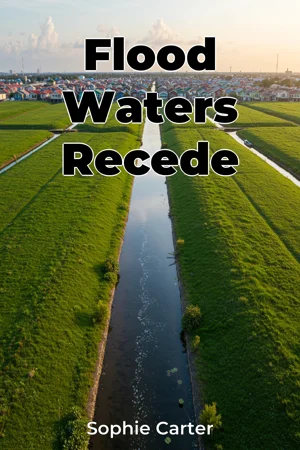
How do communities overcome the devastation of catastrophic floods and build more resilient futures? "Flood Waters Recede" examines the dual pillars of cooperation and innovative engineering as essential components of successful post-flood rebuilding efforts. These elements are vital because, increasingly, communities face more frequent and intense flooding events due to climate change and rapid urbanization, making effective recovery strategies crucial for long-term sustainability and community well-being. This book argues that the most effective post-flood reconstruction integrates collaborative community engagement with the strategic application of engineering solutions. This integration is essential for not only restoring what was lost but also for creating infrastructure and social structures capable of withstanding future challenges. Ignoring either element leads to inadequate recovery, increased vulnerability, or the displacement of already marginalized populations. Historically, flood recovery efforts have often prioritized rapid reconstruction without adequately addressing the underlying causes of vulnerability or involving affected communities in the decision-making process. This approach frequently results in repeated cycles of damage and repair. Socially, a lack of community involvement can exacerbate existing inequalities and erode trust in governance. Scientifically, failing to integrate engineering solutions based on updated climate data and risk assessments perpetuates the cycle of vulnerability. "Flood Waters Recede" presents a multi-faceted approach to the topic, beginning with an introduction to the principles of resilient design and community-based participatory action. It then delves into case studies from diverse geographical locations, analyzing instances where cooperation and engineering have been successfully combined, as well as examining failures where one or both elements were lacking. Major sections of the book focus on: (1) the role of community organizing and participatory planning in identifying needs and priorities; (2) the application of sustainable and nature-based engineering solutions for flood mitigation, such as constructed wetlands and improved drainage systems; and (3) the importance of policy frameworks that incentivize resilience and promote equitable resource allocation. The argument culminates in a practical guide for policymakers, engineers, and community leaders, offering actionable steps for implementing integrated rebuilding strategies. The book draws upon a range of evidence, including empirical data from post-flood assessments, interviews with affected residents and recovery professionals, and engineering reports detailing the performance of different mitigation strategies. Unique data sources include longitudinal studies tracking community recovery over time and comparative analyses of different policy approaches. The issues explored connect deeply with fields such as sociology, urban planning, and public policy. Sociological insights inform the understanding of social vulnerability and community resilience. Urban planning principles guide the development of sustainable and equitable reconstruction plans. Public policy frameworks shape the incentives and resources available for flood mitigation and recovery. These interdisciplinary connections enrich the book's argument by providing a holistic perspective on the challenges and opportunities of post-flood rebuilding. A unique aspect of "Flood Waters Recede" is its emphasis on the co-creation of knowledge between engineers and community members. It challenges the traditional top-down approach to infrastructure development by advocating for a more collaborative model that values local knowledge and promotes community ownership of solutions. The book adopts a fact-based and analytical tone, presenting complex information in an accessible and engaging manner. While grounded in scientific research and engineering principles, it also incorporates narrative elements to illustrate the human impact of flooding and the transformative potential of effective recovery strategies. The target audience includes policymakers, urban planners, engineers, environmental scientists, community organizers, and anyone interested in disaster resilience and sustainable development. It will appeal to those seeking practical guidance on how to build more resilient communities in the face of increasing climate-related risks. As a work of environmental technology non-fiction, the book adheres to standards of rigorous research, evidence-based analysis, and clear communication. It avoids technical jargon where possible and provides clear definitions of key terms to ensure accessibility for a broad audience. The scope of the book is limited to post-flood recovery efforts, focusing primarily on the built environment and social systems. It does not delve into the intricacies of emergency response or climate modeling, although it acknowledges the importance of these related fields. The information presented can be applied practically by readers through the implementation of community-based planning processes, the adoption of sustainable engineering practices, and the advocacy for policy changes that prioritize resilience and equity. The book addresses ongoing debates surrounding the allocation of resources for disaster recovery, the role of government versus individual responsibility, and the effectiveness of different flood mitigation strategies. It seeks to offer a balanced and nuanced perspective on these complex issues.
How do communities overcome the devastation of catastrophic floods and build more resilient futures? "Flood Waters Recede" examines the dual pillars of cooperation and innovative engineering as essential components of successful post-flood rebuilding efforts. These elements are vital because, increasingly, communities face more frequent and intense flooding events due to climate change and rapid urbanization, making effective recovery strategies crucial for long-term sustainability and community well-being. This book argues that the most effective post-flood reconstruction integrates collaborative community engagement with the strategic application of engineering solutions. This integration is essential for not only restoring what was lost but also for creating infrastructure and social structures capable of withstanding future challenges. Ignoring either element leads to inadequate recovery, increased vulnerability, or the displacement of already marginalized populations. Historically, flood recovery efforts have often prioritized rapid reconstruction without adequately addressing the underlying causes of vulnerability or involving affected communities in the decision-making process. This approach frequently results in repeated cycles of damage and repair. Socially, a lack of community involvement can exacerbate existing inequalities and erode trust in governance. Scientifically, failing to integrate engineering solutions based on updated climate data and risk assessments perpetuates the cycle of vulnerability. "Flood Waters Recede" presents a multi-faceted approach to the topic, beginning with an introduction to the principles of resilient design and community-based participatory action. It then delves into case studies from diverse geographical locations, analyzing instances where cooperation and engineering have been successfully combined, as well as examining failures where one or both elements were lacking. Major sections of the book focus on: (1) the role of community organizing and participatory planning in identifying needs and priorities; (2) the application of sustainable and nature-based engineering solutions for flood mitigation, such as constructed wetlands and improved drainage systems; and (3) the importance of policy frameworks that incentivize resilience and promote equitable resource allocation. The argument culminates in a practical guide for policymakers, engineers, and community leaders, offering actionable steps for implementing integrated rebuilding strategies. The book draws upon a range of evidence, including empirical data from post-flood assessments, interviews with affected residents and recovery professionals, and engineering reports detailing the performance of different mitigation strategies. Unique data sources include longitudinal studies tracking community recovery over time and comparative analyses of different policy approaches. The issues explored connect deeply with fields such as sociology, urban planning, and public policy. Sociological insights inform the understanding of social vulnerability and community resilience. Urban planning principles guide the development of sustainable and equitable reconstruction plans. Public policy frameworks shape the incentives and resources available for flood mitigation and recovery. These interdisciplinary connections enrich the book's argument by providing a holistic perspective on the challenges and opportunities of post-flood rebuilding. A unique aspect of "Flood Waters Recede" is its emphasis on the co-creation of knowledge between engineers and community members. It challenges the traditional top-down approach to infrastructure development by advocating for a more collaborative model that values local knowledge and promotes community ownership of solutions. The book adopts a fact-based and analytical tone, presenting complex information in an accessible and engaging manner. While grounded in scientific research and engineering principles, it also incorporates narrative elements to illustrate the human impact of flooding and the transformative potential of effective recovery strategies. The target audience includes policymakers, urban planners, engineers, environmental scientists, community organizers, and anyone interested in disaster resilience and sustainable development. It will appeal to those seeking practical guidance on how to build more resilient communities in the face of increasing climate-related risks. As a work of environmental technology non-fiction, the book adheres to standards of rigorous research, evidence-based analysis, and clear communication. It avoids technical jargon where possible and provides clear definitions of key terms to ensure accessibility for a broad audience. The scope of the book is limited to post-flood recovery efforts, focusing primarily on the built environment and social systems. It does not delve into the intricacies of emergency response or climate modeling, although it acknowledges the importance of these related fields. The information presented can be applied practically by readers through the implementation of community-based planning processes, the adoption of sustainable engineering practices, and the advocacy for policy changes that prioritize resilience and equity. The book addresses ongoing debates surrounding the allocation of resources for disaster recovery, the role of government versus individual responsibility, and the effectiveness of different flood mitigation strategies. It seeks to offer a balanced and nuanced perspective on these complex issues.
"Flood Waters Recede" explores how communities can rebuild stronger after devastating floods by connecting community cooperation with sustainable engineering. As climate change intensifies and urbanization expands, the book emphasizes the importance of resilient design and community engagement in not only restoring what was lost but also creating lasting defenses against future disasters. Did you know that integrating nature-based solutions, like constructed wetlands, can significantly reduce flood impacts while enhancing local ecosystems? The book highlights instances where collaborative efforts and innovative engineering have led to successful recoveries and examines failures where these elements were missing. The book argues for a shift from top-down approaches to a model that values local knowledge and promotes community ownership. It begins by introducing resilient design principles and examining case studies from various locations. Sections delve into community organizing, sustainable engineering solutions, and policy frameworks that incentivize resilience. Ultimately, "Flood Waters Recede" provides a practical guide for policymakers, engineers, and community leaders, offering actionable steps for implementing integrated rebuilding strategies and fostering disaster resilience.
Book Details
ISBN
9788235225863
Publisher
Publifye AS
Your Licenses
You don't own any licenses for this book
Purchase a license below to unlock this book and download the EPUB.
Purchase License
Select a tier to unlock this book
Need bulk licensing?
Contact us for enterprise agreements.