
About This Book
What if history's most profound secrets, capable of reshaping our understanding of religion and civilization, lie hidden within texts lost to time through theft, destruction, or simple neglect? "Vanished Scrolls" embarks on a journey to reconstruct the narratives contained within pivotal historical manuscripts, religious texts, and mystical writings that have been erased from public view. This book addresses critical questions about the power of information, the fragility of cultural heritage, and the enduring human quest for meaning. The core of "Vanished Scrolls" revolves around three central pillars: the reconstruction of lost knowledge, the exploration of suppressed narratives, and the analysis of the societal impact resulting from their disappearance. These themes are vital because they shed light on the intentional and unintentional biases that shape our perception of history. Understanding what was lost, and why, provides crucial context for interpreting what remains. To fully appreciate the vanished texts, we will delve into complementary historical contexts: the political climates that fueled censorship and destruction, the religious conflicts that prompted the suppression of dissenting viewpoints, and the various methods by which texts were systematically eliminated or allowed to decay. Understanding the conditions surrounding their disappearance is as important as understanding the content they held. The central argument of "Vanished Scrolls" is that the deliberate or accidental loss of textual records represents a significant impediment to a complete and unbiased understanding of history and religious thought. By piecing together fragments of lost knowledge, we can challenge conventional narratives and uncover alternative perspectives that have been marginalized or forgotten. The book unfolds in three acts. First, core methods of textual recovery and analysis are introduced, detailing how scholars reconstruct content from fragments, cross-reference available sources, and employ digital technologies to "virtually" restore damaged documents. The second section examines case studies of significant lost texts across different eras and cultures. These case studies include: a) Lost Gnostic Gospels: examining the potential content and impact of Gnostic texts suppressed by early Christian authorities. b) Manuscripts of the Library of Alexandria: an analysis of the philosophical and scientific knowledge irrevocably lost in the fires. c) Indigenous texts of the Americas: exploring accounts destroyed during the colonial period and the ongoing efforts to recover indigenous perspectives. The final section explores the broader implications of textual loss, examining the ethical responsibilities of safeguarding cultural heritage and the ongoing relevance of lost wisdom for contemporary issues. The evidence presented will draw from a range of sources: surviving fragments of the lost texts themselves, secondary accounts in surviving historical documents, archaeological findings, comparative analyses of related texts, and modern digital reconstruction techniques. The unique methodology involves combining traditional philological analysis with cutting-edge digital restoration methods, facilitating a more complete reconstruction of the intended meaning and context. "Vanished Scrolls" connects with various interdisciplinary fields: archaeology, illuminating the physical recovery of textual fragments; religious studies, providing context for understanding theological debates; and information science, exploring the preservation and dissemination of knowledge. These interdisciplinary connections enrich the argument by providing a holistic perspective on the creation, destruction, and reconstruction of knowledge. "Vanished Scrolls" offers a novel approach by focusing on the *absence* of information as a key to understanding historical narratives. Rather than simply retelling familiar stories, it challenges readers to consider the implications of what has been deliberately or accidentally omitted. The writing style balances scholarly rigor with accessibility, intending to engage a broad audience interested in history, religion, and cultural heritage. While grounded in academic research, the book avoids jargon and emphasizes clear, compelling storytelling. This book is aimed at readers interested in history, religious studies, and cultural heritage, as well as anyone curious about the power of information and the fragility of human knowledge. It offers a unique perspective on familiar historical events and provides tools for critically evaluating historical narratives. As a work of non-fiction, "Vanished Scrolls" adheres to principles of factual accuracy, evidence-based reasoning, and transparent source citation. It aims to provide a balanced and nuanced perspective on complex historical and religious issues. The scope of "Vanished Scrolls" is intentionally broad, encompassing a range of historical periods and geographical regions. However, it focuses primarily on texts that were deliberately suppressed or accidentally destroyed, rather than those that are simply unknown or undiscovered. The lessons learned from "Vanished Scrolls" can be applied practically by readers in several ways: by encouraging critical engagement with historical narratives, promoting awareness of the importance of cultural preservation, and fostering appreciation for the diversity of human thought. While exploring lost texts, "Vanished Scrolls" engages with ongoing debates about historical interpretation, religious dogma, and the ethics of cultural preservation. It aims not to resolve these debates, but to offer new perspectives and encourage thoughtful discussion.
What if history's most profound secrets, capable of reshaping our understanding of religion and civilization, lie hidden within texts lost to time through theft, destruction, or simple neglect? "Vanished Scrolls" embarks on a journey to reconstruct the narratives contained within pivotal historical manuscripts, religious texts, and mystical writings that have been erased from public view. This book addresses critical questions about the power of information, the fragility of cultural heritage, and the enduring human quest for meaning. The core of "Vanished Scrolls" revolves around three central pillars: the reconstruction of lost knowledge, the exploration of suppressed narratives, and the analysis of the societal impact resulting from their disappearance. These themes are vital because they shed light on the intentional and unintentional biases that shape our perception of history. Understanding what was lost, and why, provides crucial context for interpreting what remains. To fully appreciate the vanished texts, we will delve into complementary historical contexts: the political climates that fueled censorship and destruction, the religious conflicts that prompted the suppression of dissenting viewpoints, and the various methods by which texts were systematically eliminated or allowed to decay. Understanding the conditions surrounding their disappearance is as important as understanding the content they held. The central argument of "Vanished Scrolls" is that the deliberate or accidental loss of textual records represents a significant impediment to a complete and unbiased understanding of history and religious thought. By piecing together fragments of lost knowledge, we can challenge conventional narratives and uncover alternative perspectives that have been marginalized or forgotten. The book unfolds in three acts. First, core methods of textual recovery and analysis are introduced, detailing how scholars reconstruct content from fragments, cross-reference available sources, and employ digital technologies to "virtually" restore damaged documents. The second section examines case studies of significant lost texts across different eras and cultures. These case studies include: a) Lost Gnostic Gospels: examining the potential content and impact of Gnostic texts suppressed by early Christian authorities. b) Manuscripts of the Library of Alexandria: an analysis of the philosophical and scientific knowledge irrevocably lost in the fires. c) Indigenous texts of the Americas: exploring accounts destroyed during the colonial period and the ongoing efforts to recover indigenous perspectives. The final section explores the broader implications of textual loss, examining the ethical responsibilities of safeguarding cultural heritage and the ongoing relevance of lost wisdom for contemporary issues. The evidence presented will draw from a range of sources: surviving fragments of the lost texts themselves, secondary accounts in surviving historical documents, archaeological findings, comparative analyses of related texts, and modern digital reconstruction techniques. The unique methodology involves combining traditional philological analysis with cutting-edge digital restoration methods, facilitating a more complete reconstruction of the intended meaning and context. "Vanished Scrolls" connects with various interdisciplinary fields: archaeology, illuminating the physical recovery of textual fragments; religious studies, providing context for understanding theological debates; and information science, exploring the preservation and dissemination of knowledge. These interdisciplinary connections enrich the argument by providing a holistic perspective on the creation, destruction, and reconstruction of knowledge. "Vanished Scrolls" offers a novel approach by focusing on the *absence* of information as a key to understanding historical narratives. Rather than simply retelling familiar stories, it challenges readers to consider the implications of what has been deliberately or accidentally omitted. The writing style balances scholarly rigor with accessibility, intending to engage a broad audience interested in history, religion, and cultural heritage. While grounded in academic research, the book avoids jargon and emphasizes clear, compelling storytelling. This book is aimed at readers interested in history, religious studies, and cultural heritage, as well as anyone curious about the power of information and the fragility of human knowledge. It offers a unique perspective on familiar historical events and provides tools for critically evaluating historical narratives. As a work of non-fiction, "Vanished Scrolls" adheres to principles of factual accuracy, evidence-based reasoning, and transparent source citation. It aims to provide a balanced and nuanced perspective on complex historical and religious issues. The scope of "Vanished Scrolls" is intentionally broad, encompassing a range of historical periods and geographical regions. However, it focuses primarily on texts that were deliberately suppressed or accidentally destroyed, rather than those that are simply unknown or undiscovered. The lessons learned from "Vanished Scrolls" can be applied practically by readers in several ways: by encouraging critical engagement with historical narratives, promoting awareness of the importance of cultural preservation, and fostering appreciation for the diversity of human thought. While exploring lost texts, "Vanished Scrolls" engages with ongoing debates about historical interpretation, religious dogma, and the ethics of cultural preservation. It aims not to resolve these debates, but to offer new perspectives and encourage thoughtful discussion.
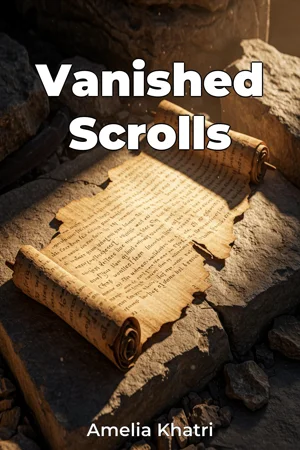
"Vanished Scrolls" explores the profound impact of lost texts on our understanding of history and religion. It delves into manuscripts, religious texts, and mystical writings erased from public view, examining how their disappearance has shaped our perception of the past. The book highlights the fragility of cultural heritage and the power of information, questioning conventional narratives by piecing together fragments of lost knowledge. For example, the destruction of the Library of Alexandria resulted in the irretrievable loss of philosophical and scientific knowledge. The book progresses through three sections, beginning with methods for textual recovery, including digital restoration, then presenting case studies of lost texts like the Gnostic Gospels and Indigenous texts of the Americas, and concluding with the ethical implications of textual loss. By focusing on the *absence* of information, "Vanished Scrolls" offers a unique perspective, challenging readers to consider what has been deliberately or accidentally omitted. Understanding why these texts vanished is as crucial as understanding their content, revealing biases that influence our interpretation of history and religious thought.
Book Details
ISBN
9788235225764
Publisher
Publifye AS
Your Licenses
You don't own any licenses for this book
Purchase a license below to unlock this book and download the EPUB.
Purchase License
Select a tier to unlock this book
Need bulk licensing?
Contact us for enterprise agreements.