
About This Book
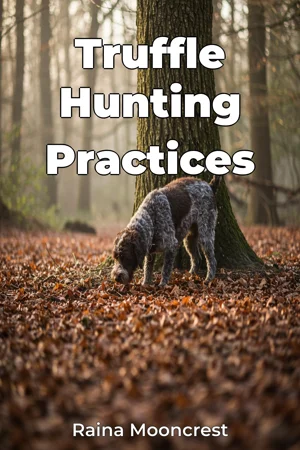
Have you ever considered the intricate dance between the forest floor and the gourmet delicacies found upon our tables? This book, *Truffle Hunting Practices*, delves into the fascinating world of truffle hunting, exploring not only the symbiotic relationships that nurture these elusive fungi but also the time-honored traditions that have shaped their harvesting across Europe. This exploration is vital for several reasons. First, understanding the symbiotic relationships between truffles and trees is crucial for sustainable harvesting practices, ensuring the continued availability of these resources. Second, examining the traditional methods employed by truffle hunters, particularly the use of pigs and dogs, offers insights into animal behavior, human-animal interactions, and the cultural heritage surrounding truffle cultivation. Finally, by connecting the biological and cultural aspects of truffle hunting, we gain a more holistic appreciation for the role of these fungi in both natural ecosystems and human economies. Historically, truffle hunting has been shrouded in secrecy, passed down through generations of families. The use of pigs, with their keen sense of smell and natural inclination to unearth truffles, dates back centuries. However, in more recent times, dogs have become increasingly popular due to their trainability and the fact that they don't consume the valuable truffles. These practices are not merely quaint traditions; they represent a sophisticated understanding of truffle ecology and animal behavior developed over long periods of observation and experimentation. Before delving into these practices, a basic understanding of fungal biology, particularly mycorrhizal relationships (symbiotic associations between fungi and plant roots), and of canine behavior, particularly scent tracking, is useful. The central argument of *Truffle Hunting Practices* is that the sustainable future of truffle harvesting depends on respecting both the biological complexities of truffle ecology and the cultural heritage embedded in traditional hunting practices. This argument is significant because, with increasing demand and environmental pressures, truffle populations are facing unprecedented challenges. Understanding and adapting traditional methods, informed by modern scientific knowledge, is crucial for ensuring the long-term viability of this valuable resource. The book begins with an introduction to the biology of truffles, explaining their life cycle, their symbiotic relationships with various tree species (such as oak, hazel, and beech), and the factors that influence their growth and distribution. It then moves on to a detailed examination of traditional hunting methods across different European regions. This section covers training and handling of both pigs and dogs, including specialized techniques for scent detection and retrieval. The book explores the legal and economic aspects of truffle hunting, addressing issues such as land ownership, permits, market dynamics, and conservation efforts. It culminates in a discussion of sustainable harvesting strategies, integrating traditional knowledge with modern scientific insights to promote responsible truffle cultivation. The evidence presented in *Truffle Hunting Practices* draws from a range of sources, including scientific literature on fungal ecology, historical accounts of truffle hunting practices, interviews with experienced truffle hunters, and original field observations. The book also incorporates case studies from different truffle-producing regions in Europe, illustrating the diversity of approaches and challenges in this field. *Truffle Hunting Practices* is inherently interdisciplinary, connecting biology, ecology, anthropology, and economics. The biological aspects explore fungal life cycles and ecological relationships. Anthropological insights examine the cultural significance of truffle hunting and the transmission of traditional knowledge. Economic considerations address the market dynamics and sustainability of truffle harvesting as livelihoods. This book offers a unique perspective by integrating scientific analysis with ethnographic insights. By combining ecological data with the lived experiences of truffle hunters, it provides a more nuanced and comprehensive understanding of this complex interaction between humans and nature. Written in a clear and accessible style, *Truffle Hunting Practices* is designed for a broad audience, including students of biology, ecology, and anthropology, as well as amateur mycologists, gourmand cooks, and anyone interested in the intersection of nature and culture. It will appeal to environmentally conscious consumers, food enthusiasts, and individuals seeking to understand the origins of the food they consume. As a work of nonfiction, this book adheres to the standards of accuracy, objectivity, and transparency. All claims are supported by evidence, and sources are carefully documented. While the focus is on European practices, the book acknowledges that truffle hunting occurs worldwide, but scope is limited to the European context to provide depth and specificity. The information presented in *Truffle Hunting Practices* has numerous real-world applications. It can inform sustainable forestry practices, guide conservation efforts, and empower consumers to make informed choices about the truffles they purchase. Furthermore, the book's insights into animal behavior and human-animal interactions can be applied to other areas of wildlife management and conservation. While the benefits of truffle harvesting are considerable, there are ongoing debates about its impact on forest ecosystems. Some argue that intensive harvesting can disrupt soil structure, damage tree roots, and deplete fungal populations. The book addresses these concerns by exploring the ecological consequences of different harvesting methods and promoting sustainable practices that minimize environmental impact.
Have you ever considered the intricate dance between the forest floor and the gourmet delicacies found upon our tables? This book, *Truffle Hunting Practices*, delves into the fascinating world of truffle hunting, exploring not only the symbiotic relationships that nurture these elusive fungi but also the time-honored traditions that have shaped their harvesting across Europe. This exploration is vital for several reasons. First, understanding the symbiotic relationships between truffles and trees is crucial for sustainable harvesting practices, ensuring the continued availability of these resources. Second, examining the traditional methods employed by truffle hunters, particularly the use of pigs and dogs, offers insights into animal behavior, human-animal interactions, and the cultural heritage surrounding truffle cultivation. Finally, by connecting the biological and cultural aspects of truffle hunting, we gain a more holistic appreciation for the role of these fungi in both natural ecosystems and human economies. Historically, truffle hunting has been shrouded in secrecy, passed down through generations of families. The use of pigs, with their keen sense of smell and natural inclination to unearth truffles, dates back centuries. However, in more recent times, dogs have become increasingly popular due to their trainability and the fact that they don't consume the valuable truffles. These practices are not merely quaint traditions; they represent a sophisticated understanding of truffle ecology and animal behavior developed over long periods of observation and experimentation. Before delving into these practices, a basic understanding of fungal biology, particularly mycorrhizal relationships (symbiotic associations between fungi and plant roots), and of canine behavior, particularly scent tracking, is useful. The central argument of *Truffle Hunting Practices* is that the sustainable future of truffle harvesting depends on respecting both the biological complexities of truffle ecology and the cultural heritage embedded in traditional hunting practices. This argument is significant because, with increasing demand and environmental pressures, truffle populations are facing unprecedented challenges. Understanding and adapting traditional methods, informed by modern scientific knowledge, is crucial for ensuring the long-term viability of this valuable resource. The book begins with an introduction to the biology of truffles, explaining their life cycle, their symbiotic relationships with various tree species (such as oak, hazel, and beech), and the factors that influence their growth and distribution. It then moves on to a detailed examination of traditional hunting methods across different European regions. This section covers training and handling of both pigs and dogs, including specialized techniques for scent detection and retrieval. The book explores the legal and economic aspects of truffle hunting, addressing issues such as land ownership, permits, market dynamics, and conservation efforts. It culminates in a discussion of sustainable harvesting strategies, integrating traditional knowledge with modern scientific insights to promote responsible truffle cultivation. The evidence presented in *Truffle Hunting Practices* draws from a range of sources, including scientific literature on fungal ecology, historical accounts of truffle hunting practices, interviews with experienced truffle hunters, and original field observations. The book also incorporates case studies from different truffle-producing regions in Europe, illustrating the diversity of approaches and challenges in this field. *Truffle Hunting Practices* is inherently interdisciplinary, connecting biology, ecology, anthropology, and economics. The biological aspects explore fungal life cycles and ecological relationships. Anthropological insights examine the cultural significance of truffle hunting and the transmission of traditional knowledge. Economic considerations address the market dynamics and sustainability of truffle harvesting as livelihoods. This book offers a unique perspective by integrating scientific analysis with ethnographic insights. By combining ecological data with the lived experiences of truffle hunters, it provides a more nuanced and comprehensive understanding of this complex interaction between humans and nature. Written in a clear and accessible style, *Truffle Hunting Practices* is designed for a broad audience, including students of biology, ecology, and anthropology, as well as amateur mycologists, gourmand cooks, and anyone interested in the intersection of nature and culture. It will appeal to environmentally conscious consumers, food enthusiasts, and individuals seeking to understand the origins of the food they consume. As a work of nonfiction, this book adheres to the standards of accuracy, objectivity, and transparency. All claims are supported by evidence, and sources are carefully documented. While the focus is on European practices, the book acknowledges that truffle hunting occurs worldwide, but scope is limited to the European context to provide depth and specificity. The information presented in *Truffle Hunting Practices* has numerous real-world applications. It can inform sustainable forestry practices, guide conservation efforts, and empower consumers to make informed choices about the truffles they purchase. Furthermore, the book's insights into animal behavior and human-animal interactions can be applied to other areas of wildlife management and conservation. While the benefits of truffle harvesting are considerable, there are ongoing debates about its impact on forest ecosystems. Some argue that intensive harvesting can disrupt soil structure, damage tree roots, and deplete fungal populations. The book addresses these concerns by exploring the ecological consequences of different harvesting methods and promoting sustainable practices that minimize environmental impact.
Truffle hunting, a blend of science and tradition, takes center stage in *Truffle Hunting Practices*. This book explores the symbiotic relationships between truffles and trees, crucial for understanding truffle ecology, and examines the cultural heritage of European harvesting methods, particularly the use of trained animals. Discover how some of the most successful hunters rely on the natural instincts of pigs or the trainability of dogs to locate these prized fungi. This practice highlights a sophisticated understanding of animal behavior and human-animal interactions developed over generations. The book uniquely integrates scientific analysis with ethnographic insights, connecting biology, ecology, anthropology, and economics. From the fungal biology of truffle life cycles to the economic impact of sustainable harvesting, readers gain a holistic view. Beginning with an introduction to truffle biology and traditional methods, the book progresses through legal and economic considerations before culminating in a discussion of sustainable harvesting strategies, reflecting a deep dive into the world of truffle hunting.
Book Details
ISBN
9788235225627
Publisher
Publifye AS
Your Licenses
You don't own any licenses for this book
Purchase a license below to unlock this book and download the EPUB.
Purchase License
Select a tier to unlock this book
Need bulk licensing?
Contact us for enterprise agreements.