
About This Book
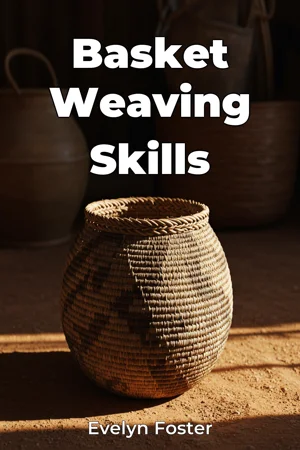
Have you ever considered the silent story woven into the very fabric of everyday life in traditional societies, a story told not through words, but through the skillful crafting of baskets? “Basket Weaving Skills” unveils this narrative, exploring the art of basket making and its profound utility within traditional households. This book delves into the history, techniques, and cultural significance of basket weaving, providing a comprehensive understanding of its role in daily life. This book centers on three key topics: the historical evolution of basket weaving, the diverse materials and methods employed across different cultures, and the practical applications of baskets in traditional household economies. These topics collectively illuminate how basket weaving served as a cornerstone of self-sufficiency and resource management. The survival of these skills demonstrates the resilience of the human spirit and our capacity to adapt to available resources. Basket weaving is not merely a craft; it's a reflection of environmental adaptation and cultural ingenuity. Understanding its history requires a basic familiarity with anthropological concepts related to material culture and the role of technology in shaping societies. This book provides the necessary background, assuming no prior expertise in either anthropology or craftwork. The central argument of “Basket Weaving Skills” is that basket weaving, far from being a primitive or obsolete practice, represents a sophisticated system of resource utilization and a vital element of cultural identity. It argues that the study of basket weaving provides valuable insights into the resourcefulness, adaptability, and sustainability practices of traditional communities and offers lessons applicable to contemporary society. The book begins by introducing the fundamental principles of basket weaving, including material selection, basic weaves, and essential tools. It then progresses through three major sections. The first explores the historical development of basket weaving across various geographical regions, examining the influence of local environments on basket designs and functions. The second section provides an in-depth look at different weaving techniques, such as coiling, plaiting, and twining, detailing the specific materials—from reeds and grasses to wood splints—used in each method. The third section focuses on the diverse applications of baskets in traditional households, covering food storage, water carrying, agricultural practices, and even ceremonial uses. The book culminates with a discussion on the relevance of traditional basket-weaving skills in a world increasingly focused on sustainability and eco-friendly practices. The book relies on a combination of ethnographic studies, archaeological findings, and hands-on experimentation. Primary sources from historical accounts and anthropological fieldwork will be analyzed alongside contemporary interviews with basket weavers from various cultural backgrounds. The author will share unique insights gained from personal engagement with the craft, and the book will include detailed photographs and illustrations to showcase the intricate details of different weaving techniques and basket designs. “Basket Weaving Skills” connects to several other fields, including anthropology, environmental studies, and art history. Anthropologically, it provides insights into material culture and social structures. Environmentally, it highlights sustainable resource management practices. Art historically, it presents baskets as functional art forms with aesthetic and cultural significance. This book adopts a unique perspective by combining historical research with practical instruction, offering readers not only an understanding of the cultural significance of basket weaving, but also the skills to create their own baskets. It emphasizes the connection between the craft and the environment, promoting sustainable practices and a deeper appreciation for the natural world. The book employs a clear, accessible writing style suitable for both academic and general audiences. It balances factual information with engaging anecdotes and personal experiences, making the subject matter both informative and enjoyable to read. The target audience includes craft enthusiasts, history buffs, anthropology students, and anyone interested in sustainable living and traditional skills. The book will be valuable to those seeking a deeper understanding of human ingenuity and the interconnectedness of culture, environment, and technology. As a non-fiction work in the crafts and hobbies genre, “Basket Weaving Skills” provides practical instructions and detailed explanations, while adhering to the historical conventions of accurate research and citation. The scope of the book is broad, covering a wide range of weaving techniques and cultural contexts, but it does not delve into the specific economic aspects of basketry as a commercial enterprise. The focus remains on the craft's utility within traditional households and its cultural significance. Readers can apply the knowledge gained from this book to create their own baskets, appreciate the cultural heritage embedded in these objects, and promote sustainable practices in their own lives. The skills learned can be applied to gardening, home décor, and gift-giving, fostering a deeper connection to the natural world. While basket weaving is generally seen as a positive and sustainable practice, the book also acknowledges potential controversies related to the over-harvesting of natural materials and the exploitation of indigenous artisans. It encourages readers to engage with the craft responsibly and ethically, supporting sustainable practices and fair trade initiatives.
Have you ever considered the silent story woven into the very fabric of everyday life in traditional societies, a story told not through words, but through the skillful crafting of baskets? “Basket Weaving Skills” unveils this narrative, exploring the art of basket making and its profound utility within traditional households. This book delves into the history, techniques, and cultural significance of basket weaving, providing a comprehensive understanding of its role in daily life. This book centers on three key topics: the historical evolution of basket weaving, the diverse materials and methods employed across different cultures, and the practical applications of baskets in traditional household economies. These topics collectively illuminate how basket weaving served as a cornerstone of self-sufficiency and resource management. The survival of these skills demonstrates the resilience of the human spirit and our capacity to adapt to available resources. Basket weaving is not merely a craft; it's a reflection of environmental adaptation and cultural ingenuity. Understanding its history requires a basic familiarity with anthropological concepts related to material culture and the role of technology in shaping societies. This book provides the necessary background, assuming no prior expertise in either anthropology or craftwork. The central argument of “Basket Weaving Skills” is that basket weaving, far from being a primitive or obsolete practice, represents a sophisticated system of resource utilization and a vital element of cultural identity. It argues that the study of basket weaving provides valuable insights into the resourcefulness, adaptability, and sustainability practices of traditional communities and offers lessons applicable to contemporary society. The book begins by introducing the fundamental principles of basket weaving, including material selection, basic weaves, and essential tools. It then progresses through three major sections. The first explores the historical development of basket weaving across various geographical regions, examining the influence of local environments on basket designs and functions. The second section provides an in-depth look at different weaving techniques, such as coiling, plaiting, and twining, detailing the specific materials—from reeds and grasses to wood splints—used in each method. The third section focuses on the diverse applications of baskets in traditional households, covering food storage, water carrying, agricultural practices, and even ceremonial uses. The book culminates with a discussion on the relevance of traditional basket-weaving skills in a world increasingly focused on sustainability and eco-friendly practices. The book relies on a combination of ethnographic studies, archaeological findings, and hands-on experimentation. Primary sources from historical accounts and anthropological fieldwork will be analyzed alongside contemporary interviews with basket weavers from various cultural backgrounds. The author will share unique insights gained from personal engagement with the craft, and the book will include detailed photographs and illustrations to showcase the intricate details of different weaving techniques and basket designs. “Basket Weaving Skills” connects to several other fields, including anthropology, environmental studies, and art history. Anthropologically, it provides insights into material culture and social structures. Environmentally, it highlights sustainable resource management practices. Art historically, it presents baskets as functional art forms with aesthetic and cultural significance. This book adopts a unique perspective by combining historical research with practical instruction, offering readers not only an understanding of the cultural significance of basket weaving, but also the skills to create their own baskets. It emphasizes the connection between the craft and the environment, promoting sustainable practices and a deeper appreciation for the natural world. The book employs a clear, accessible writing style suitable for both academic and general audiences. It balances factual information with engaging anecdotes and personal experiences, making the subject matter both informative and enjoyable to read. The target audience includes craft enthusiasts, history buffs, anthropology students, and anyone interested in sustainable living and traditional skills. The book will be valuable to those seeking a deeper understanding of human ingenuity and the interconnectedness of culture, environment, and technology. As a non-fiction work in the crafts and hobbies genre, “Basket Weaving Skills” provides practical instructions and detailed explanations, while adhering to the historical conventions of accurate research and citation. The scope of the book is broad, covering a wide range of weaving techniques and cultural contexts, but it does not delve into the specific economic aspects of basketry as a commercial enterprise. The focus remains on the craft's utility within traditional households and its cultural significance. Readers can apply the knowledge gained from this book to create their own baskets, appreciate the cultural heritage embedded in these objects, and promote sustainable practices in their own lives. The skills learned can be applied to gardening, home décor, and gift-giving, fostering a deeper connection to the natural world. While basket weaving is generally seen as a positive and sustainable practice, the book also acknowledges potential controversies related to the over-harvesting of natural materials and the exploitation of indigenous artisans. It encourages readers to engage with the craft responsibly and ethically, supporting sustainable practices and fair trade initiatives.
"Basket Weaving Skills" explores the rich history and cultural significance of basketry, revealing how this traditional craft was essential to daily life in many societies. Far from being a simple pastime, basket weaving demonstrates human ingenuity in resource management and adaptation to diverse environments. Did you know that different weaving techniques like coiling, plaiting, and twining utilize a variety of materials from reeds to wood, each influencing the basket's design and function? The book uniquely combines historical research with practical instruction, allowing readers to understand and recreate these timeless crafts. The book begins by covering the basics, like material selection and essential tools, before diving into the historical development of basket weaving across different regions. It then explores various weaving techniques and their specific materials. Finally, the book examines the diverse applications of baskets in traditional households, from food storage to ceremonial uses, highlighting the craft's relevance to contemporary sustainability practices.
Book Details
ISBN
9788235225399
Publisher
Publifye AS
Your Licenses
You don't own any licenses for this book
Purchase a license below to unlock this book and download the EPUB.
Purchase License
Select a tier to unlock this book
Need bulk licensing?
Contact us for enterprise agreements.