
About This Book
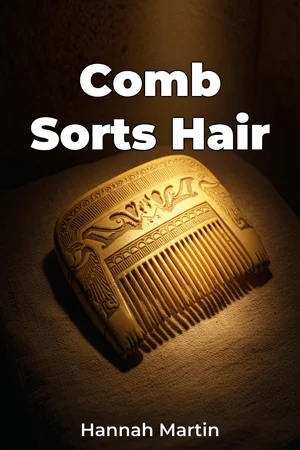
Have you ever considered the silent stories held within the teeth of a comb? "Comb Sorts Hair" delves into the surprisingly rich history of comb grooming, revealing its profound significance beyond mere personal hygiene, tracing its origins to ancient Egypt, as evidenced by archaeological discoveries. This book explores the comb not just as a practical tool, but as a cultural artifact that reflects societal values, artistic expression, and technological innovation across millennia. Two key topics take center stage: first, the evolution of comb design and materials, illustrating how combs adapted to changing hairstyles, available resources, and technological advancements. Second, the symbolic role of combs in various cultures, examining how they represented status, beauty ideals, and spiritual beliefs. These topics are crucial because they offer a unique window into past societies, revealing insights often overlooked by traditional historical narratives. The book provides a historical backdrop beginning with ancient Egyptian civilization where combs, often crafted from ivory or wood, were integral to maintaining elaborate hairstyles, status symbols, and ritual practices. Understanding this historical context is essential for appreciating the comb's enduring presence in human culture. The central argument of "Comb Sorts Hair" asserts that the comb, far from being a mundane object, serves as a tangible link to our ancestors, embodying their aesthetic preferences, social hierarchies, and technological capabilities. This argument is significant because it challenges conventional perceptions of everyday objects, prompting a deeper appreciation for the material culture that shapes our lives. The book is structured in three parts. The first section introduces the fundamental concepts of comb morphology, materials science, and archaeological context. The second section explores the comb's development through different historical periods, focusing on case studies from ancient Egypt, classical Greece and Rome, and medieval Europe. This part highlights how comb designs reflected prevailing fashion trends, social stratification, and religious customs. For example, ornate combs in royal tombs signaled power, while simpler combs found in common graves offer glimpses into daily life. The third section analyzes the cultural meanings associated with combs, examining their depiction in art, literature, and folklore. It explores how combs were used in grooming rituals, gift-giving ceremonies, and as symbols of love, beauty, or mourning. The book draws upon a wide range of evidence, from archaeological finds and museum collections to historical texts and artistic representations. Unique data sources include previously unpublished analyses of ancient combs discovered in Egyptian tombs, along with comparative studies of comb designs from diverse cultural contexts. The research methodology combines archaeological analysis, material culture studies, and art historical interpretation. "Comb Sorts Hair" connects to several other fields, including archaeology, anthropology, art history, and material culture studies. By integrating perspectives from these disciplines, the book offers a holistic understanding of the comb's multifaceted significance. For instance, anthropological insights shed light on the social rituals surrounding grooming practices, while art historical analysis reveals how combs were depicted in paintings and sculptures. The book adopts a narrative non-fiction style, blending rigorous academic research with engaging storytelling. It aims to make complex historical and cultural information accessible to a broad audience, while maintaining scholarly rigor. The target audience includes history enthusiasts, archaeology buffs, art aficionados, and anyone interested in the cultural significance of everyday objects. This book would be valuable to them because it offers a fresh perspective on the past, revealing hidden stories embedded in a seemingly ordinary tool. As a work of non-fiction history and art, "Comb Sorts Hair" adheres to genre conventions by providing meticulously researched information, clearly citing sources, and offering balanced interpretations of historical evidence. The scope of the book encompasses a broad historical and geographical range, focusing primarily on the development and cultural significance of combs in ancient Egypt, classical antiquity, and medieval Europe. While it touches upon other cultures and time periods, the book intentionally limits its scope to provide a focused and in-depth analysis of these key regions. The knowledge gained from "Comb Sorts Hair" can be applied to various real-world contexts, such as museum curation, historical preservation, and design studies. It can also inform contemporary debates about beauty standards, cultural appropriation, and the ethics of material consumption. While the book presents a comprehensive overview of comb history, it acknowledges ongoing debates about the interpretation of archaeological evidence and the reconstruction of past grooming practices. It engages with these debates by presenting multiple perspectives and carefully evaluating the available data.
Have you ever considered the silent stories held within the teeth of a comb? "Comb Sorts Hair" delves into the surprisingly rich history of comb grooming, revealing its profound significance beyond mere personal hygiene, tracing its origins to ancient Egypt, as evidenced by archaeological discoveries. This book explores the comb not just as a practical tool, but as a cultural artifact that reflects societal values, artistic expression, and technological innovation across millennia. Two key topics take center stage: first, the evolution of comb design and materials, illustrating how combs adapted to changing hairstyles, available resources, and technological advancements. Second, the symbolic role of combs in various cultures, examining how they represented status, beauty ideals, and spiritual beliefs. These topics are crucial because they offer a unique window into past societies, revealing insights often overlooked by traditional historical narratives. The book provides a historical backdrop beginning with ancient Egyptian civilization where combs, often crafted from ivory or wood, were integral to maintaining elaborate hairstyles, status symbols, and ritual practices. Understanding this historical context is essential for appreciating the comb's enduring presence in human culture. The central argument of "Comb Sorts Hair" asserts that the comb, far from being a mundane object, serves as a tangible link to our ancestors, embodying their aesthetic preferences, social hierarchies, and technological capabilities. This argument is significant because it challenges conventional perceptions of everyday objects, prompting a deeper appreciation for the material culture that shapes our lives. The book is structured in three parts. The first section introduces the fundamental concepts of comb morphology, materials science, and archaeological context. The second section explores the comb's development through different historical periods, focusing on case studies from ancient Egypt, classical Greece and Rome, and medieval Europe. This part highlights how comb designs reflected prevailing fashion trends, social stratification, and religious customs. For example, ornate combs in royal tombs signaled power, while simpler combs found in common graves offer glimpses into daily life. The third section analyzes the cultural meanings associated with combs, examining their depiction in art, literature, and folklore. It explores how combs were used in grooming rituals, gift-giving ceremonies, and as symbols of love, beauty, or mourning. The book draws upon a wide range of evidence, from archaeological finds and museum collections to historical texts and artistic representations. Unique data sources include previously unpublished analyses of ancient combs discovered in Egyptian tombs, along with comparative studies of comb designs from diverse cultural contexts. The research methodology combines archaeological analysis, material culture studies, and art historical interpretation. "Comb Sorts Hair" connects to several other fields, including archaeology, anthropology, art history, and material culture studies. By integrating perspectives from these disciplines, the book offers a holistic understanding of the comb's multifaceted significance. For instance, anthropological insights shed light on the social rituals surrounding grooming practices, while art historical analysis reveals how combs were depicted in paintings and sculptures. The book adopts a narrative non-fiction style, blending rigorous academic research with engaging storytelling. It aims to make complex historical and cultural information accessible to a broad audience, while maintaining scholarly rigor. The target audience includes history enthusiasts, archaeology buffs, art aficionados, and anyone interested in the cultural significance of everyday objects. This book would be valuable to them because it offers a fresh perspective on the past, revealing hidden stories embedded in a seemingly ordinary tool. As a work of non-fiction history and art, "Comb Sorts Hair" adheres to genre conventions by providing meticulously researched information, clearly citing sources, and offering balanced interpretations of historical evidence. The scope of the book encompasses a broad historical and geographical range, focusing primarily on the development and cultural significance of combs in ancient Egypt, classical antiquity, and medieval Europe. While it touches upon other cultures and time periods, the book intentionally limits its scope to provide a focused and in-depth analysis of these key regions. The knowledge gained from "Comb Sorts Hair" can be applied to various real-world contexts, such as museum curation, historical preservation, and design studies. It can also inform contemporary debates about beauty standards, cultural appropriation, and the ethics of material consumption. While the book presents a comprehensive overview of comb history, it acknowledges ongoing debates about the interpretation of archaeological evidence and the reconstruction of past grooming practices. It engages with these debates by presenting multiple perspectives and carefully evaluating the available data.
"Comb Sorts Hair" unveils the captivating history of combs, transforming our understanding of this everyday object into a window into past civilizations. Far from being a simple grooming tool, the comb reflects societal values, artistic expression, and technological advancements across millennia. Archaeological discoveries reveal that in ancient Egypt, combs were not merely functional but also status symbols integral to elaborate hairstyles and ritual practices. The book explores the evolution of comb design and materials, showcasing adaptations to changing hairstyles and technologies. It also delves into the symbolic roles of combs in different cultures, highlighting their representation of status, beauty ideals, and spiritual beliefs. Structured in three parts, the book progresses from comb morphology and archaeological context to historical case studies across ancient Egypt, Greece, Rome, and Medieval Europe, and finally to an analysis of cultural meanings in art and literature. "Comb Sorts Hair" challenges our perception of mundane objects by presenting the comb as a tangible link to our ancestors, embodying their aesthetic preferences and capabilities. Drawing on archaeological finds, museum collections, historical texts, and art, the book adopts a narrative non-fiction style, making complex history accessible. This approach makes it a valuable read for history enthusiasts and those interested in the cultural significance of material culture.
Book Details
ISBN
9788235225306
Publisher
Publifye AS
Your Licenses
You don't own any licenses for this book
Purchase a license below to unlock this book and download the EPUB.
Purchase License
Select a tier to unlock this book
Need bulk licensing?
Contact us for enterprise agreements.