
About This Book
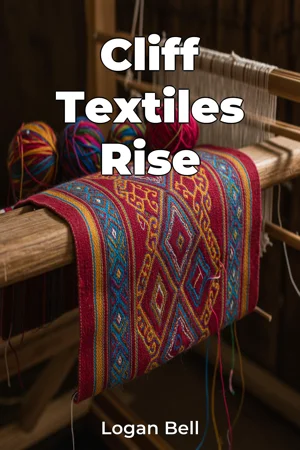
Can ancient artistry thrive in the modern global marketplace? *Cliff Textiles Rise* answers this question by exploring the intricate world of Aymara crafts and their journey from the Andean highlands to international consumers. This book delves into the complex interplay between tradition, innovation, and globalization, focusing on the economic and cultural significance of Aymara textiles. It examines how these crafts, deeply rooted in Aymara history and identity, are adapting to meet the demands of a globalized world. The book focuses on three key areas: the history and cultural significance of Aymara textiles, the challenges and opportunities presented by globalization, and the strategies employed by Aymara artisans to maintain their cultural heritage while participating in the global economy. Understanding these elements is crucial to appreciating the resilience and adaptability of indigenous cultures in the face of modernization. Historically, Aymara textiles have served as more than just functional items; they are storytellers, weaving narratives of community, spirituality, and ancestral knowledge. The colors, patterns, and techniques used in these textiles hold deep symbolic meaning, passed down through generations. However, the increasing demand for these crafts in international markets presents both an opportunity for economic empowerment and a threat to cultural authenticity. Cheap imitations and mass-produced alternatives challenge the livelihoods of Aymara artisans, while changing consumer preferences require them to adapt their designs and production methods. The central argument of *Cliff Textiles Rise* is that the successful integration of Aymara crafts into the global market hinges on a delicate balance between preserving cultural integrity and embracing innovation. It posits that sustainable economic development for Aymara communities depends on maintaining the artistic integrity of their textiles while strategically adapting to the demands of the global economy. The book unfolds in a structured manner, beginning with an introduction to the Aymara people and their rich textile tradition. It then explores the historical context of Aymara weaving, tracing its evolution from ancient techniques to contemporary practices. The subsequent sections delve into the economic realities of Aymara artisans, examining their production processes, marketing strategies, and access to global markets. The final chapters analyze case studies of successful and unsuccessful attempts at integrating Aymara textiles into the global economy, culminating in a discussion of the ethical considerations and policy recommendations for promoting sustainable development in the Aymara textile industry. The arguments presented in *Cliff Textiles Rise* are supported by a diverse range of evidence, including ethnographic research conducted in Aymara communities, market analysis of the global textile industry, and interviews with Aymara artisans, business owners, and policymakers. Unique data sources, such as traditional Aymara weaving patterns documented over centuries and detailed economic analyses of fair trade initiatives, provide valuable insights into the complexities of this industry. The book also connects to several other fields of study, including anthropology, economics, and art history. Its exploration of cultural preservation intersects with anthropological debates about the impact of globalization on indigenous communities. Its analysis of market dynamics contributes to economic discussions about sustainable development and ethical consumerism. Its examination of textile design and symbolism enriches art historical understanding of indigenous art forms. What sets *Cliff Textiles Rise* apart is its focus on providing practical strategies that can be used by Aymara artisans to maintain the integrity of their work while still seeing financial returns. The tone and style are informative yet accessible, making the text engaging for both academic and general audiences. This work targets readers interested in crafts, fair trade, indigenous cultures, and sustainable business practices. It would appeal to students and researchers in anthropology, economics, and art history, as well as consumers interested in supporting ethical and sustainable businesses. As a work in the 'Crafts & Hobbies' and 'Business' genres, *Cliff Textiles Rise* acknowledges the inherent artistic value in the textiles but also how that value translates into a financial asset. The book's scope is intentionally limited to the Aymara people and their textile industry to provide a focused and in-depth analysis. Practically, this information can be used to inform policy decisions related to fair trade and economic development in the Aymara region. It also can guide consumers looking to make informed purchasing decisions that support sustainable and ethical businesses.
Can ancient artistry thrive in the modern global marketplace? *Cliff Textiles Rise* answers this question by exploring the intricate world of Aymara crafts and their journey from the Andean highlands to international consumers. This book delves into the complex interplay between tradition, innovation, and globalization, focusing on the economic and cultural significance of Aymara textiles. It examines how these crafts, deeply rooted in Aymara history and identity, are adapting to meet the demands of a globalized world. The book focuses on three key areas: the history and cultural significance of Aymara textiles, the challenges and opportunities presented by globalization, and the strategies employed by Aymara artisans to maintain their cultural heritage while participating in the global economy. Understanding these elements is crucial to appreciating the resilience and adaptability of indigenous cultures in the face of modernization. Historically, Aymara textiles have served as more than just functional items; they are storytellers, weaving narratives of community, spirituality, and ancestral knowledge. The colors, patterns, and techniques used in these textiles hold deep symbolic meaning, passed down through generations. However, the increasing demand for these crafts in international markets presents both an opportunity for economic empowerment and a threat to cultural authenticity. Cheap imitations and mass-produced alternatives challenge the livelihoods of Aymara artisans, while changing consumer preferences require them to adapt their designs and production methods. The central argument of *Cliff Textiles Rise* is that the successful integration of Aymara crafts into the global market hinges on a delicate balance between preserving cultural integrity and embracing innovation. It posits that sustainable economic development for Aymara communities depends on maintaining the artistic integrity of their textiles while strategically adapting to the demands of the global economy. The book unfolds in a structured manner, beginning with an introduction to the Aymara people and their rich textile tradition. It then explores the historical context of Aymara weaving, tracing its evolution from ancient techniques to contemporary practices. The subsequent sections delve into the economic realities of Aymara artisans, examining their production processes, marketing strategies, and access to global markets. The final chapters analyze case studies of successful and unsuccessful attempts at integrating Aymara textiles into the global economy, culminating in a discussion of the ethical considerations and policy recommendations for promoting sustainable development in the Aymara textile industry. The arguments presented in *Cliff Textiles Rise* are supported by a diverse range of evidence, including ethnographic research conducted in Aymara communities, market analysis of the global textile industry, and interviews with Aymara artisans, business owners, and policymakers. Unique data sources, such as traditional Aymara weaving patterns documented over centuries and detailed economic analyses of fair trade initiatives, provide valuable insights into the complexities of this industry. The book also connects to several other fields of study, including anthropology, economics, and art history. Its exploration of cultural preservation intersects with anthropological debates about the impact of globalization on indigenous communities. Its analysis of market dynamics contributes to economic discussions about sustainable development and ethical consumerism. Its examination of textile design and symbolism enriches art historical understanding of indigenous art forms. What sets *Cliff Textiles Rise* apart is its focus on providing practical strategies that can be used by Aymara artisans to maintain the integrity of their work while still seeing financial returns. The tone and style are informative yet accessible, making the text engaging for both academic and general audiences. This work targets readers interested in crafts, fair trade, indigenous cultures, and sustainable business practices. It would appeal to students and researchers in anthropology, economics, and art history, as well as consumers interested in supporting ethical and sustainable businesses. As a work in the 'Crafts & Hobbies' and 'Business' genres, *Cliff Textiles Rise* acknowledges the inherent artistic value in the textiles but also how that value translates into a financial asset. The book's scope is intentionally limited to the Aymara people and their textile industry to provide a focused and in-depth analysis. Practically, this information can be used to inform policy decisions related to fair trade and economic development in the Aymara region. It also can guide consumers looking to make informed purchasing decisions that support sustainable and ethical businesses.
*Cliff Textiles Rise* explores the journey of Aymara textiles from the Andean highlands to the global marketplace, examining the intersection of cultural heritage, fair trade, and economic development. These textiles, rich with symbolic meaning passed down through generations, face the challenge of maintaining authenticity amidst increasing global demand. The book highlights how Aymara artisans strive to preserve their traditions while adapting to the pressures of the global economy. The book delves into the history and cultural significance of Aymara weaving, analyzing how these indigenous crafts can thrive in a modern context. It emphasizes the importance of balancing cultural integrity with innovation to achieve sustainable development. Through ethnographic research, market analysis, and interviews, *Cliff Textiles Rise* presents practical strategies for Aymara artisans to navigate the global market while upholding the artistic value of their work. The book progresses by first introducing the Aymara people and their textiles, then exploring the historical context, and finally, analyzing economic realities and ethical considerations.
Book Details
ISBN
9788235225023
Publisher
Publifye AS
Your Licenses
You don't own any licenses for this book
Purchase a license below to unlock this book and download the EPUB.
Purchase License
Select a tier to unlock this book
Need bulk licensing?
Contact us for enterprise agreements.