
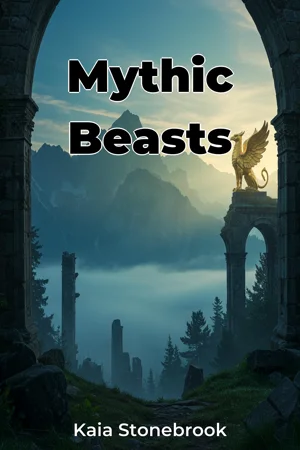
About This Book
Are mythical beasts merely figments of human imagination, or do they reflect deeper truths about our cultures, history, and understanding of the natural world? "Mythic Beasts" embarks on a detailed exploration of these powerful symbols, tracing their origins, mapping their cultural significance across diverse civilizations, and examining their enduring impact on literature and folklore. This book delves into the intertwined realms of history and science to unravel the multifaceted nature of mythic creatures. We will address three key topics essential to understanding the enduring presence of mythic beasts. First, the book examines the genesis of these creatures, investigating the environmental, social, and psychological factors that contributed to their creation. Second, we analyze the cultural roles they played in shaping belief systems, social structures, and artistic expressions. Finally, we trace their evolution through literature and folklore, demonstrating how stories transformed and adapted these creatures over centuries. These topics are crucial because they provide a framework for understanding how humans have used mythical beasts to explain the world, encode values, and grapple with existential questions. To fully appreciate the significance of mythic beasts, one must understand the historical and social context in which they arose. The book provides background on ancient civilizations, including Mesopotamian, Egyptian, Greek, Roman, Norse, and East Asian cultures. It also considers the scientific understanding—or misunderstanding—of the natural world that prevailed in these eras, as this shaped perceptions of the possible and impossible. The central argument of "Mythic Beasts" is that these creatures function as cultural mirrors, reflecting the anxieties, aspirations, and collective experiences of the societies that created them. This book is not about proving or disproving the existence of these beings but rather about understanding their cultural significance and the human need for them. Understanding this argument is significant because it highlights the power of storytelling and the human impulse to find meaning in the unknown, promoting critical thinking about cultural narratives. The book unfolds in three major sections. The first section introduces the core concepts, providing a framework for understanding the origins and functions of mythic beasts. The second part delves into specific regional traditions, examining creatures such as dragons, griffins, unicorns, and sea monsters across different cultures. Each chapter in this section will focus on a particular type of creature, tracing its historical roots and cultural significance. The third section analyzes the lasting legacy of mythic beasts in literature, art, and popular culture, exploring how these creatures continue to shape our imagination and inform contemporary narratives. The arguments presented in "Mythic Beasts" are supported by a range of evidence, including historical texts, archaeological findings, iconographic analysis, and comparative mythology. We will draw upon primary sources, such as ancient myths and legends, as well as secondary scholarship from various fields, to provide a comprehensive and interdisciplinary perspective. "Mythic Beasts" connects to several fields of study, including anthropology, art history, and religious studies. Anthropological perspectives shed light on the cultural functions of mythic beasts in shaping social structures and belief systems. Art history helps to trace the visual representations of these creatures across different periods and regions. Religious studies illuminates the role of mythic beasts in religious cosmologies and rituals. This book offers a unique perspective by combining historical analysis with scientific inquiry. It moves beyond simple descriptions of mythic beasts to explore the underlying reasons for their creation and their enduring appeal. The approach is academic yet accessible, designed to engage a broad audience while maintaining scholarly rigor. The target audience for "Mythic Beasts" includes readers interested in mythology, folklore, history, and cultural studies. It would also appeal to students and researchers in related fields, as well as anyone curious about the intersection of human imagination and the natural world. The book is valuable because it provides a comprehensive and insightful overview of a topic that has fascinated people for centuries. As a work of non-fiction, "Mythic Beasts" adheres to the genre's conventions of accuracy, objectivity, and evidence-based analysis. While the exploration of myth may seem speculative, this book focuses on providing a grounded, factual analysis of the cultural context and historical evolution of these myths. The scope of "Mythic Beasts" is broad, encompassing a wide range of cultures and time periods. However, it is intentionally limited to exploring the cultural significance of mythic beasts rather than attempting to prove or disprove their existence. The information in this book can be practically applied to understanding cultural narratives, interpreting symbolic language, and appreciating the diversity of human imagination. By understanding the underlying motivations behind the creation of mythic beasts, readers can gain insights into the values, beliefs, and anxieties of different cultures. While "Mythic Beasts" aims for an objective analysis, debates exist regarding the interpretation of certain myths and their historical accuracy. The book acknowledges these controversies and presents multiple perspectives where appropriate, encouraging readers to critically evaluate the evidence.
Are mythical beasts merely figments of human imagination, or do they reflect deeper truths about our cultures, history, and understanding of the natural world? "Mythic Beasts" embarks on a detailed exploration of these powerful symbols, tracing their origins, mapping their cultural significance across diverse civilizations, and examining their enduring impact on literature and folklore. This book delves into the intertwined realms of history and science to unravel the multifaceted nature of mythic creatures. We will address three key topics essential to understanding the enduring presence of mythic beasts. First, the book examines the genesis of these creatures, investigating the environmental, social, and psychological factors that contributed to their creation. Second, we analyze the cultural roles they played in shaping belief systems, social structures, and artistic expressions. Finally, we trace their evolution through literature and folklore, demonstrating how stories transformed and adapted these creatures over centuries. These topics are crucial because they provide a framework for understanding how humans have used mythical beasts to explain the world, encode values, and grapple with existential questions. To fully appreciate the significance of mythic beasts, one must understand the historical and social context in which they arose. The book provides background on ancient civilizations, including Mesopotamian, Egyptian, Greek, Roman, Norse, and East Asian cultures. It also considers the scientific understanding—or misunderstanding—of the natural world that prevailed in these eras, as this shaped perceptions of the possible and impossible. The central argument of "Mythic Beasts" is that these creatures function as cultural mirrors, reflecting the anxieties, aspirations, and collective experiences of the societies that created them. This book is not about proving or disproving the existence of these beings but rather about understanding their cultural significance and the human need for them. Understanding this argument is significant because it highlights the power of storytelling and the human impulse to find meaning in the unknown, promoting critical thinking about cultural narratives. The book unfolds in three major sections. The first section introduces the core concepts, providing a framework for understanding the origins and functions of mythic beasts. The second part delves into specific regional traditions, examining creatures such as dragons, griffins, unicorns, and sea monsters across different cultures. Each chapter in this section will focus on a particular type of creature, tracing its historical roots and cultural significance. The third section analyzes the lasting legacy of mythic beasts in literature, art, and popular culture, exploring how these creatures continue to shape our imagination and inform contemporary narratives. The arguments presented in "Mythic Beasts" are supported by a range of evidence, including historical texts, archaeological findings, iconographic analysis, and comparative mythology. We will draw upon primary sources, such as ancient myths and legends, as well as secondary scholarship from various fields, to provide a comprehensive and interdisciplinary perspective. "Mythic Beasts" connects to several fields of study, including anthropology, art history, and religious studies. Anthropological perspectives shed light on the cultural functions of mythic beasts in shaping social structures and belief systems. Art history helps to trace the visual representations of these creatures across different periods and regions. Religious studies illuminates the role of mythic beasts in religious cosmologies and rituals. This book offers a unique perspective by combining historical analysis with scientific inquiry. It moves beyond simple descriptions of mythic beasts to explore the underlying reasons for their creation and their enduring appeal. The approach is academic yet accessible, designed to engage a broad audience while maintaining scholarly rigor. The target audience for "Mythic Beasts" includes readers interested in mythology, folklore, history, and cultural studies. It would also appeal to students and researchers in related fields, as well as anyone curious about the intersection of human imagination and the natural world. The book is valuable because it provides a comprehensive and insightful overview of a topic that has fascinated people for centuries. As a work of non-fiction, "Mythic Beasts" adheres to the genre's conventions of accuracy, objectivity, and evidence-based analysis. While the exploration of myth may seem speculative, this book focuses on providing a grounded, factual analysis of the cultural context and historical evolution of these myths. The scope of "Mythic Beasts" is broad, encompassing a wide range of cultures and time periods. However, it is intentionally limited to exploring the cultural significance of mythic beasts rather than attempting to prove or disprove their existence. The information in this book can be practically applied to understanding cultural narratives, interpreting symbolic language, and appreciating the diversity of human imagination. By understanding the underlying motivations behind the creation of mythic beasts, readers can gain insights into the values, beliefs, and anxieties of different cultures. While "Mythic Beasts" aims for an objective analysis, debates exist regarding the interpretation of certain myths and their historical accuracy. The book acknowledges these controversies and presents multiple perspectives where appropriate, encouraging readers to critically evaluate the evidence.
"Mythic Beasts" explores the captivating world of legendary creatures, examining their origins and cultural significance across diverse civilizations. These beasts, far from being mere fantasies, reveal profound insights into the anxieties, aspirations, and collective experiences of the societies that birthed them. For instance, dragons, often depicted as fearsome fire-breathers, symbolize chaos and destruction in some cultures, while representing wisdom and good fortune in others. Similarly, the elusive unicorn, a symbol of purity and grace, appears in various forms throughout history and folklore, reflecting humanity's enduring quest for the unattainable. The book adopts an interdisciplinary approach, blending historical analysis with scientific inquiry to understand why these creatures were created and why they continue to fascinate us. Examining ancient civilizations like Mesopotamia, Greece, and East Asia, the book reveals how environmental factors, social structures, and early scientific understandings shaped these mythical beings. The book progresses through three main sections, beginning with the core concepts, moving into regional traditions, and concluding with the lasting legacy of these creatures in art and literature, offering a comprehensive perspective on their enduring appeal.
Book Details
ISBN
9788235225016
Publisher
Publifye AS
Your Licenses
You don't own any licenses for this book
Purchase a license below to unlock this book and download the EPUB.
Purchase License
Select a tier to unlock this book
Need bulk licensing?
Contact us for enterprise agreements.