
About This Book
Have you ever considered the ingenuity of building a home from the very earth beneath your feet? "Mud Hut Building" delves into the age-old practice of constructing durable and sustainable dwellings utilizing readily available mud resources, focusing particularly on the techniques employed by families in arid regions. This book explores the architectural principles, historical context, and practical application of mud construction, offering insights into a building tradition that continues to provide shelter and community in challenging environments. The book centers on three main themes: the material science of mud construction, the socio-cultural significance of mud homes, and the practical techniques for building and maintaining these structures. Understanding the properties of different types of soil, the ways in which they can be mixed and reinforced, and the impact of climate on mud structures, is crucial for effective building. Likewise, the design and construction of mud homes are deeply intertwined with local customs, family structures, and resource management strategies; these homes are often the product of communal effort passed down through generations. Finally, mastering the techniques for building walls, roofs, and foundations, as well as understanding maintenance and repair, is essential for creating lasting and functional dwellings. The historical roots of mud construction stretch back millennia, with evidence of mud structures found in ancient civilizations across the globe. In arid regions, where timber and stone are scarce, mud has served as a primary building material, offering thermal mass to regulate temperature and providing a readily available resource. The book provides background on the development of these techniques across various historical periods, highlighting the ingenuity demonstrated by different cultures in adapting to their environments. The central argument of "Mud Hut Building" is that mud construction represents a viable, sustainable, and culturally significant approach to housing, especially relevant in an era of increasing environmental awareness. This book makes the case that by understanding the principles of mud construction, we can learn from traditional building practices, promote sustainable development, and empower communities to create affordable and culturally appropriate housing solutions. The book begins by introducing the fundamental concepts of mud construction, including the types of soil suitable for building and the essential tools and techniques involved. Following this introduction, the book explores the diverse architectural styles found in different arid regions, examining the ways in which local climates and cultural practices have shaped the design of mud homes. Several chapters are dedicated to the practical aspects of construction, covering topics such as foundation laying, wall building, roof construction, and plastering techniques. The book culminates by exploring case studies of successful mud building projects, highlighting the potential for innovation and adaptation in contemporary architecture. The arguments presented are supported by a combination of historical research, architectural analysis, and field studies. The book draws upon archaeological findings, historical texts, and ethnographic accounts to trace the evolution of mud construction techniques. Detailed diagrams and photographs illustrate the various construction methods, and data from material testing and climate analysis are presented to demonstrate the structural integrity and thermal performance of mud buildings. "Mud Hut Building" connects to broader fields such as environmental studies, anthropology, and sustainable development. The environmental impact of mud construction, compared to conventional building methods, is a key consideration, as is the role of housing in shaping social identities and cultural practices. Discussions of sustainable development highlight the potential for mud construction to address housing shortages while minimizing resource consumption and environmental degradation. This book stands out by providing a comprehensive and practical guide to mud construction tailored specifically for arid regions. It integrates historical insights, architectural analysis, and hands-on building techniques to provide a holistic understanding of this time-honored tradition. The overall tone is informative and accessible, aiming to provide a clear and engaging overview of the subject matter. The intent is to strike a balance between academic rigor and practical application, making the book valuable to both researchers and practitioners. The intended audience includes architecture students, environmental enthusiasts, sustainable building professionals, and anyone interested in learning about alternative construction methods. The book will particularly appeal to those seeking affordable and environmentally responsible housing solutions. As a work of non-fiction architecture, "Mud Hut Building" adheres to the conventions of presenting verifiable facts, providing clear explanations of technical concepts, and supporting arguments with evidence. The scope of the book is limited to the construction of mud homes in arid regions, focusing primarily on techniques that are accessible to families and communities with limited resources. The information presented can be applied in a variety of real-world contexts, from building affordable housing in developing countries to constructing eco-friendly homes in arid climates. The book also aims to empower individuals to experiment with mud construction techniques, fostering innovation and adaptation in the field. While mud construction is widely accepted as a sustainable building practice, debates continue regarding the best methods for reinforcing mud structures and ensuring their long-term durability. The book addresses these controversies by presenting a range of perspectives and highlighting the ongoing research in this area.
Have you ever considered the ingenuity of building a home from the very earth beneath your feet? "Mud Hut Building" delves into the age-old practice of constructing durable and sustainable dwellings utilizing readily available mud resources, focusing particularly on the techniques employed by families in arid regions. This book explores the architectural principles, historical context, and practical application of mud construction, offering insights into a building tradition that continues to provide shelter and community in challenging environments. The book centers on three main themes: the material science of mud construction, the socio-cultural significance of mud homes, and the practical techniques for building and maintaining these structures. Understanding the properties of different types of soil, the ways in which they can be mixed and reinforced, and the impact of climate on mud structures, is crucial for effective building. Likewise, the design and construction of mud homes are deeply intertwined with local customs, family structures, and resource management strategies; these homes are often the product of communal effort passed down through generations. Finally, mastering the techniques for building walls, roofs, and foundations, as well as understanding maintenance and repair, is essential for creating lasting and functional dwellings. The historical roots of mud construction stretch back millennia, with evidence of mud structures found in ancient civilizations across the globe. In arid regions, where timber and stone are scarce, mud has served as a primary building material, offering thermal mass to regulate temperature and providing a readily available resource. The book provides background on the development of these techniques across various historical periods, highlighting the ingenuity demonstrated by different cultures in adapting to their environments. The central argument of "Mud Hut Building" is that mud construction represents a viable, sustainable, and culturally significant approach to housing, especially relevant in an era of increasing environmental awareness. This book makes the case that by understanding the principles of mud construction, we can learn from traditional building practices, promote sustainable development, and empower communities to create affordable and culturally appropriate housing solutions. The book begins by introducing the fundamental concepts of mud construction, including the types of soil suitable for building and the essential tools and techniques involved. Following this introduction, the book explores the diverse architectural styles found in different arid regions, examining the ways in which local climates and cultural practices have shaped the design of mud homes. Several chapters are dedicated to the practical aspects of construction, covering topics such as foundation laying, wall building, roof construction, and plastering techniques. The book culminates by exploring case studies of successful mud building projects, highlighting the potential for innovation and adaptation in contemporary architecture. The arguments presented are supported by a combination of historical research, architectural analysis, and field studies. The book draws upon archaeological findings, historical texts, and ethnographic accounts to trace the evolution of mud construction techniques. Detailed diagrams and photographs illustrate the various construction methods, and data from material testing and climate analysis are presented to demonstrate the structural integrity and thermal performance of mud buildings. "Mud Hut Building" connects to broader fields such as environmental studies, anthropology, and sustainable development. The environmental impact of mud construction, compared to conventional building methods, is a key consideration, as is the role of housing in shaping social identities and cultural practices. Discussions of sustainable development highlight the potential for mud construction to address housing shortages while minimizing resource consumption and environmental degradation. This book stands out by providing a comprehensive and practical guide to mud construction tailored specifically for arid regions. It integrates historical insights, architectural analysis, and hands-on building techniques to provide a holistic understanding of this time-honored tradition. The overall tone is informative and accessible, aiming to provide a clear and engaging overview of the subject matter. The intent is to strike a balance between academic rigor and practical application, making the book valuable to both researchers and practitioners. The intended audience includes architecture students, environmental enthusiasts, sustainable building professionals, and anyone interested in learning about alternative construction methods. The book will particularly appeal to those seeking affordable and environmentally responsible housing solutions. As a work of non-fiction architecture, "Mud Hut Building" adheres to the conventions of presenting verifiable facts, providing clear explanations of technical concepts, and supporting arguments with evidence. The scope of the book is limited to the construction of mud homes in arid regions, focusing primarily on techniques that are accessible to families and communities with limited resources. The information presented can be applied in a variety of real-world contexts, from building affordable housing in developing countries to constructing eco-friendly homes in arid climates. The book also aims to empower individuals to experiment with mud construction techniques, fostering innovation and adaptation in the field. While mud construction is widely accepted as a sustainable building practice, debates continue regarding the best methods for reinforcing mud structures and ensuring their long-term durability. The book addresses these controversies by presenting a range of perspectives and highlighting the ongoing research in this area.
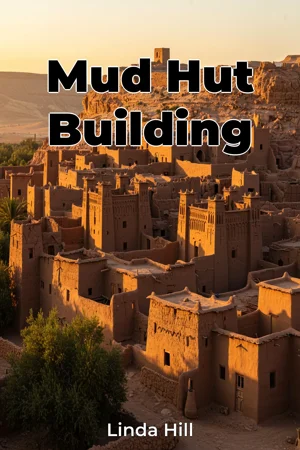
"Mud Hut Building" explores the sustainable and resourceful practice of mud construction, particularly in arid regions where it has served communities for millennia. The book delves into the material science behind using earth as a building resource, highlighting how different soil types are mixed and reinforced to create durable structures. It also examines the socio-cultural importance of these mud homes, often built through communal effort and deeply connected to local customs and family structures. The book progresses from introducing the fundamentals of mud construction, like identifying suitable soils and essential techniques, to exploring diverse architectural styles shaped by local climates and cultural practices. Practical aspects such as foundation laying, wall building, and roof construction are covered in detail. One intriguing fact is how mud's thermal mass helps regulate indoor temperatures in harsh climates. Ultimately, "Mud Hut Building" champions mud construction as a viable, eco-friendly housing solution. By integrating historical research, architectural analysis, and practical techniques, it provides a comprehensive understanding of this traditional practice, making it valuable for both researchers and those seeking affordable, sustainable housing options.
Book Details
ISBN
9788235224996
Publisher
Publifye AS
Your Licenses
You don't own any licenses for this book
Purchase a license below to unlock this book and download the EPUB.
Purchase License
Select a tier to unlock this book
Need bulk licensing?
Contact us for enterprise agreements.