
About This Book
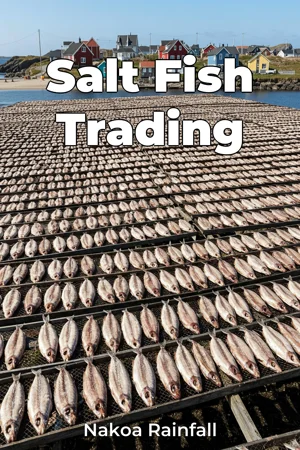
How did a seemingly simple preservation technique shape the social and economic landscapes of coastal communities worldwide? "Salt Fish Trading" delves into the intricate world of salted fish commerce, exploring its profound impact on family structures and economic systems in coastal regions across history. This book examines the multifaceted role of salted fish, not merely as a food commodity but as a catalyst for trade networks, a driver of economic development, and a shaper of family dynamics. This study focuses on two primary areas. First, it analyzes the historical development of salt fish trading routes, examining how these networks facilitated the exchange of goods, ideas, and cultural practices. Second, it investigates the evolving roles of family members within the salt fish industry, exploring how labor was divided, how resources were managed, and how familial relationships were affected by the demands of this trade. These topics are crucial because they reveal the often-overlooked significance of small-scale industries in shaping broader economic and social trends. The book provides historical context, tracing the origins of salt fish preservation techniques and their subsequent spread across different geographical regions. Readers will gain an understanding of the environmental factors that influenced salt fish production, the technological advancements that improved processing methods, and the regulatory frameworks that governed trade practices. The central argument of "Salt Fish Trading" posits that the salt fish trade, while seemingly localized, exerted a significant influence on global economic and social structures, particularly within coastal communities. The book highlights how families adapted to the demands of this industry, demonstrating their resilience and adaptability in the face of changing economic conditions. The book is structured into three main parts. Part one introduces the foundational concepts, providing an overview of salt fish preservation techniques, trade routes, and family structures. Part two delves into specific case studies, examining the salt fish trade in different regions and analyzing the unique challenges and opportunities faced by families involved in the industry. Part three synthesizes the findings, drawing broader conclusions about the socio-economic impact of salt fish trading and its relevance to contemporary issues. A final section explores the implications of these historical trends for modern coastal communities, particularly in the context of sustainable resource management and economic development. Evidence presented in this book draws upon a range of sources, including archival records, trade documents, census data, and oral histories. The research incorporates quantitative analysis of trade volumes and economic indicators, as well as qualitative analysis of personal narratives and community traditions. "Salt Fish Trading" connects to several other fields of study, including maritime history, economic anthropology, and family sociology. The book’s interdisciplinary approach provides a holistic understanding of the salt fish trade, revealing its complex interplay with social, economic, and cultural forces. What sets this book apart is its emphasis on the human dimension of the salt fish trade. By focusing on the experiences of families involved in the industry, the book offers a nuanced perspective on the challenges and opportunities presented by this unique economic activity. It illustrates that decisions related to local food systems are tightly intertwined with the social fabric of coastal communities. The tone of the book is academic yet accessible, blending rigorous research with engaging storytelling. The writing style is clear and concise, making complex concepts understandable to a broad audience. The intended audience includes historians, social scientists, economists, and anyone interested in the history of food, trade, and family dynamics. The book will also appeal to readers with a general interest in coastal communities and their unique cultural traditions. It is valuable to understand how an economic activity such as salt fish trading can have ripple effects. As a work of history and social science, this book adheres to the conventions of scholarly research, including rigorous documentation, critical analysis, and objective interpretation. The scope of the book is limited to the historical development of salt fish trading and its impact on family structures in coastal communities. The information in "Salt Fish Trading" can be applied to contemporary issues such as sustainable seafood production, coastal community development, and the preservation of cultural heritage. This book contributes to ongoing discussions about the importance of small-scale industries in shaping economic and social landscapes. The debates concern the balance between tradition and modernity, and the role of government regulation in promoting sustainable development.
How did a seemingly simple preservation technique shape the social and economic landscapes of coastal communities worldwide? "Salt Fish Trading" delves into the intricate world of salted fish commerce, exploring its profound impact on family structures and economic systems in coastal regions across history. This book examines the multifaceted role of salted fish, not merely as a food commodity but as a catalyst for trade networks, a driver of economic development, and a shaper of family dynamics. This study focuses on two primary areas. First, it analyzes the historical development of salt fish trading routes, examining how these networks facilitated the exchange of goods, ideas, and cultural practices. Second, it investigates the evolving roles of family members within the salt fish industry, exploring how labor was divided, how resources were managed, and how familial relationships were affected by the demands of this trade. These topics are crucial because they reveal the often-overlooked significance of small-scale industries in shaping broader economic and social trends. The book provides historical context, tracing the origins of salt fish preservation techniques and their subsequent spread across different geographical regions. Readers will gain an understanding of the environmental factors that influenced salt fish production, the technological advancements that improved processing methods, and the regulatory frameworks that governed trade practices. The central argument of "Salt Fish Trading" posits that the salt fish trade, while seemingly localized, exerted a significant influence on global economic and social structures, particularly within coastal communities. The book highlights how families adapted to the demands of this industry, demonstrating their resilience and adaptability in the face of changing economic conditions. The book is structured into three main parts. Part one introduces the foundational concepts, providing an overview of salt fish preservation techniques, trade routes, and family structures. Part two delves into specific case studies, examining the salt fish trade in different regions and analyzing the unique challenges and opportunities faced by families involved in the industry. Part three synthesizes the findings, drawing broader conclusions about the socio-economic impact of salt fish trading and its relevance to contemporary issues. A final section explores the implications of these historical trends for modern coastal communities, particularly in the context of sustainable resource management and economic development. Evidence presented in this book draws upon a range of sources, including archival records, trade documents, census data, and oral histories. The research incorporates quantitative analysis of trade volumes and economic indicators, as well as qualitative analysis of personal narratives and community traditions. "Salt Fish Trading" connects to several other fields of study, including maritime history, economic anthropology, and family sociology. The book’s interdisciplinary approach provides a holistic understanding of the salt fish trade, revealing its complex interplay with social, economic, and cultural forces. What sets this book apart is its emphasis on the human dimension of the salt fish trade. By focusing on the experiences of families involved in the industry, the book offers a nuanced perspective on the challenges and opportunities presented by this unique economic activity. It illustrates that decisions related to local food systems are tightly intertwined with the social fabric of coastal communities. The tone of the book is academic yet accessible, blending rigorous research with engaging storytelling. The writing style is clear and concise, making complex concepts understandable to a broad audience. The intended audience includes historians, social scientists, economists, and anyone interested in the history of food, trade, and family dynamics. The book will also appeal to readers with a general interest in coastal communities and their unique cultural traditions. It is valuable to understand how an economic activity such as salt fish trading can have ripple effects. As a work of history and social science, this book adheres to the conventions of scholarly research, including rigorous documentation, critical analysis, and objective interpretation. The scope of the book is limited to the historical development of salt fish trading and its impact on family structures in coastal communities. The information in "Salt Fish Trading" can be applied to contemporary issues such as sustainable seafood production, coastal community development, and the preservation of cultural heritage. This book contributes to ongoing discussions about the importance of small-scale industries in shaping economic and social landscapes. The debates concern the balance between tradition and modernity, and the role of government regulation in promoting sustainable development.
"Salt Fish Trading" explores the surprisingly significant role of salt fish trading in shaping the socio-economic landscapes of coastal communities globally. Delving into maritime history and economic anthropology, the book reveals how a simple preservation technique became a catalyst for complex trade routes and influenced family structures. The book highlights how salt fish wasn't merely a commodity; it was a driver of economic development, with families adapting to the demands of the industry. It also examines how this small-scale industry shaped broader economic and social trends. The book presents a historical context, tracing the origins of salt fish preservation and its spread across different regions. Did you know that environmental factors and technological advancements significantly influenced salt fish production and processing methods? The book is structured into three parts, starting with foundational concepts, then moving into case studies, and finally synthesizing findings to draw broader conclusions about the socio-economic impact. This approach provides a comprehensive understanding of the trade's influence, making it valuable for those interested in the history of food, trade, and family dynamics.
Book Details
ISBN
9788235224750
Publisher
Publifye AS
Your Licenses
You don't own any licenses for this book
Purchase a license below to unlock this book and download the EPUB.
Purchase License
Select a tier to unlock this book
Need bulk licensing?
Contact us for enterprise agreements.