
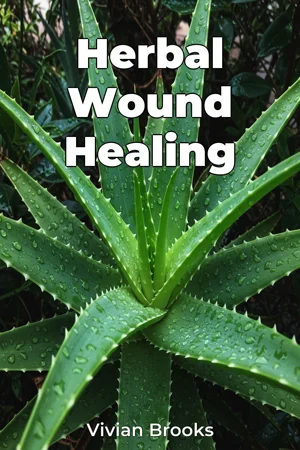
About This Book
Have you ever considered the healing power of herbs readily available in nature's pharmacy? "Herbal Wound Healing" delves into the time-honored practice of using traditional herbs to treat minor wounds, offering a comprehensive exploration of botanical remedies rooted in both historical precedent and scientific understanding. This book bridges the gap between ancestral knowledge and contemporary science, examining how specific herbs can promote tissue repair, combat infection, and alleviate pain associated with minor injuries. The core of this book revolves around three key themes: the identification and properties of effective wound-healing herbs, the mechanisms by which these herbs facilitate healing, and the safe and effective application of these herbal remedies in various contexts. Understanding these topics is crucial because conventional wound care, while often effective, can be costly and may have undesirable side effects. Herbal remedies offer a potentially accessible and gentler alternative, especially for minor injuries. Historically, wound care was almost exclusively reliant on natural resources, with various cultures developing sophisticated systems for identifying and utilizing medicinal plants. This book draws upon ethnobotanical studies and historical texts to provide context for the herbs discussed. Basic knowledge of botany and human physiology will be beneficial for readers seeking a deeper understanding, but the information is presented in an accessible manner for a broad audience. The central argument of "Herbal Wound Healing" is that certain traditional herbs possess demonstrable wound-healing properties that, when understood and applied correctly, can significantly aid in the management of minor injuries. This argument is significant because it empowers individuals to take a more active role in their healthcare while also promoting a greater appreciation for the potential of the natural world. The book begins with an introduction to the principles of wound healing and an overview of traditional herbal medicine. It then progresses into detailed profiles of specific herbs known for their wound-healing properties. These profiles include information on the herb's botanical characteristics, traditional uses, active compounds, and scientific evidence supporting its efficacy. We explore herbs such as Calendula, renowned for its anti-inflammatory and antiseptic qualities, Aloe Vera, celebrated for its soothing and moisturizing effects, and Plantain, valued for its ability to draw out impurities and promote tissue regeneration. The final sections of the book cover the preparation and application of herbal remedies, including poultices, salves, and washes, along with safety considerations and potential interactions. The book culminates with practical guidance on creating your own herbal first-aid kit. The evidence presented in this book is derived from a combination of sources, including peer-reviewed scientific studies, traditional medicine texts, and clinical observations. We critically analyze existing research to assess the effectiveness of each herb, highlighting both strengths and limitations of the available data. "Herbal Wound Healing" connects to other fields such as ethnobotany, pharmacology, and dermatology. Ethnobotany provides the cultural and historical context for the use of these herbs, pharmacology elucidates the biochemical mechanisms of action, and dermatology offers insights into the physiological processes of wound healing. These interdisciplinary connections enrich the book's argument by providing a more holistic understanding of herbal wound care. This book takes a practical and evidence-based approach, focusing on herbs with a strong history of use. While acknowledging the limitations of existing research, it emphasizes the potential benefits of incorporating herbal remedies into a comprehensive approach to wound care. The tone of the book is informative and accessible, aiming to empower readers with the knowledge needed to make informed decisions about their health. The writing style is clear and concise, avoiding technical jargon where possible. The target audience for "Herbal Wound Healing" includes herbalists, natural health enthusiasts, gardeners, outdoor enthusiasts, and anyone interested in exploring alternative approaches to wound care. This book will be valuable to them because it provides a comprehensive and evidence-based guide to using traditional herbs for minor injuries. It aligns with the expectations of the health and fitness genre by providing practical advice and promoting a proactive approach to wellness. The scope of the book is limited to the treatment of minor wounds, such as cuts, scrapes, burns, and insect bites. It does not cover the treatment of serious injuries or chronic wounds, which require professional medical attention. Readers can apply the information in this book by creating their own herbal first-aid kits, preparing herbal remedies for minor injuries, and incorporating herbal wound care into their daily routines. While the book is not intended to replace professional medical advice, it offers a valuable resource for those seeking to explore natural alternatives for minor wound care.
Have you ever considered the healing power of herbs readily available in nature's pharmacy? "Herbal Wound Healing" delves into the time-honored practice of using traditional herbs to treat minor wounds, offering a comprehensive exploration of botanical remedies rooted in both historical precedent and scientific understanding. This book bridges the gap between ancestral knowledge and contemporary science, examining how specific herbs can promote tissue repair, combat infection, and alleviate pain associated with minor injuries. The core of this book revolves around three key themes: the identification and properties of effective wound-healing herbs, the mechanisms by which these herbs facilitate healing, and the safe and effective application of these herbal remedies in various contexts. Understanding these topics is crucial because conventional wound care, while often effective, can be costly and may have undesirable side effects. Herbal remedies offer a potentially accessible and gentler alternative, especially for minor injuries. Historically, wound care was almost exclusively reliant on natural resources, with various cultures developing sophisticated systems for identifying and utilizing medicinal plants. This book draws upon ethnobotanical studies and historical texts to provide context for the herbs discussed. Basic knowledge of botany and human physiology will be beneficial for readers seeking a deeper understanding, but the information is presented in an accessible manner for a broad audience. The central argument of "Herbal Wound Healing" is that certain traditional herbs possess demonstrable wound-healing properties that, when understood and applied correctly, can significantly aid in the management of minor injuries. This argument is significant because it empowers individuals to take a more active role in their healthcare while also promoting a greater appreciation for the potential of the natural world. The book begins with an introduction to the principles of wound healing and an overview of traditional herbal medicine. It then progresses into detailed profiles of specific herbs known for their wound-healing properties. These profiles include information on the herb's botanical characteristics, traditional uses, active compounds, and scientific evidence supporting its efficacy. We explore herbs such as Calendula, renowned for its anti-inflammatory and antiseptic qualities, Aloe Vera, celebrated for its soothing and moisturizing effects, and Plantain, valued for its ability to draw out impurities and promote tissue regeneration. The final sections of the book cover the preparation and application of herbal remedies, including poultices, salves, and washes, along with safety considerations and potential interactions. The book culminates with practical guidance on creating your own herbal first-aid kit. The evidence presented in this book is derived from a combination of sources, including peer-reviewed scientific studies, traditional medicine texts, and clinical observations. We critically analyze existing research to assess the effectiveness of each herb, highlighting both strengths and limitations of the available data. "Herbal Wound Healing" connects to other fields such as ethnobotany, pharmacology, and dermatology. Ethnobotany provides the cultural and historical context for the use of these herbs, pharmacology elucidates the biochemical mechanisms of action, and dermatology offers insights into the physiological processes of wound healing. These interdisciplinary connections enrich the book's argument by providing a more holistic understanding of herbal wound care. This book takes a practical and evidence-based approach, focusing on herbs with a strong history of use. While acknowledging the limitations of existing research, it emphasizes the potential benefits of incorporating herbal remedies into a comprehensive approach to wound care. The tone of the book is informative and accessible, aiming to empower readers with the knowledge needed to make informed decisions about their health. The writing style is clear and concise, avoiding technical jargon where possible. The target audience for "Herbal Wound Healing" includes herbalists, natural health enthusiasts, gardeners, outdoor enthusiasts, and anyone interested in exploring alternative approaches to wound care. This book will be valuable to them because it provides a comprehensive and evidence-based guide to using traditional herbs for minor injuries. It aligns with the expectations of the health and fitness genre by providing practical advice and promoting a proactive approach to wellness. The scope of the book is limited to the treatment of minor wounds, such as cuts, scrapes, burns, and insect bites. It does not cover the treatment of serious injuries or chronic wounds, which require professional medical attention. Readers can apply the information in this book by creating their own herbal first-aid kits, preparing herbal remedies for minor injuries, and incorporating herbal wound care into their daily routines. While the book is not intended to replace professional medical advice, it offers a valuable resource for those seeking to explore natural alternatives for minor wound care.
"Herbal Wound Healing" explores the use of traditional herbs as effective treatments for minor wounds, bridging historical practices with modern science. It focuses on identifying wound-healing herbs, understanding their mechanisms, and applying them safely. One intriguing fact is that many cultures historically relied solely on natural resources for wound care, developing sophisticated systems for utilizing medicinal plants. The book emphasizes that herbs like Calendula, Aloe Vera, and Plantain have demonstrable wound-healing properties, potentially offering a gentler and more accessible alternative to conventional treatments for minor cuts, scrapes, and burns, without dismissing the importance of professional medical advice for serious injuries. The book begins with an introduction to wound-healing principles and traditional herbal medicine. It then progresses into detailed profiles of specific herbs and their properties, examining their botanical characteristics, traditional uses, active compounds, and scientific evidence supporting their efficacy. The book emphasizes a practical and evidence-based approach, culminating in guidance for creating your own herbal first-aid kit. By combining ethnobotanical studies, historical texts, and scientific research, this book empowers readers to take a more active role in their healthcare and appreciate the potential of natural remedies.
Book Details
ISBN
9788235224736
Publisher
Publifye AS
Your Licenses
You don't own any licenses for this book
Purchase a license below to unlock this book and download the EPUB.
Purchase License
Select a tier to unlock this book
Need bulk licensing?
Contact us for enterprise agreements.