
About This Book
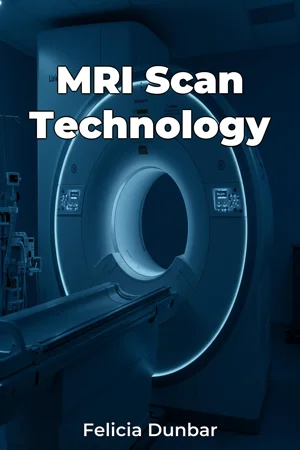
Have you ever wondered how doctors can see inside your body without surgery? This book, "MRI Scan Technology," unveils the intricate workings of Magnetic Resonance Imaging (MRI) machines and the sophisticated techniques they employ to visualize internal organs with unparalleled clarity. We delve into the core principles of MRI, exploring how they have revolutionized medical diagnostics and continue to evolve. This exploration begins by establishing a solid grounding in the physics underlying MRI. Central to this is an examination of nuclear magnetic resonance (NMR), the phenomenon where atomic nuclei absorb and re-emit electromagnetic radiation when placed in a magnetic field. Understanding the manipulation of magnetic fields and radiofrequency pulses is crucial to grasping how MRI machines generate detailed images. We will also focus on image reconstruction techniques which are essential for transforming raw data into interpretable anatomical images. These topics are important because they form the foundation of MRI technology, allowing medical professionals to diagnose a wide range of conditions, from brain tumors to musculoskeletal injuries. Before diving into the technical intricacies, we'll briefly discuss the historical development of MRI, tracing its roots from early NMR experiments to the sophisticated clinical tools used today. No advanced physics knowledge is required; the book provides clear explanations of relevant concepts. The central argument of "MRI Scan Technology" is that advancements in MRI technology are not merely incremental improvements, but rather represent a continuous paradigm shift in medical imaging, enabling earlier and more accurate diagnoses, improved treatment planning, and ultimately, better patient outcomes. The book is structured to guide the reader through a comprehensive understanding of MRI. Beginning with an introduction to the basic principles of magnetism and radiofrequency signals, we move to the core components of an MRI machine, including the magnets, gradient coils, and radiofrequency coils. Subsequent chapters detail the different MRI sequences, such as T1-weighted, T2-weighted, and diffusion-weighted imaging, explaining how each sequence highlights specific tissue characteristics. The book culminates with a discussion of advanced MRI techniques, clinical applications across various medical specialties, and future directions in MRI research. The book relies on a combination of published research, clinical studies, and technical specifications from leading MRI manufacturers. Diagrams and illustrations are used extensively to visualize complex concepts and machinery components. MRI technology intersects with several other fields, including computer science (for image processing and analysis), electrical engineering (for designing and building MRI hardware), and materials science (for developing improved contrast agents). These interdisciplinary connections highlight the collaborative nature of MRI development. "MRI Scan Technology" adopts a pragmatic approach, focusing on the underlying science and engineering principles that drive MRI technology. We avoid overly technical jargon and instead use clear, concise language to make the subject matter accessible to a broad audience. The target audience primarily consists of biomedical engineering students, radiology technicians, medical residents, and anyone seeking a deeper understanding of MRI technology. The book will be particularly valuable to those working directly with MRI machines or interpreting MRI images. As a work of non-fiction, "MRI Scan Technology" prioritizes accuracy, clarity, and objectivity. Information is presented in a balanced and unbiased manner, with appropriate citations and references. The book's scope is focused on the technical and scientific aspects of MRI, and doesn't delve into the specifics of patient care or clinical decision-making beyond showcasing example applications. The knowledge gained from this book can be applied in various practical settings, from optimizing MRI scan protocols to troubleshooting technical issues with MRI equipment. It also provides a solid foundation for interpreting MRI images and understanding the limitations of the technology. While MRI is generally considered a safe imaging modality, some ongoing debates surround the potential long-term effects of exposure to strong magnetic fields and radiofrequency radiation, we will touch upon the current safety guidelines and research efforts in this area allowing the reader to form a well-founded opinion.
Have you ever wondered how doctors can see inside your body without surgery? This book, "MRI Scan Technology," unveils the intricate workings of Magnetic Resonance Imaging (MRI) machines and the sophisticated techniques they employ to visualize internal organs with unparalleled clarity. We delve into the core principles of MRI, exploring how they have revolutionized medical diagnostics and continue to evolve. This exploration begins by establishing a solid grounding in the physics underlying MRI. Central to this is an examination of nuclear magnetic resonance (NMR), the phenomenon where atomic nuclei absorb and re-emit electromagnetic radiation when placed in a magnetic field. Understanding the manipulation of magnetic fields and radiofrequency pulses is crucial to grasping how MRI machines generate detailed images. We will also focus on image reconstruction techniques which are essential for transforming raw data into interpretable anatomical images. These topics are important because they form the foundation of MRI technology, allowing medical professionals to diagnose a wide range of conditions, from brain tumors to musculoskeletal injuries. Before diving into the technical intricacies, we'll briefly discuss the historical development of MRI, tracing its roots from early NMR experiments to the sophisticated clinical tools used today. No advanced physics knowledge is required; the book provides clear explanations of relevant concepts. The central argument of "MRI Scan Technology" is that advancements in MRI technology are not merely incremental improvements, but rather represent a continuous paradigm shift in medical imaging, enabling earlier and more accurate diagnoses, improved treatment planning, and ultimately, better patient outcomes. The book is structured to guide the reader through a comprehensive understanding of MRI. Beginning with an introduction to the basic principles of magnetism and radiofrequency signals, we move to the core components of an MRI machine, including the magnets, gradient coils, and radiofrequency coils. Subsequent chapters detail the different MRI sequences, such as T1-weighted, T2-weighted, and diffusion-weighted imaging, explaining how each sequence highlights specific tissue characteristics. The book culminates with a discussion of advanced MRI techniques, clinical applications across various medical specialties, and future directions in MRI research. The book relies on a combination of published research, clinical studies, and technical specifications from leading MRI manufacturers. Diagrams and illustrations are used extensively to visualize complex concepts and machinery components. MRI technology intersects with several other fields, including computer science (for image processing and analysis), electrical engineering (for designing and building MRI hardware), and materials science (for developing improved contrast agents). These interdisciplinary connections highlight the collaborative nature of MRI development. "MRI Scan Technology" adopts a pragmatic approach, focusing on the underlying science and engineering principles that drive MRI technology. We avoid overly technical jargon and instead use clear, concise language to make the subject matter accessible to a broad audience. The target audience primarily consists of biomedical engineering students, radiology technicians, medical residents, and anyone seeking a deeper understanding of MRI technology. The book will be particularly valuable to those working directly with MRI machines or interpreting MRI images. As a work of non-fiction, "MRI Scan Technology" prioritizes accuracy, clarity, and objectivity. Information is presented in a balanced and unbiased manner, with appropriate citations and references. The book's scope is focused on the technical and scientific aspects of MRI, and doesn't delve into the specifics of patient care or clinical decision-making beyond showcasing example applications. The knowledge gained from this book can be applied in various practical settings, from optimizing MRI scan protocols to troubleshooting technical issues with MRI equipment. It also provides a solid foundation for interpreting MRI images and understanding the limitations of the technology. While MRI is generally considered a safe imaging modality, some ongoing debates surround the potential long-term effects of exposure to strong magnetic fields and radiofrequency radiation, we will touch upon the current safety guidelines and research efforts in this area allowing the reader to form a well-founded opinion.
"MRI Scan Technology" explores the groundbreaking world of Magnetic Resonance Imaging, revealing how these machines provide doctors with unprecedented views inside the human body. It starts with the physics of nuclear magnetic resonance, explaining how manipulating magnetic fields and radiofrequency pulses generates detailed images. Image reconstruction techniques are also covered, showing how raw data becomes interpretable anatomical visuals. The book progresses from basic principles to the core components of an MRI machine and different MRI sequences like T1-weighted and T2-weighted imaging, each designed to highlight specific tissue characteristics. It highlights the ongoing advancements, which lead to earlier, more accurate diagnoses and improved treatment planning. Diagrams and illustrations are used extensively to explain complex concepts and machinery components. This book is unique in its pragmatic approach, making MRI technology accessible to a broad audience, including biomedical engineering students and radiology technicians. It bridges the gap between technical specifications and practical understanding, without requiring advanced physics knowledge.
Book Details
ISBN
9788235224620
Publisher
Publifye AS
Your Licenses
You don't own any licenses for this book
Purchase a license below to unlock this book and download the EPUB.
Purchase License
Select a tier to unlock this book
Need bulk licensing?
Contact us for enterprise agreements.