
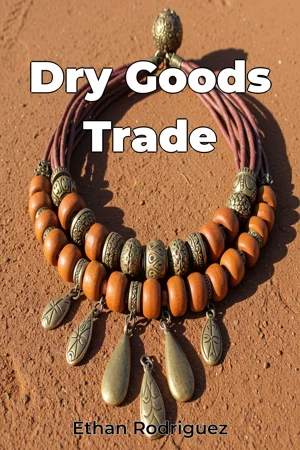
About This Book
How do traditional products from remote communities fare when introduced into the complexities of urban markets? This book, "Dry Goods Trade," delves into the intricate dynamics of Himba products sold in city markets, examining their economic, social, and cultural implications. We explore the adaptation of these products, the challenges faced by Himba traders, and the broader impact on both the Himba community and the urban consumers driving the demand. The core of this study rests on three key topics: the commodification of Himba cultural heritage, the economic empowerment (or disempowerment) of Himba women through trade, and the sustainability of traditional production practices in the face of market pressures. These topics are vital because they illuminate the complexities of globalization and its effects on indigenous communities. The increasing demand for authentic cultural products raises crucial questions about fair trade, cultural preservation, and the ethical responsibilities of consumers. To understand these dynamics, we must first appreciate the historical and social context of the Himba people, a semi-nomadic group residing primarily in northwestern Namibia. Their traditional economy revolves around cattle herding and the production of handcrafted goods, often utilizing locally sourced materials. Readers should possess a basic understanding of economic anthropology and the principles of supply and demand. The central argument of "Dry Goods Trade" asserts that the market integration of Himba products, while presenting opportunities for economic advancement, simultaneously poses significant risks to their cultural integrity and social structures. This argument is crucial because it challenges simplistic notions of economic development and highlights the need for nuanced approaches that prioritize community well-being and cultural preservation. The book is structured to systematically explore these issues. Initially, we introduce the Himba people and their traditional economic practices. We then trace the journey of specific dry goods – such as jewelry, traditional clothing, and handcrafted utensils – from their origin in Himba communities to their final sale in urban markets. The development of ideas unfolds across three major sections. First, we analyze the marketing and branding of Himba products, focusing on how "authenticity" is constructed and commodified. Second, we examine the roles and experiences of Himba women who are often at the forefront of this trade, assessing their economic gains, labor conditions, and social agency. Third, we evaluate the environmental impact of resource extraction and production, addressing the sustainability of current practices. The book culminates by proposing strategies for promoting fair trade practices, supporting Himba-led initiatives, and ensuring the long-term viability of their cultural heritage. Our analysis is grounded in extensive fieldwork conducted in both Himba communities and urban markets. This includes in-depth interviews with Himba producers and traders, surveys of consumer preferences, and ethnographic observations of market interactions. We also draw upon archival data related to trade patterns and historical accounts of Himba economic activities. The book also connects to broader fields of study, including development economics, cultural studies, and environmental sociology. The study enhances our understanding of the interconnectedness of global markets, cultural preservation, and social justice. "Dry Goods Trade" offers a distinctive perspective by focusing on the lived experiences of Himba women involved in the trade. The goal is to move beyond simplistic analyses of supply chains and demand, and to provide a nuanced account of how market forces impact individual lives and community well-being. The tone is academic yet accessible, aiming to inform and engage a broad audience. The writing style balances rigorous analysis with compelling storytelling, incorporating voices and perspectives from the field. The target audience includes students and scholars in anthropology, economics, and development studies, as well as policymakers, fair trade advocates, and anyone interested in the intersection of culture, commerce, and sustainability. The insights offered are valuable to those seeking to understand the ethical implications of consumer choices and the challenges faced by indigenous communities in a globalized world. As a work of social science and business, this study adheres to the conventions of rigorous research, evidence-based analysis, and clear articulation of findings. While the book offers a comprehensive exploration of Himba products in urban markets, it intentionally focuses on select dry goods to provide depth and specificity. This allows for a more thorough examination of the social, economic, and environmental impacts of this particular trade dynamic. The information presented can be applied practically by consumers seeking to make informed purchasing decisions, by businesses interested in promoting fair and sustainable trade practices, and by policymakers seeking to develop effective strategies for supporting indigenous communities. The book addresses ongoing debates surrounding the ethics of cultural commodification, the impact of globalization on indigenous livelihoods, and the responsibility of consumers to support fair trade practices. By engaging with these controversies, "Dry Goods Trade" contributes to a more informed and nuanced understanding of the challenges and opportunities facing indigenous communities in the 21st century.
How do traditional products from remote communities fare when introduced into the complexities of urban markets? This book, "Dry Goods Trade," delves into the intricate dynamics of Himba products sold in city markets, examining their economic, social, and cultural implications. We explore the adaptation of these products, the challenges faced by Himba traders, and the broader impact on both the Himba community and the urban consumers driving the demand. The core of this study rests on three key topics: the commodification of Himba cultural heritage, the economic empowerment (or disempowerment) of Himba women through trade, and the sustainability of traditional production practices in the face of market pressures. These topics are vital because they illuminate the complexities of globalization and its effects on indigenous communities. The increasing demand for authentic cultural products raises crucial questions about fair trade, cultural preservation, and the ethical responsibilities of consumers. To understand these dynamics, we must first appreciate the historical and social context of the Himba people, a semi-nomadic group residing primarily in northwestern Namibia. Their traditional economy revolves around cattle herding and the production of handcrafted goods, often utilizing locally sourced materials. Readers should possess a basic understanding of economic anthropology and the principles of supply and demand. The central argument of "Dry Goods Trade" asserts that the market integration of Himba products, while presenting opportunities for economic advancement, simultaneously poses significant risks to their cultural integrity and social structures. This argument is crucial because it challenges simplistic notions of economic development and highlights the need for nuanced approaches that prioritize community well-being and cultural preservation. The book is structured to systematically explore these issues. Initially, we introduce the Himba people and their traditional economic practices. We then trace the journey of specific dry goods – such as jewelry, traditional clothing, and handcrafted utensils – from their origin in Himba communities to their final sale in urban markets. The development of ideas unfolds across three major sections. First, we analyze the marketing and branding of Himba products, focusing on how "authenticity" is constructed and commodified. Second, we examine the roles and experiences of Himba women who are often at the forefront of this trade, assessing their economic gains, labor conditions, and social agency. Third, we evaluate the environmental impact of resource extraction and production, addressing the sustainability of current practices. The book culminates by proposing strategies for promoting fair trade practices, supporting Himba-led initiatives, and ensuring the long-term viability of their cultural heritage. Our analysis is grounded in extensive fieldwork conducted in both Himba communities and urban markets. This includes in-depth interviews with Himba producers and traders, surveys of consumer preferences, and ethnographic observations of market interactions. We also draw upon archival data related to trade patterns and historical accounts of Himba economic activities. The book also connects to broader fields of study, including development economics, cultural studies, and environmental sociology. The study enhances our understanding of the interconnectedness of global markets, cultural preservation, and social justice. "Dry Goods Trade" offers a distinctive perspective by focusing on the lived experiences of Himba women involved in the trade. The goal is to move beyond simplistic analyses of supply chains and demand, and to provide a nuanced account of how market forces impact individual lives and community well-being. The tone is academic yet accessible, aiming to inform and engage a broad audience. The writing style balances rigorous analysis with compelling storytelling, incorporating voices and perspectives from the field. The target audience includes students and scholars in anthropology, economics, and development studies, as well as policymakers, fair trade advocates, and anyone interested in the intersection of culture, commerce, and sustainability. The insights offered are valuable to those seeking to understand the ethical implications of consumer choices and the challenges faced by indigenous communities in a globalized world. As a work of social science and business, this study adheres to the conventions of rigorous research, evidence-based analysis, and clear articulation of findings. While the book offers a comprehensive exploration of Himba products in urban markets, it intentionally focuses on select dry goods to provide depth and specificity. This allows for a more thorough examination of the social, economic, and environmental impacts of this particular trade dynamic. The information presented can be applied practically by consumers seeking to make informed purchasing decisions, by businesses interested in promoting fair and sustainable trade practices, and by policymakers seeking to develop effective strategies for supporting indigenous communities. The book addresses ongoing debates surrounding the ethics of cultural commodification, the impact of globalization on indigenous livelihoods, and the responsibility of consumers to support fair trade practices. By engaging with these controversies, "Dry Goods Trade" contributes to a more informed and nuanced understanding of the challenges and opportunities facing indigenous communities in the 21st century.
"Dry Goods Trade" explores the complex journey of traditional Himba products from remote Namibian communities to urban markets, examining the economic, social, and cultural implications of this trade. It highlights how the integration of Himba crafts into global markets, while offering economic opportunities, simultaneously poses risks to cultural heritage and social structures. The book delves into the commodification of Himba culture, focusing on how "authenticity" is marketed and the challenges faced by Himba women at the forefront of this trade. The book offers a nuanced perspective on globalization's impact on indigenous communities, particularly the Himba people, whose traditional economy revolves around cattle herding and handcrafted goods. It also investigates the sustainability of traditional production practices amidst market pressures, questioning the long-term viability of resource extraction. Through fieldwork and interviews, the book systematically analyzes these issues, starting with an introduction to the Himba and their economic practices, then tracing the journey of specific products to urban markets. The analysis progresses through marketing strategies, the roles of Himba women, and the environmental impacts, ultimately proposing strategies for fair trade and cultural preservation.
Book Details
ISBN
9788235224606
Publisher
Publifye AS
Your Licenses
You don't own any licenses for this book
Purchase a license below to unlock this book and download the EPUB.
Purchase License
Select a tier to unlock this book
Need bulk licensing?
Contact us for enterprise agreements.