
About This Book
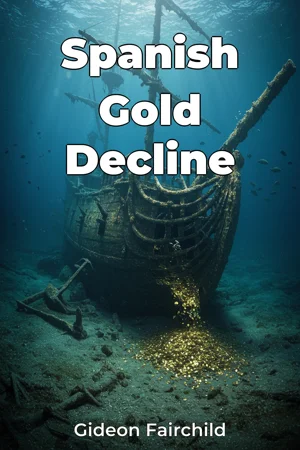
How could immense wealth cripple an empire? *Spanish Gold Decline* unravels the paradoxical decline of the Spanish economy during its Golden Age, demonstrating how the influx of colonial wealth, particularly gold and silver from the Americas, ultimately undermined Spain's economic foundations through inflation and the neglect of its industrial sector. This book examines the complex interplay between colonial exploitation, monetary policy, and domestic economic development in 16th and 17th century Spain, offering insights relevant to understanding modern resource curses and the challenges of managing sudden wealth. The central argument of *Spanish Gold Decline* posits that the massive quantities of precious metals entering Spain from its American colonies fueled hyperinflation, making Spanish goods increasingly expensive and uncompetitive in international markets. This, in turn, discouraged domestic manufacturing and agriculture, as it became cheaper to import goods from other European nations. The book further asserts that the Spanish crown's reliance on colonial wealth disincentivized crucial economic reforms and investments in infrastructure and technology, leaving Spain vulnerable when colonial resources eventually dwindled. Understanding this historical trajectory is crucial, as it offers a cautionary tale about the potential pitfalls of resource dependence and the importance of diversification and sound fiscal policies. The book is structured to first provide a historical context of Spain's rise to global power and its acquisition of vast colonial territories in the Americas. It then delves into the economic mechanisms through which colonial wealth affected the Spanish economy, with dedicated chapters analyzing: (1) the inflationary impact of the influx of gold and silver, meticulously tracing price fluctuations and wage stagnation; (2) the decline of Spanish industry and agriculture, examining the impact of cheap imports; (3) the Crown's fiscal policies and its dependence on colonial revenue, scrutinizing royal decrees, taxation policies, and debt management. The culmination of these analyses illustrates how Spain's economic decline was not a matter of inevitable fate but a result of specific policy choices and structural vulnerabilities exacerbated by colonial wealth. *Spanish Gold Decline* relies on a diverse range of primary and secondary sources, including archival records of Spanish trade, price indices from the period, royal decrees and economic treatises, and contemporary accounts of observers. It integrates quantitative data, such as trade statistics and price levels, with qualitative analyses of historical narratives and policy documents. Furthermore, the book incorporates recent scholarship in economic history and colonial studies to provide a nuanced and comprehensive understanding of the period. The book connects to broader themes in economic history, political science, and development studies. It resonates with current debates about resource curses, the impact of globalization on national economies, and the challenges of sustainable development. It also sheds light on the long-term consequences of colonialism and its enduring impact on both colonizers and colonized societies. *Spanish Gold Decline* offers a fresh perspective by challenging traditional narratives of Spain's Golden Age, arguing that its apparent prosperity masked underlying economic weaknesses. It diverges from simplistic explanations that attribute Spain's decline solely to military defeats or political mismanagement, emphasizing instead the crucial role of economic factors. Written in a clear and accessible style, *Spanish Gold Decline* is aimed at students and scholars of history, economics, and Latin American studies, as well as general readers interested in understanding the complexities of economic development and the long-term consequences of colonialism. It provides valuable insights for policymakers and economists grappling with issues of resource dependence and economic diversification. The scope of the book is limited to the economic history of Spain during the 16th and 17th centuries, with a specific focus on the impact of colonial wealth. It does not attempt to provide a comprehensive history of Spain during this period or to analyze all aspects of its colonial empire. The lessons gleaned from *Spanish Gold Decline* have practical applications for contemporary economies. Understanding the mechanisms through which resource wealth can undermine economic competitiveness and discourage diversification is crucial for countries rich in natural resources, such as oil or minerals. The book offers valuable insights for designing fiscal policies that promote sustainable development and avoid the pitfalls of resource dependence. The book engages with ongoing debates about the causes of Spain's decline and the role of colonialism in shaping global economic inequalities. It challenges interpretations that downplay the negative consequences of colonial exploitation and advocates for a more nuanced understanding of the complex relationship between wealth, power, and economic development.
How could immense wealth cripple an empire? *Spanish Gold Decline* unravels the paradoxical decline of the Spanish economy during its Golden Age, demonstrating how the influx of colonial wealth, particularly gold and silver from the Americas, ultimately undermined Spain's economic foundations through inflation and the neglect of its industrial sector. This book examines the complex interplay between colonial exploitation, monetary policy, and domestic economic development in 16th and 17th century Spain, offering insights relevant to understanding modern resource curses and the challenges of managing sudden wealth. The central argument of *Spanish Gold Decline* posits that the massive quantities of precious metals entering Spain from its American colonies fueled hyperinflation, making Spanish goods increasingly expensive and uncompetitive in international markets. This, in turn, discouraged domestic manufacturing and agriculture, as it became cheaper to import goods from other European nations. The book further asserts that the Spanish crown's reliance on colonial wealth disincentivized crucial economic reforms and investments in infrastructure and technology, leaving Spain vulnerable when colonial resources eventually dwindled. Understanding this historical trajectory is crucial, as it offers a cautionary tale about the potential pitfalls of resource dependence and the importance of diversification and sound fiscal policies. The book is structured to first provide a historical context of Spain's rise to global power and its acquisition of vast colonial territories in the Americas. It then delves into the economic mechanisms through which colonial wealth affected the Spanish economy, with dedicated chapters analyzing: (1) the inflationary impact of the influx of gold and silver, meticulously tracing price fluctuations and wage stagnation; (2) the decline of Spanish industry and agriculture, examining the impact of cheap imports; (3) the Crown's fiscal policies and its dependence on colonial revenue, scrutinizing royal decrees, taxation policies, and debt management. The culmination of these analyses illustrates how Spain's economic decline was not a matter of inevitable fate but a result of specific policy choices and structural vulnerabilities exacerbated by colonial wealth. *Spanish Gold Decline* relies on a diverse range of primary and secondary sources, including archival records of Spanish trade, price indices from the period, royal decrees and economic treatises, and contemporary accounts of observers. It integrates quantitative data, such as trade statistics and price levels, with qualitative analyses of historical narratives and policy documents. Furthermore, the book incorporates recent scholarship in economic history and colonial studies to provide a nuanced and comprehensive understanding of the period. The book connects to broader themes in economic history, political science, and development studies. It resonates with current debates about resource curses, the impact of globalization on national economies, and the challenges of sustainable development. It also sheds light on the long-term consequences of colonialism and its enduring impact on both colonizers and colonized societies. *Spanish Gold Decline* offers a fresh perspective by challenging traditional narratives of Spain's Golden Age, arguing that its apparent prosperity masked underlying economic weaknesses. It diverges from simplistic explanations that attribute Spain's decline solely to military defeats or political mismanagement, emphasizing instead the crucial role of economic factors. Written in a clear and accessible style, *Spanish Gold Decline* is aimed at students and scholars of history, economics, and Latin American studies, as well as general readers interested in understanding the complexities of economic development and the long-term consequences of colonialism. It provides valuable insights for policymakers and economists grappling with issues of resource dependence and economic diversification. The scope of the book is limited to the economic history of Spain during the 16th and 17th centuries, with a specific focus on the impact of colonial wealth. It does not attempt to provide a comprehensive history of Spain during this period or to analyze all aspects of its colonial empire. The lessons gleaned from *Spanish Gold Decline* have practical applications for contemporary economies. Understanding the mechanisms through which resource wealth can undermine economic competitiveness and discourage diversification is crucial for countries rich in natural resources, such as oil or minerals. The book offers valuable insights for designing fiscal policies that promote sustainable development and avoid the pitfalls of resource dependence. The book engages with ongoing debates about the causes of Spain's decline and the role of colonialism in shaping global economic inequalities. It challenges interpretations that downplay the negative consequences of colonial exploitation and advocates for a more nuanced understanding of the complex relationship between wealth, power, and economic development.
"Spanish Gold Decline" offers a compelling analysis of how Spain's Golden Age was paradoxically undermined by its vast colonial wealth. The book argues that the influx of gold and silver from the Americas triggered hyperinflation, rendering Spanish goods uncompetitive and hindering domestic industry. The Spanish crown's reliance on colonial riches also disincentivized crucial economic reforms. The book reveals that Spain's economic decline was not inevitable but stemmed from specific policy choices and vulnerabilities exacerbated by colonial wealth. The book meticulously examines the inflationary impact of colonial wealth, tracing price fluctuations and wage stagnation. It further investigates the decline of Spanish industry and agriculture due to cheap imports, as well as the Crown's fiscal policies and dependence on colonial revenue. By integrating quantitative data with qualitative analyses, "Spanish Gold Decline" challenges traditional narratives of Spain's Golden Age and offers a fresh perspective on the complexities of economic development and the resource curse. Structured chronologically, the book begins by establishing the historical backdrop of Spain's ascent and its acquisition of American colonies. Subsequent chapters delve into the mechanisms by which colonial wealth influenced the Spanish economy, culminating in an illustration of how Spain's economic downturn resulted from policy decisions and structural weaknesses intensified by colonial wealth. This approach provides readers with a comprehensive understanding of Spain's economic trajectory during this pivotal period.
Book Details
ISBN
9788235224484
Publisher
Publifye AS
Your Licenses
You don't own any licenses for this book
Purchase a license below to unlock this book and download the EPUB.
Purchase License
Select a tier to unlock this book
Need bulk licensing?
Contact us for enterprise agreements.