
About This Book
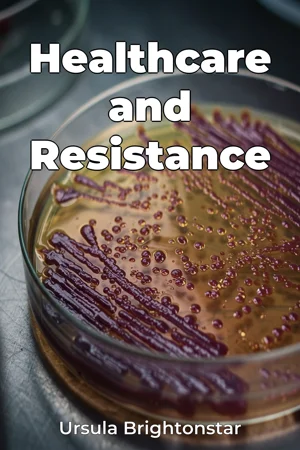
Are we on the verge of losing the battle against infectious diseases within our hospitals? Healthcare-associated infections (HAIs) are a persistent and growing threat, driven by the rise of antibiotic-resistant organisms. This book, *Healthcare and Resistance*, delves into the multifaceted challenges of treating resistant infections in hospital settings, a complex issue demanding urgent attention from healthcare professionals, policymakers, and the public alike. This book addresses three key topics: the mechanisms driving antibiotic resistance; the epidemiology and impact of resistant infections in hospitals; and strategies for prevention and control. Understanding how bacteria evolve resistance is paramount to developing effective countermeasures. The book examines the genetic and biochemical processes that enable pathogens to evade the effects of antimicrobial drugs. Examining the spread and consequences of these infections within hospitals is equally essential. We analyze the morbidity, mortality, and economic burden associated with HAIs, highlighting the urgent need for improved infection control practices. Finally, the book explores evidence-based strategies for preventing and controlling the spread of resistance, from antimicrobial stewardship programs to innovative approaches to environmental disinfection. The proliferation of antibiotic resistance is not a new phenomenon, but its acceleration in recent decades poses an existential risk to modern medicine. Overuse and misuse of antibiotics in both human and animal health have created selective pressures that favor the survival and spread of resistant strains. Compounding this issue are factors such as increased global travel, which facilitates the rapid dissemination of resistant pathogens across borders, and the aging population, which is more vulnerable to infection. The central argument of *Healthcare and Resistance* is that a comprehensive, interdisciplinary approach is essential to combat the threat of resistant infections in hospitals. This approach must integrate advancements in basic science, clinical medicine, public health, and policy to effectively address the complex drivers of resistance and implement sustainable solutions. *Healthcare and Resistance* begins by establishing a robust foundation in the microbiology of antibiotic resistance and common mechanisms of resistance development. The book then transitions into an epidemiological analysis of HAIs, drawing on data from national surveillance programs and local hospital initiatives. A significant portion of the book is dedicated to exploring various infection control strategies, including hand hygiene protocols, environmental cleaning practices, and the implementation of antimicrobial stewardship programs. These sections include case studies and practical examples of successful interventions implemented in diverse healthcare settings. The culmination of the book presents a forward-looking perspective on emerging technologies and novel therapeutic approaches for combating resistant infections, while also considering the ethical and economic implications of different strategies. To support its arguments, *Healthcare and Resistance* relies on a wide range of evidence, including peer-reviewed scientific publications, government reports, and original research. The book incorporates data from large-scale clinical trials, observational studies, and mathematical models to provide a comprehensive and nuanced understanding of the challenges and opportunities in this field. *Healthcare and Resistance* connects to several other fields, including public health policy, environmental science, and health economics. The book explores the role of public policy in promoting responsible antibiotic use and funding infection control initiatives. It examines the environmental factors that contribute to the spread of resistance, such as the presence of antibiotics in wastewater and agricultural runoff. The book also considers the economic costs associated with resistant infections and the cost-effectiveness of different prevention and control strategies. This book offers a practical and comprehensive guide to understanding and addressing the challenges of antimicrobial resistance in hospitals. The book is written in an accessible yet rigorous style, making it suitable for a wide range of readers, from healthcare professionals and students to policymakers and concerned citizens. The primary audience for *Healthcare and Resistance* includes hospital administrators, infection control practitioners, physicians, nurses, pharmacists, and public health officials. The book will also be of interest to students and researchers in related fields. The scope of *Healthcare and Resistance* is intentionally broad, covering a wide range of topics related to antibiotic resistance in hospitals. However, the book primarily focuses on bacterial infections and does not delve into the complexities of viral or fungal resistance. The information presented in *Healthcare and Resistance* can be applied in a variety of practical settings, from implementing evidence-based infection control protocols in hospitals to advocating for policies that promote responsible antibiotic use. The book provides readers with the tools and knowledge they need to make a meaningful difference in the fight against antibiotic resistance. This book addresses the ongoing debates surrounding optimal antimicrobial stewardship strategies and the role of new technologies in infection prevention.
Are we on the verge of losing the battle against infectious diseases within our hospitals? Healthcare-associated infections (HAIs) are a persistent and growing threat, driven by the rise of antibiotic-resistant organisms. This book, *Healthcare and Resistance*, delves into the multifaceted challenges of treating resistant infections in hospital settings, a complex issue demanding urgent attention from healthcare professionals, policymakers, and the public alike. This book addresses three key topics: the mechanisms driving antibiotic resistance; the epidemiology and impact of resistant infections in hospitals; and strategies for prevention and control. Understanding how bacteria evolve resistance is paramount to developing effective countermeasures. The book examines the genetic and biochemical processes that enable pathogens to evade the effects of antimicrobial drugs. Examining the spread and consequences of these infections within hospitals is equally essential. We analyze the morbidity, mortality, and economic burden associated with HAIs, highlighting the urgent need for improved infection control practices. Finally, the book explores evidence-based strategies for preventing and controlling the spread of resistance, from antimicrobial stewardship programs to innovative approaches to environmental disinfection. The proliferation of antibiotic resistance is not a new phenomenon, but its acceleration in recent decades poses an existential risk to modern medicine. Overuse and misuse of antibiotics in both human and animal health have created selective pressures that favor the survival and spread of resistant strains. Compounding this issue are factors such as increased global travel, which facilitates the rapid dissemination of resistant pathogens across borders, and the aging population, which is more vulnerable to infection. The central argument of *Healthcare and Resistance* is that a comprehensive, interdisciplinary approach is essential to combat the threat of resistant infections in hospitals. This approach must integrate advancements in basic science, clinical medicine, public health, and policy to effectively address the complex drivers of resistance and implement sustainable solutions. *Healthcare and Resistance* begins by establishing a robust foundation in the microbiology of antibiotic resistance and common mechanisms of resistance development. The book then transitions into an epidemiological analysis of HAIs, drawing on data from national surveillance programs and local hospital initiatives. A significant portion of the book is dedicated to exploring various infection control strategies, including hand hygiene protocols, environmental cleaning practices, and the implementation of antimicrobial stewardship programs. These sections include case studies and practical examples of successful interventions implemented in diverse healthcare settings. The culmination of the book presents a forward-looking perspective on emerging technologies and novel therapeutic approaches for combating resistant infections, while also considering the ethical and economic implications of different strategies. To support its arguments, *Healthcare and Resistance* relies on a wide range of evidence, including peer-reviewed scientific publications, government reports, and original research. The book incorporates data from large-scale clinical trials, observational studies, and mathematical models to provide a comprehensive and nuanced understanding of the challenges and opportunities in this field. *Healthcare and Resistance* connects to several other fields, including public health policy, environmental science, and health economics. The book explores the role of public policy in promoting responsible antibiotic use and funding infection control initiatives. It examines the environmental factors that contribute to the spread of resistance, such as the presence of antibiotics in wastewater and agricultural runoff. The book also considers the economic costs associated with resistant infections and the cost-effectiveness of different prevention and control strategies. This book offers a practical and comprehensive guide to understanding and addressing the challenges of antimicrobial resistance in hospitals. The book is written in an accessible yet rigorous style, making it suitable for a wide range of readers, from healthcare professionals and students to policymakers and concerned citizens. The primary audience for *Healthcare and Resistance* includes hospital administrators, infection control practitioners, physicians, nurses, pharmacists, and public health officials. The book will also be of interest to students and researchers in related fields. The scope of *Healthcare and Resistance* is intentionally broad, covering a wide range of topics related to antibiotic resistance in hospitals. However, the book primarily focuses on bacterial infections and does not delve into the complexities of viral or fungal resistance. The information presented in *Healthcare and Resistance* can be applied in a variety of practical settings, from implementing evidence-based infection control protocols in hospitals to advocating for policies that promote responsible antibiotic use. The book provides readers with the tools and knowledge they need to make a meaningful difference in the fight against antibiotic resistance. This book addresses the ongoing debates surrounding optimal antimicrobial stewardship strategies and the role of new technologies in infection prevention.
Healthcare-associated infections (HAIs) are an increasing threat, fueled by antibiotic resistance. *Healthcare and Resistance* addresses this urgent issue, exploring the mechanisms behind resistance, the epidemiology of HAIs, and strategies for prevention. Understanding bacterial evolution and its impact is paramount, as the book details how pathogens evade antimicrobial drugs. The rise in resistant infections poses a significant risk to modern medicine, with overuse of antibiotics contributing to the problem. The book takes a comprehensive approach, integrating science, medicine, and public health to combat resistant infections. Beginning with the microbiology of resistance, it moves to an epidemiological analysis of HAIs, drawing from surveillance programs. A significant portion explores infection control strategies, including hand hygiene and antimicrobial stewardship, providing practical examples. The book emphasizes the need for improved infection control practices, especially given factors like increased global travel and an aging population. Ultimately, *Healthcare and Resistance* provides a practical guide for a broad audience, from healthcare professionals to policymakers. It uses evidence-based strategies from peer-reviewed publications and government reports to highlight successful interventions in diverse healthcare settings. The book concludes with a forward-looking perspective on emerging technologies, novel therapeutic approaches, and the ethical and economic implications of different strategies to combat resistant infections.
Book Details
ISBN
9788235224255
Publisher
Publifye AS
Your Licenses
You don't own any licenses for this book
Purchase a license below to unlock this book and download the EPUB.
Purchase License
Select a tier to unlock this book
Need bulk licensing?
Contact us for enterprise agreements.