
About This Book
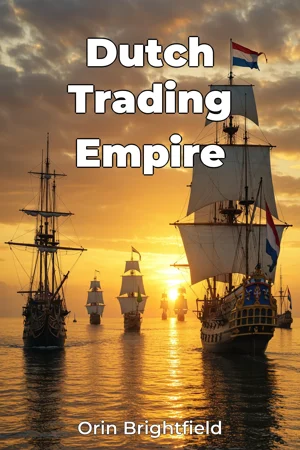
How did a small nation like the Netherlands become a dominant global commercial power in the 17th century? "Dutch Trading Empire" explores this phenomenon through a detailed examination of the Dutch East India Company (VOC) and the financial innovations that fueled its success, providing insight into the origins of modern global trade. This book is important because it dissects the structures and strategies that allowed the Dutch to establish a vast trading network, influencing economic systems worldwide and laying the foundations for modern capitalism. The book offers context by detailing the political and economic climate of Europe in the 16th and 17th centuries, including the decline of Spanish power and the rise of mercantilism. No prior knowledge beyond a basic understanding of European history is required. The central argument is that the VOC's unprecedented scale, coupled with Amsterdam's pioneering financial markets, allowed the Dutch Republic to establish a commercially dominant, albeit ethically complex, global presence. This argument is significant because it challenges traditional narratives that focus solely on military or political power, highlighting the critical role of commercial enterprise in shaping world history. The book is structured into three parts. First, it introduces the historical context and lays the groundwork by examining the Dutch Republic's unique political structure and its burgeoning merchant class. Second, it delves into the VOC itself, analyzing its organization, trade routes, and impact on various regions, from Southeast Asia to Southern Africa. This section will cover the formation of the VOC in 1602, its unique structure as a joint-stock company, its aggressive expansion into the spice trade, and its establishment of trading posts and colonies. Third, it examines the Dutch financial revolution, focusing on the Amsterdam Stock Exchange, the development of sophisticated banking practices, and the role of credit in enabling the VOC's expansion. The book culminates by assessing the long-term consequences of Dutch commercial dominance, exploring its impact on global trade patterns, colonial legacies, and the development of modern financial institutions. The research presented draws upon a variety of primary sources, including VOC archives, contemporary merchant accounts, and travel narratives. It also incorporates secondary scholarship from economic history, maritime history, and colonial studies. "Dutch Trading Empire" connects to several other fields of study. It intersects with political science by examining the relationship between state power and commercial interests. It links to sociology by exploring the social impact of trade on both Dutch society and the societies it encountered. It also ties into ethics by grappling with the moral implications of the VOC's practices, including its involvement in slavery and exploitation. These connections enrich the analysis by providing a multifaceted perspective on the Dutch trading empire. The book adopts a balanced and nuanced perspective, acknowledging both the achievements and the ethical shortcomings of the Dutch trading empire. The writing style is accessible to a broad audience while maintaining scholarly rigor. The target audience includes students of history, economics, and business, as well as general readers interested in learning about the origins of global trade and the rise of capitalism. It will appeal to those seeking a deeper understanding of the Netherlands' role in shaping the modern world. As a work of history, the book adheres to standards of evidence-based analysis and objectivity. The scope is intentionally limited to the Dutch East India Company and its immediate context, acknowledging that other factors also contributed to the Netherlands' overall success. The information presented has real-world applications for understanding contemporary global trade and financial systems. The Dutch experience offers valuable lessons about the opportunities and challenges of globalization, as well as the importance of ethical considerations in international commerce. The book also addresses debates surrounding the legacy of colonialism and the ethics of early multinational corporations. It seeks to provide a balanced and informed perspective on these complex issues.
How did a small nation like the Netherlands become a dominant global commercial power in the 17th century? "Dutch Trading Empire" explores this phenomenon through a detailed examination of the Dutch East India Company (VOC) and the financial innovations that fueled its success, providing insight into the origins of modern global trade. This book is important because it dissects the structures and strategies that allowed the Dutch to establish a vast trading network, influencing economic systems worldwide and laying the foundations for modern capitalism. The book offers context by detailing the political and economic climate of Europe in the 16th and 17th centuries, including the decline of Spanish power and the rise of mercantilism. No prior knowledge beyond a basic understanding of European history is required. The central argument is that the VOC's unprecedented scale, coupled with Amsterdam's pioneering financial markets, allowed the Dutch Republic to establish a commercially dominant, albeit ethically complex, global presence. This argument is significant because it challenges traditional narratives that focus solely on military or political power, highlighting the critical role of commercial enterprise in shaping world history. The book is structured into three parts. First, it introduces the historical context and lays the groundwork by examining the Dutch Republic's unique political structure and its burgeoning merchant class. Second, it delves into the VOC itself, analyzing its organization, trade routes, and impact on various regions, from Southeast Asia to Southern Africa. This section will cover the formation of the VOC in 1602, its unique structure as a joint-stock company, its aggressive expansion into the spice trade, and its establishment of trading posts and colonies. Third, it examines the Dutch financial revolution, focusing on the Amsterdam Stock Exchange, the development of sophisticated banking practices, and the role of credit in enabling the VOC's expansion. The book culminates by assessing the long-term consequences of Dutch commercial dominance, exploring its impact on global trade patterns, colonial legacies, and the development of modern financial institutions. The research presented draws upon a variety of primary sources, including VOC archives, contemporary merchant accounts, and travel narratives. It also incorporates secondary scholarship from economic history, maritime history, and colonial studies. "Dutch Trading Empire" connects to several other fields of study. It intersects with political science by examining the relationship between state power and commercial interests. It links to sociology by exploring the social impact of trade on both Dutch society and the societies it encountered. It also ties into ethics by grappling with the moral implications of the VOC's practices, including its involvement in slavery and exploitation. These connections enrich the analysis by providing a multifaceted perspective on the Dutch trading empire. The book adopts a balanced and nuanced perspective, acknowledging both the achievements and the ethical shortcomings of the Dutch trading empire. The writing style is accessible to a broad audience while maintaining scholarly rigor. The target audience includes students of history, economics, and business, as well as general readers interested in learning about the origins of global trade and the rise of capitalism. It will appeal to those seeking a deeper understanding of the Netherlands' role in shaping the modern world. As a work of history, the book adheres to standards of evidence-based analysis and objectivity. The scope is intentionally limited to the Dutch East India Company and its immediate context, acknowledging that other factors also contributed to the Netherlands' overall success. The information presented has real-world applications for understanding contemporary global trade and financial systems. The Dutch experience offers valuable lessons about the opportunities and challenges of globalization, as well as the importance of ethical considerations in international commerce. The book also addresses debates surrounding the legacy of colonialism and the ethics of early multinational corporations. It seeks to provide a balanced and informed perspective on these complex issues.
"Dutch Trading Empire" meticulously examines how the Netherlands, against the odds, rose to become a global commercial powerhouse during the 17th century. It highlights the Dutch East India Company (VOC) and the groundbreaking financial innovations, such as the Amsterdam Stock Exchange, that propelled its success. Through this lens, the book offers a comprehensive look at the origins of global trade and the foundations of modern capitalism, arguing that the VOC's unprecedented scale, coupled with Amsterdam's pioneering financial markets, allowed the Dutch Republic to establish a commercially dominant global presence. The book charts the political and economic landscape of 16th and 17th century Europe, providing context for the rise of mercantilism and the decline of Spanish dominance. It then navigates the VOC's organizational structure, trade routes, and impact on regions from Southeast Asia to Southern Africa. Finally, it delves into the Dutch financial revolution, exploring the development of sophisticated banking practices and the role of credit in enabling the VOC's expansion. By dissecting the structures and strategies that allowed the Dutch to establish their vast trading network, this book reveals the profound influence of commercial enterprise on shaping world history.
Book Details
ISBN
9788235224217
Publisher
Publifye AS
Your Licenses
You don't own any licenses for this book
Purchase a license below to unlock this book and download the EPUB.
Purchase License
Select a tier to unlock this book
Need bulk licensing?
Contact us for enterprise agreements.