
About This Book
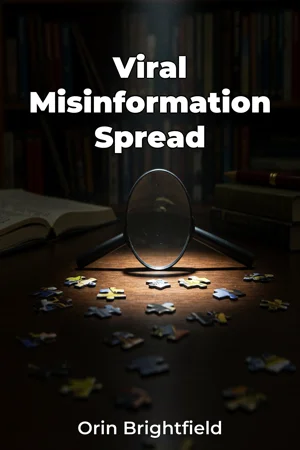
In an age where information spreads at unprecedented speeds, how can we distinguish truth from falsehood? "Viral Misinformation Spread" investigates the complex ecology of fake news, examining its propagation, the responses of major online platforms, and the burgeoning field of collaborative fact-checking. This book is crucial because misinformation erodes public trust, manipulates opinions, and can have tangible consequences on elections, public health, and social stability. This book will navigate through the multifaceted layers of misinformation. It provides historical context, tracing the evolution of propaganda and disinformation tactics throughout the 20th century and into the digital age. It explores the psychological mechanisms that make individuals susceptible to believing and sharing false information, examining cognitive biases, emotional reasoning, and the echo chamber effect created by social media algorithms. The central argument posits that a comprehensive solution to the problem of viral misinformation requires a multi-pronged approach involving technological innovation, media literacy education, and policy interventions. It emphasizes that platforms alone cannot solve this issue and that a collaborative effort involving researchers, journalists, educators, and the public is essential. The book unfolds in three major parts. The first section introduces the core concepts, defining various types of misinformation, such as satire, manipulated content, and outright fabrication. It analyzes the motivations behind creating and disseminating fake news, ranging from political agendas to financial gain. The second part delves into the responses of social media platforms and search engines. It evaluates the effectiveness of algorithms designed to detect and flag misinformation, content moderation policies, and the role of artificial intelligence in combating the spread of falsehoods. This section also explores the challenges platforms face, including balancing free speech concerns with the need to protect users from harmful content. The third section examines collaborative fact-checking initiatives, highlighting the methodologies employed by fact-checkers, the challenges of scaling fact-checking efforts, and the impact of fact-checking on public perceptions. It also considers the role of media literacy education in empowering individuals to critically evaluate information and resist manipulation. The analysis is supported by empirical research, including case studies of significant misinformation campaigns, statistical analyses of the spread of fake news on social media, and experimental studies examining the effectiveness of different fact-checking techniques. It draws on data from social media analytics platforms, fact-checking organizations, and academic research institutions. "Viral Misinformation Spread" connects to the fields of communication studies, political science, and computer science. Its analysis of the psychological aspects of belief formation intersects with cognitive psychology and behavioral economics. It offers a unique perspective by integrating technological, sociological, and psychological insights to provide a holistic understanding of the misinformation ecosystem. The book distinguishes itself through its focus on collaborative solutions. Rather than simply critiquing the problem, it explores practical strategies for mitigating the harmful effects of misinformation by fostering collaboration between diverse stakeholders. Written in a clear and accessible style, "Viral Misinformation Spread" is intended for a broad audience, including students, researchers, policymakers, journalists, and anyone concerned about the impact of misinformation on society. It offers valuable insights for understanding and addressing one of the most pressing challenges of the digital age. The scope of the book is limited to the analysis of misinformation in the context of online platforms and does not delve into other forms of propaganda or disinformation. Readers can apply the information to critically evaluate the information they encounter online, support fact-checking organizations, and advocate for media literacy education. The book will inevitably touch upon controversies related to censorship, freedom of speech, and the role of technology companies in shaping public discourse. It addresses these debates by presenting different perspectives and advocating for a balanced approach that respects both individual rights and the need to protect society from harm.
In an age where information spreads at unprecedented speeds, how can we distinguish truth from falsehood? "Viral Misinformation Spread" investigates the complex ecology of fake news, examining its propagation, the responses of major online platforms, and the burgeoning field of collaborative fact-checking. This book is crucial because misinformation erodes public trust, manipulates opinions, and can have tangible consequences on elections, public health, and social stability. This book will navigate through the multifaceted layers of misinformation. It provides historical context, tracing the evolution of propaganda and disinformation tactics throughout the 20th century and into the digital age. It explores the psychological mechanisms that make individuals susceptible to believing and sharing false information, examining cognitive biases, emotional reasoning, and the echo chamber effect created by social media algorithms. The central argument posits that a comprehensive solution to the problem of viral misinformation requires a multi-pronged approach involving technological innovation, media literacy education, and policy interventions. It emphasizes that platforms alone cannot solve this issue and that a collaborative effort involving researchers, journalists, educators, and the public is essential. The book unfolds in three major parts. The first section introduces the core concepts, defining various types of misinformation, such as satire, manipulated content, and outright fabrication. It analyzes the motivations behind creating and disseminating fake news, ranging from political agendas to financial gain. The second part delves into the responses of social media platforms and search engines. It evaluates the effectiveness of algorithms designed to detect and flag misinformation, content moderation policies, and the role of artificial intelligence in combating the spread of falsehoods. This section also explores the challenges platforms face, including balancing free speech concerns with the need to protect users from harmful content. The third section examines collaborative fact-checking initiatives, highlighting the methodologies employed by fact-checkers, the challenges of scaling fact-checking efforts, and the impact of fact-checking on public perceptions. It also considers the role of media literacy education in empowering individuals to critically evaluate information and resist manipulation. The analysis is supported by empirical research, including case studies of significant misinformation campaigns, statistical analyses of the spread of fake news on social media, and experimental studies examining the effectiveness of different fact-checking techniques. It draws on data from social media analytics platforms, fact-checking organizations, and academic research institutions. "Viral Misinformation Spread" connects to the fields of communication studies, political science, and computer science. Its analysis of the psychological aspects of belief formation intersects with cognitive psychology and behavioral economics. It offers a unique perspective by integrating technological, sociological, and psychological insights to provide a holistic understanding of the misinformation ecosystem. The book distinguishes itself through its focus on collaborative solutions. Rather than simply critiquing the problem, it explores practical strategies for mitigating the harmful effects of misinformation by fostering collaboration between diverse stakeholders. Written in a clear and accessible style, "Viral Misinformation Spread" is intended for a broad audience, including students, researchers, policymakers, journalists, and anyone concerned about the impact of misinformation on society. It offers valuable insights for understanding and addressing one of the most pressing challenges of the digital age. The scope of the book is limited to the analysis of misinformation in the context of online platforms and does not delve into other forms of propaganda or disinformation. Readers can apply the information to critically evaluate the information they encounter online, support fact-checking organizations, and advocate for media literacy education. The book will inevitably touch upon controversies related to censorship, freedom of speech, and the role of technology companies in shaping public discourse. It addresses these debates by presenting different perspectives and advocating for a balanced approach that respects both individual rights and the need to protect society from harm.
"Viral Misinformation Spread" explores the pervasive issue of fake news in the digital age, examining its origins, spread, and impact on society. The book navigates the complex landscape of misinformation, highlighting intriguing facts such as the role of cognitive biases and emotional reasoning in making individuals susceptible to false information. It also examines the evolution of propaganda tactics from the 20th century to the present day, revealing how these strategies have adapted to the online environment. The text underscores the erosion of public trust and the potential for manipulation of opinions due to viral misinformation, which can have tangible effects on elections, public health, and social stability. This book uniquely emphasizes collaborative solutions, rather than simply critiquing the problem. It explores the responses of online platforms, the challenges of content moderation, and the importance of fact-checking initiatives. It also considers the role of media literacy education in empowering individuals to critically evaluate information. The book unfolds in three parts: defining misinformation, analyzing platform responses, and examining fact-checking efforts, offering a comprehensive understanding of the misinformation ecosystem.
Book Details
ISBN
9788235224149
Publisher
Publifye AS
Your Licenses
You don't own any licenses for this book
Purchase a license below to unlock this book and download the EPUB.
Purchase License
Select a tier to unlock this book
Need bulk licensing?
Contact us for enterprise agreements.