
About This Book
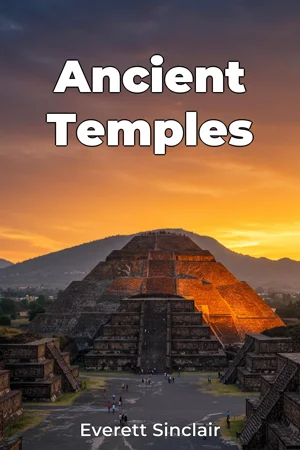
What if the stones themselves could speak, whispering tales of faith, power, and ingenuity across millennia? "Ancient Temples" embarks on a journey through time and across cultures, revealing the multifaceted stories embedded within the world’s most significant ancient places of worship. This book explores not only the architectural marvels of these structures but also their profound historical and cultural significance, providing a comprehensive understanding of their purpose and impact on the societies that built them. Two key concepts form the foundation of this exploration: the evolution of temple architecture as a reflection of societal beliefs and technological advancements, and the role of these sacred spaces as centers of social, political, and economic life. Understanding these concepts is crucial for appreciating the lasting influence of ancient civilizations and their spiritual practices. To fully appreciate the narrative, some background in ancient history and basic architectural terminology is beneficial, though not essential. We will explore the development of religious thought across various cultures, examining the core beliefs that dictated the form and function of their temples. The central argument of "Ancient Temples" is that these structures serve as tangible embodiments of a civilization's worldview, offering invaluable insights into their values, aspirations, and capabilities. This argument is vital because it moves beyond a purely aesthetic appreciation of ancient temples, encouraging a deeper engagement with their historical context and cultural significance. The book unfolds in a structured manner, beginning with an introduction to the core concepts of temple architecture, including the evolution of building techniques and the symbolism embedded within temple design. It then progresses through several major sections, each dedicated to exploring specific cultural regions and time periods. We will examine Egyptian temples like Karnak, analyzing their massive scale and intricate hieroglyphics as expressions of pharaonic power and divine connection. The book will investigate Greek temples, focusing on the Parthenon and its influence on Western architectural traditions, highlighting the pursuit of ideal proportions and civic pride. Finally, the book delves into Mesoamerican pyramids, such as those at Teotihuacan, exploring their complex astronomical alignments and their roles in ritualistic practices and social control. The concluding sections synthesize these diverse examples, drawing broader conclusions about the universal human impulse to create sacred spaces and the lessons these structures hold for contemporary society. The evidence presented will draw upon archaeological findings, architectural surveys, historical texts, and religious studies. The book will cite original sources and incorporate recent discoveries in the field to offer a current and comprehensive perspective. "Ancient Temples" also connects to other fields such as anthropology, art history, and religious studies. By considering the anthropological context of temple construction, the book reveals how these structures shaped social organization and power dynamics. The connection to art history allows for an analysis of the artistic motifs and decorative elements within temples, revealing their symbolic meanings and aesthetic values. The link to religious studies provides a framework for understanding the theological concepts and ritual practices associated with these sacred spaces. This book distinguishes itself by adopting a comparative and interdisciplinary approach, synthesizing insights from various fields to offer a holistic understanding of ancient temples. The tone is scholarly yet accessible, aiming to engage both academic readers and general enthusiasts. The target audience includes students of history, architecture, and religious studies, as well as anyone fascinated by ancient civilizations and their cultural achievements. The book’s value lies in its ability to provide a comprehensive and engaging overview of a subject that is both historically significant and culturally relevant. As a work of non-fiction history and architecture, "Ancient Temples" adheres to the conventions of scholarly rigor and factual accuracy, presenting well-researched information in a clear and objective manner. The scope of the book is broad, covering a wide range of cultures and time periods, but it is limited by its focus on primarily monumental temple structures. Smaller shrines and domestic worship spaces are not the main focus. The information presented has real-world applications in fields such as architectural preservation, cultural heritage management, and tourism. Understanding the historical and cultural significance of ancient temples informs efforts to protect and promote these sites for future generations. Finally, the book acknowledges ongoing debates surrounding the interpretation of certain archaeological findings and the reconstruction of ancient religious practices, providing a balanced and nuanced perspective on these controversies.
What if the stones themselves could speak, whispering tales of faith, power, and ingenuity across millennia? "Ancient Temples" embarks on a journey through time and across cultures, revealing the multifaceted stories embedded within the world’s most significant ancient places of worship. This book explores not only the architectural marvels of these structures but also their profound historical and cultural significance, providing a comprehensive understanding of their purpose and impact on the societies that built them. Two key concepts form the foundation of this exploration: the evolution of temple architecture as a reflection of societal beliefs and technological advancements, and the role of these sacred spaces as centers of social, political, and economic life. Understanding these concepts is crucial for appreciating the lasting influence of ancient civilizations and their spiritual practices. To fully appreciate the narrative, some background in ancient history and basic architectural terminology is beneficial, though not essential. We will explore the development of religious thought across various cultures, examining the core beliefs that dictated the form and function of their temples. The central argument of "Ancient Temples" is that these structures serve as tangible embodiments of a civilization's worldview, offering invaluable insights into their values, aspirations, and capabilities. This argument is vital because it moves beyond a purely aesthetic appreciation of ancient temples, encouraging a deeper engagement with their historical context and cultural significance. The book unfolds in a structured manner, beginning with an introduction to the core concepts of temple architecture, including the evolution of building techniques and the symbolism embedded within temple design. It then progresses through several major sections, each dedicated to exploring specific cultural regions and time periods. We will examine Egyptian temples like Karnak, analyzing their massive scale and intricate hieroglyphics as expressions of pharaonic power and divine connection. The book will investigate Greek temples, focusing on the Parthenon and its influence on Western architectural traditions, highlighting the pursuit of ideal proportions and civic pride. Finally, the book delves into Mesoamerican pyramids, such as those at Teotihuacan, exploring their complex astronomical alignments and their roles in ritualistic practices and social control. The concluding sections synthesize these diverse examples, drawing broader conclusions about the universal human impulse to create sacred spaces and the lessons these structures hold for contemporary society. The evidence presented will draw upon archaeological findings, architectural surveys, historical texts, and religious studies. The book will cite original sources and incorporate recent discoveries in the field to offer a current and comprehensive perspective. "Ancient Temples" also connects to other fields such as anthropology, art history, and religious studies. By considering the anthropological context of temple construction, the book reveals how these structures shaped social organization and power dynamics. The connection to art history allows for an analysis of the artistic motifs and decorative elements within temples, revealing their symbolic meanings and aesthetic values. The link to religious studies provides a framework for understanding the theological concepts and ritual practices associated with these sacred spaces. This book distinguishes itself by adopting a comparative and interdisciplinary approach, synthesizing insights from various fields to offer a holistic understanding of ancient temples. The tone is scholarly yet accessible, aiming to engage both academic readers and general enthusiasts. The target audience includes students of history, architecture, and religious studies, as well as anyone fascinated by ancient civilizations and their cultural achievements. The book’s value lies in its ability to provide a comprehensive and engaging overview of a subject that is both historically significant and culturally relevant. As a work of non-fiction history and architecture, "Ancient Temples" adheres to the conventions of scholarly rigor and factual accuracy, presenting well-researched information in a clear and objective manner. The scope of the book is broad, covering a wide range of cultures and time periods, but it is limited by its focus on primarily monumental temple structures. Smaller shrines and domestic worship spaces are not the main focus. The information presented has real-world applications in fields such as architectural preservation, cultural heritage management, and tourism. Understanding the historical and cultural significance of ancient temples informs efforts to protect and promote these sites for future generations. Finally, the book acknowledges ongoing debates surrounding the interpretation of certain archaeological findings and the reconstruction of ancient religious practices, providing a balanced and nuanced perspective on these controversies.
"Ancient Temples" explores the fascinating world of ancient sacred spaces, examining their architectural grandeur and deep cultural importance. Temples weren't just places of worship; they were also vital hubs for social, political, and economic activities in ancient civilizations. This book uniquely blends history and architecture to reveal how temple design reflects the beliefs and technological advancements of societies across time. The book investigates iconic structures like Karnak in Egypt, where massive scale and intricate hieroglyphics showcased pharaonic power. It also delves into the Parthenon, highlighting its influence on Western architectural traditions rooted in ideal proportions. Progressing through chapters, the narrative examines Mesoamerican pyramids and their complex astronomical alignments, illustrating their role in rituals and social control. By synthesizing archaeological findings, historical texts, and religious studies, "Ancient Temples" offers a comprehensive perspective. It presents these ancient structures as tangible embodiments of a civilization's worldview, providing invaluable insights into their values, aspirations, and capabilities. The book's comparative approach makes it valuable for students and enthusiasts alike.
Book Details
ISBN
9788235223982
Publisher
Publifye AS
Your Licenses
You don't own any licenses for this book
Purchase a license below to unlock this book and download the EPUB.
Purchase License
Select a tier to unlock this book
Need bulk licensing?
Contact us for enterprise agreements.