
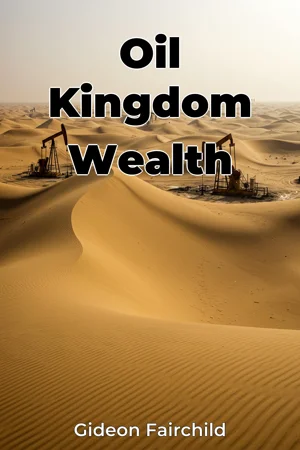
About This Book
How has one nation's geological endowment shaped not only its domestic affairs but also the geopolitical landscape of the 20th and 21st centuries? "Oil Kingdom Wealth" delves into the intricate story of Saudi Arabia's petroleum-based economy, its far-reaching global influence, and the considerable challenges it faces in diversifying its economic base. This book examines the intersection of economics and politics in the context of Saudi Arabia's unique position as a leading oil producer and a key player in international relations. This exploration is vital because understanding Saudi Arabia's economic structure and its global impact is crucial for comprehending contemporary energy markets, geopolitical power dynamics, and the future of sustainable development in the region. The book provides a necessary perspective on the complexities of resource-dependent economies in an evolving world. Readers should possess a basic understanding of economic principles, international relations, and the history of the Middle East to fully appreciate the arguments presented. The central argument of "Oil Kingdom Wealth" is that Saudi Arabia's economic development, inextricably linked to its vast oil reserves, has created a complex web of global dependencies and internal challenges that require innovative strategies for sustainable growth and stability. This argument is crucial because it challenges conventional understandings of resource wealth and its long-term implications, providing insights into the limitations and opportunities faced by nations heavily reliant on natural resources. The book is structured to provide a comprehensive analysis of Saudi Arabia's economic and political landscape. It begins with an introduction to the history of oil discovery and development in Saudi Arabia, detailing the initial concessions and the rise of Saudi Aramco. The narrative then progresses through key stages: a) An examination of the economic policies implemented to manage oil wealth and develop infrastructure, including the nationalization of oil assets. b) An analysis of Saudi Arabia's influence within OPEC and its impact on global oil prices, along with an assessment of its role in international financial markets. c) A detailed study of the challenges associated with economic diversification, including efforts to promote non-oil sectors, address unemployment, and modernize the Kingdom's economy. Supporting this analysis, the book draws on a range of evidence, including economic data from Saudi Arabian government sources, analyses of OPEC policies, and research from international organizations such as the World Bank and the International Monetary Fund. It incorporates unique insights from academic studies, policy reports, and firsthand accounts to provide a rigorous and nuanced perspective. The analysis also connects to other fields of study such as environmental science, exploring the environmental impact of oil production and consumption, and sociology, examining the social and cultural consequences of rapid economic development. Furthermore, it connects to studies of political science, analyzing the impact of oil wealth on governance and political stability. These interdisciplinary connections enrich the book's argument by providing a more holistic understanding of Saudi Arabia's complexities. "Oil Kingdom Wealth" offers a unique perspective by combining economic analysis with political context, exploring not only the financial aspects of Saudi Arabia's oil wealth but also its implications for governance, social development, and international relations. The approach is academic, presenting information in a clear and structured manner, suitable for students, researchers, and policymakers interested in the political economy of the Middle East. The target audience includes academics in economics, political science, and Middle Eastern studies, as well as policymakers, business professionals, and anyone seeking a deeper understanding of Saudi Arabia's role in the global economy. In keeping with the conventions of academic non-fiction, the book aims to provide a balanced and objective analysis, presenting diverse perspectives and acknowledging the complexities of the issues discussed. The scope of the book is limited to an examination of Saudi Arabia's petroleum-based economy and related challenges, focusing primarily on the period from the mid-20th century to the present day. The information offered has real-world applications for policymakers seeking to formulate effective energy policies, investors assessing risks and opportunities in the region, and academics conducting research on resource-dependent economies. The book also addresses ongoing debates surrounding the sustainability of Saudi Arabia's economic model, the impact of its foreign policy decisions, and the future of its leadership in the global energy market.
How has one nation's geological endowment shaped not only its domestic affairs but also the geopolitical landscape of the 20th and 21st centuries? "Oil Kingdom Wealth" delves into the intricate story of Saudi Arabia's petroleum-based economy, its far-reaching global influence, and the considerable challenges it faces in diversifying its economic base. This book examines the intersection of economics and politics in the context of Saudi Arabia's unique position as a leading oil producer and a key player in international relations. This exploration is vital because understanding Saudi Arabia's economic structure and its global impact is crucial for comprehending contemporary energy markets, geopolitical power dynamics, and the future of sustainable development in the region. The book provides a necessary perspective on the complexities of resource-dependent economies in an evolving world. Readers should possess a basic understanding of economic principles, international relations, and the history of the Middle East to fully appreciate the arguments presented. The central argument of "Oil Kingdom Wealth" is that Saudi Arabia's economic development, inextricably linked to its vast oil reserves, has created a complex web of global dependencies and internal challenges that require innovative strategies for sustainable growth and stability. This argument is crucial because it challenges conventional understandings of resource wealth and its long-term implications, providing insights into the limitations and opportunities faced by nations heavily reliant on natural resources. The book is structured to provide a comprehensive analysis of Saudi Arabia's economic and political landscape. It begins with an introduction to the history of oil discovery and development in Saudi Arabia, detailing the initial concessions and the rise of Saudi Aramco. The narrative then progresses through key stages: a) An examination of the economic policies implemented to manage oil wealth and develop infrastructure, including the nationalization of oil assets. b) An analysis of Saudi Arabia's influence within OPEC and its impact on global oil prices, along with an assessment of its role in international financial markets. c) A detailed study of the challenges associated with economic diversification, including efforts to promote non-oil sectors, address unemployment, and modernize the Kingdom's economy. Supporting this analysis, the book draws on a range of evidence, including economic data from Saudi Arabian government sources, analyses of OPEC policies, and research from international organizations such as the World Bank and the International Monetary Fund. It incorporates unique insights from academic studies, policy reports, and firsthand accounts to provide a rigorous and nuanced perspective. The analysis also connects to other fields of study such as environmental science, exploring the environmental impact of oil production and consumption, and sociology, examining the social and cultural consequences of rapid economic development. Furthermore, it connects to studies of political science, analyzing the impact of oil wealth on governance and political stability. These interdisciplinary connections enrich the book's argument by providing a more holistic understanding of Saudi Arabia's complexities. "Oil Kingdom Wealth" offers a unique perspective by combining economic analysis with political context, exploring not only the financial aspects of Saudi Arabia's oil wealth but also its implications for governance, social development, and international relations. The approach is academic, presenting information in a clear and structured manner, suitable for students, researchers, and policymakers interested in the political economy of the Middle East. The target audience includes academics in economics, political science, and Middle Eastern studies, as well as policymakers, business professionals, and anyone seeking a deeper understanding of Saudi Arabia's role in the global economy. In keeping with the conventions of academic non-fiction, the book aims to provide a balanced and objective analysis, presenting diverse perspectives and acknowledging the complexities of the issues discussed. The scope of the book is limited to an examination of Saudi Arabia's petroleum-based economy and related challenges, focusing primarily on the period from the mid-20th century to the present day. The information offered has real-world applications for policymakers seeking to formulate effective energy policies, investors assessing risks and opportunities in the region, and academics conducting research on resource-dependent economies. The book also addresses ongoing debates surrounding the sustainability of Saudi Arabia's economic model, the impact of its foreign policy decisions, and the future of its leadership in the global energy market.
"Oil Kingdom Wealth" explores Saudi Arabia's complex relationship with its vast oil reserves and its impact on global economics and geopolitics. The book examines how this petroleum-based economy has shaped the nation's domestic policies and its role in international relations, particularly within OPEC. Saudi Arabia's unique position as a leading oil producer has created both immense wealth and significant challenges, including the need for economic diversification and sustainable development. The book traces the history of oil discovery and development in Saudi Arabia, from initial concessions to the rise of Saudi Aramco. It analyzes the economic policies implemented to manage oil wealth, including nationalization, and assesses Saudi Arabia's influence on global oil prices and financial markets. A key focus is the exploration of efforts to promote non-oil sectors and modernize the economy, addressing issues like unemployment and sustainable growth. The book uses economic data, OPEC policy analysis, and insights from international organizations to provide a nuanced perspective. This study offers a comprehensive analysis by combining economic insights with political context, suitable for academics, policymakers, and business professionals seeking a deeper understanding of Saudi Arabia's role in the global economy. Its structured approach progresses from historical context to contemporary challenges, providing a balanced view of the opportunities and limitations faced by this resource-dependent economy.
Book Details
ISBN
9788235223944
Publisher
Publifye AS
Your Licenses
You don't own any licenses for this book
Purchase a license below to unlock this book and download the EPUB.
Purchase License
Select a tier to unlock this book
Need bulk licensing?
Contact us for enterprise agreements.