
About This Book
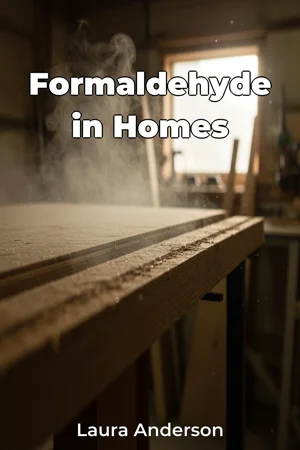
Are you unknowingly living in a formaldehyde-filled environment? This book, "Formaldehyde in Homes," is a comprehensive guide to understanding and mitigating the risks associated with formaldehyde exposure in your living spaces. It falls under the genres of Health & Fitness, Health Fitness, and Environment, addressing the intersection of indoor air quality, personal well-being, and environmental health. The central argument of this book is that formaldehyde, a common volatile organic compound (VOC), poses a significant yet often overlooked health risk in modern homes. The importance of this argument lies in the fact that prolonged exposure to even low levels of formaldehyde can lead to various health issues, ranging from respiratory problems and skin irritation to an increased risk of certain cancers. Understanding the sources, effects, and mitigation strategies is vital for creating healthier living environments. To provide the necessary context, the book begins with an overview of formaldehyde: its chemical properties, industrial uses, and historical presence in building materials and consumer products. We trace the evolution of formaldehyde use, from its early applications to its widespread adoption in manufacturing processes and the subsequent rise in awareness of its potential health hazards. No prior scientific knowledge is required, as all technical terms are clearly explained. The book is structured into three main sections, each building upon the previous one. First, we identify and examine the primary sources of formaldehyde in homes. This includes pressed wood products (particleboard, plywood, MDF), furniture, adhesives, textiles, paints, and certain household cleaning agents. For each source, we discuss the levels of formaldehyde emission typically observed and the factors influencing these levels, such as temperature and humidity. Second, we delve into the health effects of formaldehyde exposure, drawing upon epidemiological studies and toxicological research. This section covers both short-term and long-term health impacts, focusing on vulnerable populations such as children, the elderly, and individuals with pre-existing respiratory conditions. Crucially, we address the dose-response relationship, clarifying the levels of exposure considered safe versus those that pose a significant risk. Third, the book outlines practical strategies for reducing formaldehyde levels in your home. These mitigation techniques include selecting low-emission products, improving ventilation, using air purifiers, and implementing proper sealing and finishing techniques. We provide specific product recommendations and step-by-step instructions for implementing these strategies. The evidence presented throughout the book is based on a comprehensive review of scientific literature, including peer-reviewed studies, government reports, and industry data. We rely heavily on research from organizations such as the Environmental Protection Agency (EPA), the National Cancer Institute (NCI), and the World Health Organization (WHO). Furthermore, we incorporate data from independent testing laboratories to provide objective assessments of formaldehyde emissions from various products. The book connects to other fields, including public health (examining the population-level impact of formaldehyde exposure), environmental science (assessing the environmental fate and transport of formaldehyde), and building science (understanding the factors that influence indoor air quality). These connections enhance the book's argument by providing a more holistic perspective on the issue. This book takes a practical and actionable approach, focusing on empowering readers to take control of their indoor environment. The tone is informative and accessible, avoiding technical jargon whenever possible and presenting complex information in a clear and concise manner. The target audience includes homeowners, renters, expecting parents, individuals with sensitivities to chemicals, and anyone concerned about indoor air quality. This book would be valuable to them because it provides the knowledge and tools necessary to identify and mitigate formaldehyde risks in their homes, leading to improved health and well-being. As a work of non-fiction, this book adheres to the conventions of accuracy, objectivity, and evidence-based reporting. All claims are supported by credible sources, and any limitations in the available data are clearly acknowledged. The scope of the book is limited to formaldehyde in residential settings, excluding industrial or occupational exposures. The information in this book can be applied practically by readers to make informed purchasing decisions, improve ventilation in their homes, and implement other mitigation strategies. We also address potential controversies surrounding formaldehyde regulations and provide guidance on navigating conflicting information. "Formaldehyde in Homes" aims to be an indispensable resource for anyone seeking to create a healthier and safer living environment.
Are you unknowingly living in a formaldehyde-filled environment? This book, "Formaldehyde in Homes," is a comprehensive guide to understanding and mitigating the risks associated with formaldehyde exposure in your living spaces. It falls under the genres of Health & Fitness, Health Fitness, and Environment, addressing the intersection of indoor air quality, personal well-being, and environmental health. The central argument of this book is that formaldehyde, a common volatile organic compound (VOC), poses a significant yet often overlooked health risk in modern homes. The importance of this argument lies in the fact that prolonged exposure to even low levels of formaldehyde can lead to various health issues, ranging from respiratory problems and skin irritation to an increased risk of certain cancers. Understanding the sources, effects, and mitigation strategies is vital for creating healthier living environments. To provide the necessary context, the book begins with an overview of formaldehyde: its chemical properties, industrial uses, and historical presence in building materials and consumer products. We trace the evolution of formaldehyde use, from its early applications to its widespread adoption in manufacturing processes and the subsequent rise in awareness of its potential health hazards. No prior scientific knowledge is required, as all technical terms are clearly explained. The book is structured into three main sections, each building upon the previous one. First, we identify and examine the primary sources of formaldehyde in homes. This includes pressed wood products (particleboard, plywood, MDF), furniture, adhesives, textiles, paints, and certain household cleaning agents. For each source, we discuss the levels of formaldehyde emission typically observed and the factors influencing these levels, such as temperature and humidity. Second, we delve into the health effects of formaldehyde exposure, drawing upon epidemiological studies and toxicological research. This section covers both short-term and long-term health impacts, focusing on vulnerable populations such as children, the elderly, and individuals with pre-existing respiratory conditions. Crucially, we address the dose-response relationship, clarifying the levels of exposure considered safe versus those that pose a significant risk. Third, the book outlines practical strategies for reducing formaldehyde levels in your home. These mitigation techniques include selecting low-emission products, improving ventilation, using air purifiers, and implementing proper sealing and finishing techniques. We provide specific product recommendations and step-by-step instructions for implementing these strategies. The evidence presented throughout the book is based on a comprehensive review of scientific literature, including peer-reviewed studies, government reports, and industry data. We rely heavily on research from organizations such as the Environmental Protection Agency (EPA), the National Cancer Institute (NCI), and the World Health Organization (WHO). Furthermore, we incorporate data from independent testing laboratories to provide objective assessments of formaldehyde emissions from various products. The book connects to other fields, including public health (examining the population-level impact of formaldehyde exposure), environmental science (assessing the environmental fate and transport of formaldehyde), and building science (understanding the factors that influence indoor air quality). These connections enhance the book's argument by providing a more holistic perspective on the issue. This book takes a practical and actionable approach, focusing on empowering readers to take control of their indoor environment. The tone is informative and accessible, avoiding technical jargon whenever possible and presenting complex information in a clear and concise manner. The target audience includes homeowners, renters, expecting parents, individuals with sensitivities to chemicals, and anyone concerned about indoor air quality. This book would be valuable to them because it provides the knowledge and tools necessary to identify and mitigate formaldehyde risks in their homes, leading to improved health and well-being. As a work of non-fiction, this book adheres to the conventions of accuracy, objectivity, and evidence-based reporting. All claims are supported by credible sources, and any limitations in the available data are clearly acknowledged. The scope of the book is limited to formaldehyde in residential settings, excluding industrial or occupational exposures. The information in this book can be applied practically by readers to make informed purchasing decisions, improve ventilation in their homes, and implement other mitigation strategies. We also address potential controversies surrounding formaldehyde regulations and provide guidance on navigating conflicting information. "Formaldehyde in Homes" aims to be an indispensable resource for anyone seeking to create a healthier and safer living environment.
"Formaldehyde in Homes" addresses the often-overlooked dangers of formaldehyde, a common volatile organic compound (VOC), found in many homes. This book highlights how prolonged exposure, even at low levels, can lead to health issues, emphasizing the importance of understanding its sources and effects. For instance, pressed wood products like particleboard and certain household cleaning agents are significant sources of formaldehyde emissions. The book stands out by connecting environmental science with practical health & fitness strategies, guiding homeowners towards creating a healthier living space. The book progresses by first identifying the primary sources of formaldehyde, then delving into its short and long-term health effects, and finally outlining practical mitigation strategies. It thoroughly reviews scientific literature, drawing from organizations like the EPA and WHO, to provide an evidence-based perspective. Readers will learn how selecting low-emission products and improving ventilation can drastically reduce formaldehyde levels, ultimately empowering them to take control of their indoor air quality and well-being.
Book Details
ISBN
9788235223937
Publisher
Publifye AS
Your Licenses
You don't own any licenses for this book
Purchase a license below to unlock this book and download the EPUB.
Purchase License
Select a tier to unlock this book
Need bulk licensing?
Contact us for enterprise agreements.