
About This Book
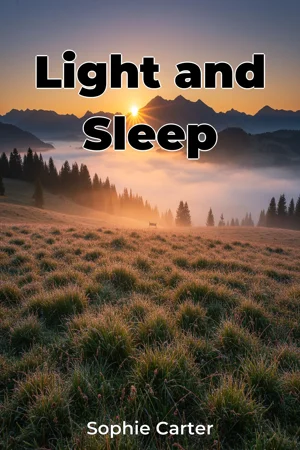
Are you truly aware of the silent director orchestrating your sleep every night? This book, "Light and Sleep," sheds light on that director: light itself. We delve into the profound ways different types of light exposure directly influence and regulate human sleep patterns. Understanding these intricacies is crucial for improving sleep quality, overall health, and daily performance. This exploration centers on three key areas. First, we examine the science of circadian rhythms, the body’s internal clock, which is exquisitely sensitive to light. Second, we investigate how varying wavelengths and intensities of light, from natural sunlight to artificial blue light, impact melatonin production, a hormone vital for sleep. Finally, we analyze the practical implications of these findings, discussing how strategic light exposure can be used to optimize sleep. The relationship between light and sleep has evolved alongside human civilization. Historically, humans were primarily exposed to natural light patterns, but the advent of artificial light has dramatically altered this dynamic, leading to widespread sleep disturbances. Basic knowledge of biology, specifically endocrinology and neurology, provides the foundation for understanding the mechanisms described throughout this book. The central tenet of "Light and Sleep" is that conscious management of light exposure represents a powerful, yet often overlooked, tool for enhancing sleep. By understanding how light influences our circadian biology, we can take control of our sleep cycles and, consequently, improve our health and well-being. The book unfolds systematically. It begins with an introduction to the fundamental principles of circadian rhythms and the neurobiology of sleep. Subsequent chapters meticulously detail the effects of different light sources, including sunlight, incandescent light, fluorescent light, and the pervasive blue light emitted from digital screens. Human studies and laboratory experiments will be analyzed to underscore the impact of each light type on sleep latency, sleep duration, and sleep quality. The book culminates with practical guidelines for optimizing light exposure in various settings, from homes and offices to schools and hospitals, to promote healthier sleep. The arguments presented are fortified with a wealth of evidence derived from peer-reviewed scientific literature, clinical trials, and meta-analyses. Specific focus is given to studies employing polysomnography and actigraphy to objectively measure sleep patterns in relation to light exposure. This book lies at the intersection of several disciplines, including chronobiology, environmental health, and behavioral science. The integration of these perspectives offers a comprehensive understanding of the multi-faceted relationship between light and sleep. "Light and Sleep" distinguishes itself by providing a translational approach, bridging the gap between scientific research and actionable advice. Rather than simply presenting research findings, this book equips readers with the knowledge and tools to implement practical strategies for optimizing their sleep through light management. The writing style is accessible and informative, aiming to make complex scientific concepts understandable for a broad audience. The book avoids jargon and uses clear explanations and real-world examples to illustrate key points. The target audience includes health enthusiasts, sleep-deprived individuals, parents of young children, shift workers, and anyone seeking to improve their sleep quality. This work will be valuable to those who seek to understand the science-backed strategies to optimize sleep through light exposure. As a work of health and fitness and science, the book adheres to standards of academic integrity, presenting accurate and unbiased information. While the book strives to provide a comprehensive overview, it acknowledges certain limitations in scope. For instance, it does not extensively cover sleep disorders beyond those directly related to light exposure, focusing instead on the general population. The information is very applicable to daily life. Readers will learn how to strategically use light to combat jet lag, improve alertness during the day, and create a more restful sleep environment. While the beneficial effects of natural light are generally accepted, debate continues concerning the long-term consequences of prolonged exposure to blue light from digital devices. The book addresses these evolving discussions, providing a balanced perspective informed by current research.
Are you truly aware of the silent director orchestrating your sleep every night? This book, "Light and Sleep," sheds light on that director: light itself. We delve into the profound ways different types of light exposure directly influence and regulate human sleep patterns. Understanding these intricacies is crucial for improving sleep quality, overall health, and daily performance. This exploration centers on three key areas. First, we examine the science of circadian rhythms, the body’s internal clock, which is exquisitely sensitive to light. Second, we investigate how varying wavelengths and intensities of light, from natural sunlight to artificial blue light, impact melatonin production, a hormone vital for sleep. Finally, we analyze the practical implications of these findings, discussing how strategic light exposure can be used to optimize sleep. The relationship between light and sleep has evolved alongside human civilization. Historically, humans were primarily exposed to natural light patterns, but the advent of artificial light has dramatically altered this dynamic, leading to widespread sleep disturbances. Basic knowledge of biology, specifically endocrinology and neurology, provides the foundation for understanding the mechanisms described throughout this book. The central tenet of "Light and Sleep" is that conscious management of light exposure represents a powerful, yet often overlooked, tool for enhancing sleep. By understanding how light influences our circadian biology, we can take control of our sleep cycles and, consequently, improve our health and well-being. The book unfolds systematically. It begins with an introduction to the fundamental principles of circadian rhythms and the neurobiology of sleep. Subsequent chapters meticulously detail the effects of different light sources, including sunlight, incandescent light, fluorescent light, and the pervasive blue light emitted from digital screens. Human studies and laboratory experiments will be analyzed to underscore the impact of each light type on sleep latency, sleep duration, and sleep quality. The book culminates with practical guidelines for optimizing light exposure in various settings, from homes and offices to schools and hospitals, to promote healthier sleep. The arguments presented are fortified with a wealth of evidence derived from peer-reviewed scientific literature, clinical trials, and meta-analyses. Specific focus is given to studies employing polysomnography and actigraphy to objectively measure sleep patterns in relation to light exposure. This book lies at the intersection of several disciplines, including chronobiology, environmental health, and behavioral science. The integration of these perspectives offers a comprehensive understanding of the multi-faceted relationship between light and sleep. "Light and Sleep" distinguishes itself by providing a translational approach, bridging the gap between scientific research and actionable advice. Rather than simply presenting research findings, this book equips readers with the knowledge and tools to implement practical strategies for optimizing their sleep through light management. The writing style is accessible and informative, aiming to make complex scientific concepts understandable for a broad audience. The book avoids jargon and uses clear explanations and real-world examples to illustrate key points. The target audience includes health enthusiasts, sleep-deprived individuals, parents of young children, shift workers, and anyone seeking to improve their sleep quality. This work will be valuable to those who seek to understand the science-backed strategies to optimize sleep through light exposure. As a work of health and fitness and science, the book adheres to standards of academic integrity, presenting accurate and unbiased information. While the book strives to provide a comprehensive overview, it acknowledges certain limitations in scope. For instance, it does not extensively cover sleep disorders beyond those directly related to light exposure, focusing instead on the general population. The information is very applicable to daily life. Readers will learn how to strategically use light to combat jet lag, improve alertness during the day, and create a more restful sleep environment. While the beneficial effects of natural light are generally accepted, debate continues concerning the long-term consequences of prolonged exposure to blue light from digital devices. The book addresses these evolving discussions, providing a balanced perspective informed by current research.
"Light and Sleep" explores the profound influence of light on our sleep patterns and overall health, focusing on how different types of light exposure affect our circadian rhythms. The book delves into the science of how light impacts melatonin production, a crucial hormone for sleep, and examines the effects of both natural and artificial light sources, including the pervasive blue light from digital screens. Did you know that our bodies' internal clocks are exquisitely sensitive to light, which either promotes wakefulness or prepares us for sleep, depending on the timing and intensity? Understanding these intricate relationships helps readers optimize their sleep quality through conscious light management. The book progresses systematically, starting with the fundamental principles of circadian biology and then detailing the effects of various light sources on sleep latency, duration, and quality. By analyzing human studies and laboratory experiments, "Light and Sleep" bridges the gap between scientific research and practical advice, empowering readers to implement strategies for improving sleep in homes, offices, and other environments. For instance, strategic light exposure can be a powerful tool to combat jet lag and improve alertness, underscoring the book's translational approach to health and fitness.
Book Details
ISBN
9788235223920
Publisher
Publifye AS
Your Licenses
You don't own any licenses for this book
Purchase a license below to unlock this book and download the EPUB.
Purchase License
Select a tier to unlock this book
Need bulk licensing?
Contact us for enterprise agreements.